If you are already on the tools, the idea of stepping back into a classroom full-time probably feels like a bad financial decision. That is exactly why blended learning trade courses are getting serious attention from working Australians who want formal qualifications without putting income, family commitments or job momentum on hold.
The appeal is simple. You keep working, you complete theory online at a pace that suits your week, and you attend structured practical sessions to prove competence in real conditions. Done properly, this model does not water down the training. It removes wasted time.
Why blended learning trade courses suit working tradies
Traditional training pathways can drag on for years. For school leavers, that may be acceptable. For adults already earning money, supporting a household or trying to move into a licensed trade faster, it often is not.
That is where blended learning trade courses have a real edge. The strongest programs combine self-paced online learning with scheduled practical workshops, trainer support and progress tracking through a learning management system. You are not left on your own to figure it out. You move through the same accredited units, but in a structure built for adults with real responsibilities.
For many tradies, the biggest benefit is not convenience. It is speed to outcome. The faster you become qualified, the sooner you can access better roles, stronger rates and, in some trades, the licensing pathway that opens up contracting or business ownership.
What a good blended model actually looks like
Not all flexible training is equal. Some courses sell the idea of convenience, then leave students with too little practical exposure or poor support. That is where people get sceptical, and fairly so.
A credible blended model has three parts that must work together.
Online theory with structure
The online component should do more than dump reading material into a portal. It needs clear modules, visible progress, deadlines that keep you moving and trainer access when questions come up. Adults do best when they can study on their own schedule, but they also need a system that keeps momentum high.
That matters because the real risk with any self-paced study is delay. Work gets busy. Family life takes over. A decent LMS-based structure reduces drop-off by making the path visible and manageable.
In-person practical workshops
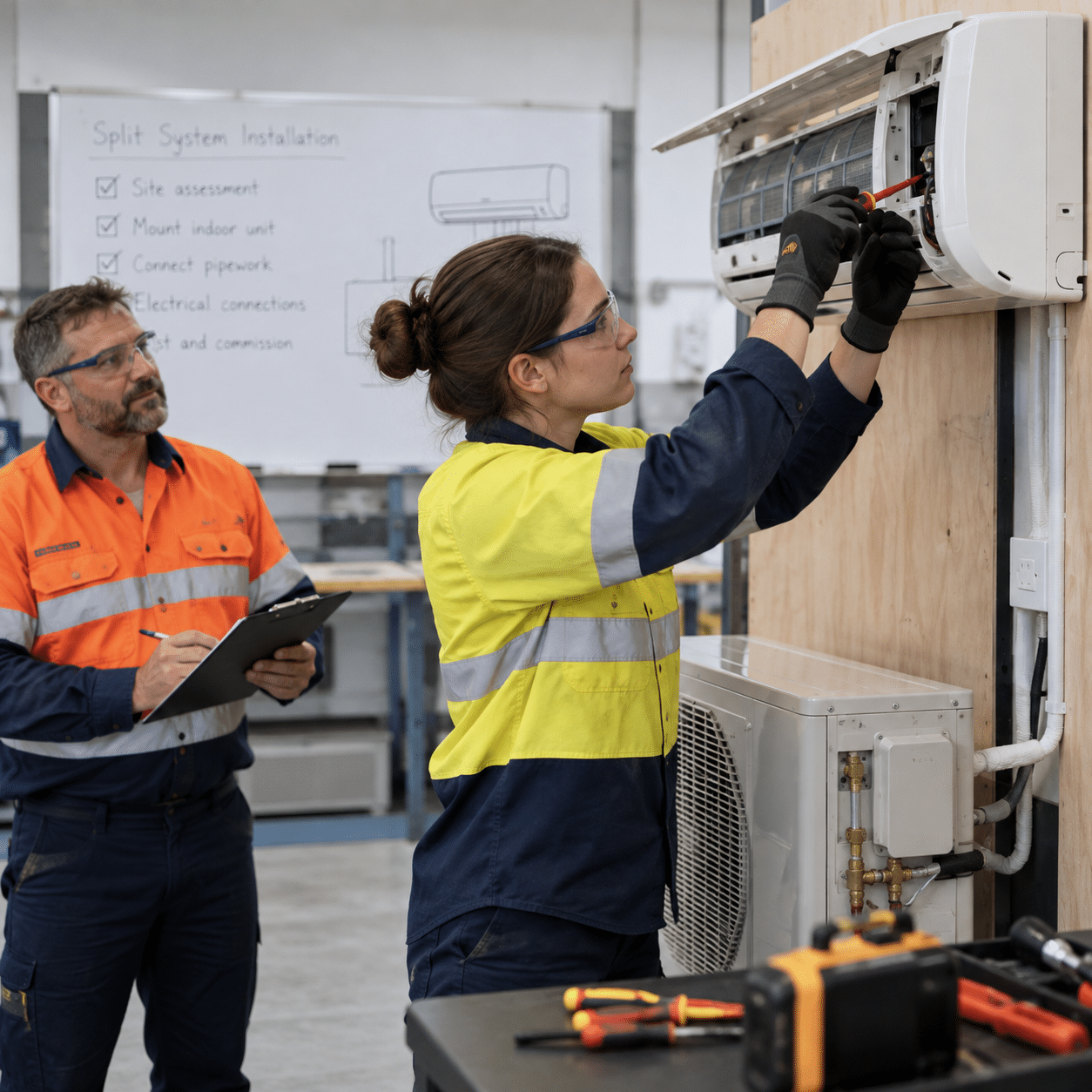
Trade training cannot live on a screen. At some point, you need to handle tools, systems, faults and safety procedures in a supervised environment. Practical workshops are where theory gets tested against reality.
Monthly or scheduled workshop blocks work well for employed students because they reduce disruption while still giving enough hands-on exposure. Better again if the trainers are active in industry. Students do not need textbook theory from ten years ago. They need current practices, current compliance expectations and practical shortcuts that only experienced operators can teach.
Compliance and evidence
Speed only matters if the qualification stands up. A proper course must meet the requirements of the nationally recognised training framework and gather the evidence needed for competency. If that side is weak, the fast-track promise can become expensive rework.
This is the point many people miss. A shorter pathway is not about cutting content. It is about cutting inefficiency. Recognition of existing skills, focused delivery and tighter support can reduce time without compromising compliance.
The real comparison: blended vs traditional apprenticeship
For the right student, the difference is hard to ignore.
A traditional apprenticeship gives long-term workplace exposure, but it can also lock adults into lower wages for too long, especially if they already have practical experience. If you are mature-aged and have been doing related work for years, repeating basic stages at apprentice pay can hold you back more than it helps.
Blended learning shifts the model. Instead of waiting years for formal progression, you work through the accredited curriculum with a tighter schedule and targeted practical attendance. You can keep earning while moving towards the same recognised outcome.
That does not mean it is better for everyone. If you are brand new to a trade, have no industry exposure and need daily supervision from the ground up, a full apprenticeship may still be the smarter fit. But if you already work in the sector, or in adjacent roles, blended delivery can be a financially smarter move.
In plain terms, it helps close the gap between what you can already do and what you need on paper to move ahead.
Why air conditioning and refrigeration students benefit most
Some trades are especially well suited to this model, and air conditioning and refrigeration is one of them. The theory matters. So does the practical work. And so does compliance.
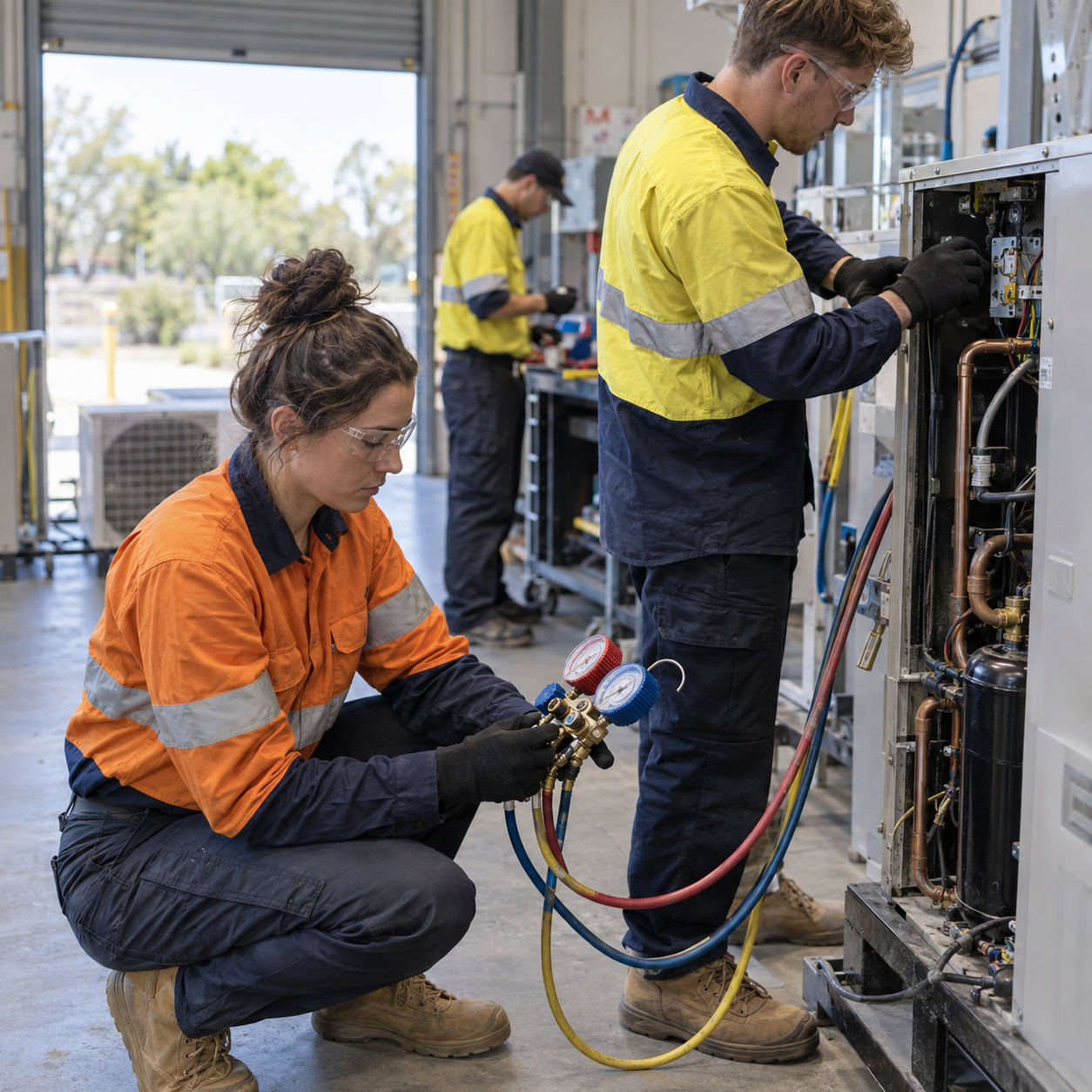
Students in this field need a clear understanding of electrical principles, system components, diagnostics, refrigerant handling, safety and regulatory requirements. They also need workshop time to apply that knowledge properly. Blended delivery makes sense because it allows theory-heavy units to be completed flexibly while reserving in-person sessions for the tasks that genuinely require equipment, supervision and direct assessment.
For working technicians or trade assistants trying to step up, that can dramatically reduce the time between experience and formal recognition. That is one reason providers like Alpha Technical Training have built strong demand in this area. The model matches the reality of the industry – busy workers, urgent skills shortages and a clear commercial upside for becoming qualified sooner.
What results-focused students should look for
If your goal is qualification, licensing and better earning potential, you should be selective. Do not judge a course by the phrase flexible learning alone.
Look at whether the program is nationally recognised, how practical training is scheduled, how progress is tracked and what support exists when you hit a roadblock. Ask who delivers the workshops. Ask how often students attend. Ask what happens after the course if licensing paperwork or next-step compliance gets complicated.
That last part matters more than most people realise. For many students, training is only one stage. The bigger goal is legal work access, better contracts or independent operation. A provider that understands the licensing path can save months of confusion.
You should also ask the uncomfortable question: how many students actually finish? Completion rates say a lot about delivery quality. If a provider cannot keep adults engaged and progressing, the flexibility is not helping.
The trade-offs nobody should pretend away
Blended delivery is powerful, but it is not magic.
You still need discipline. If you repeatedly push study aside, even the best online system will not complete the units for you. You also need to show up ready for practical workshops, because that is where competence gets tested. Students who expect an easy shortcut usually struggle.
There is also a trade-off in learning style. Some people need face-to-face contact every week to stay focused. Others thrive when they can study at night, on weekends or between jobs. The right model depends on how you learn, how you work and what pressures you are balancing.
Then there is the question of speed. Faster is good when it is backed by evidence, support and proper assessment. Faster is risky when it is just a sales line. That is why credibility matters. The training must be accelerated, not flimsy.
Who should seriously consider blended learning trade courses
This pathway tends to suit three groups particularly well.
The first is experienced workers who are already doing trade-related tasks and need the qualification to stop hitting a ceiling. The second is mature-aged career changers who cannot afford apprentice-style earnings for years. The third is ambitious tradies who want a clearer path to licensing, higher rates or running their own operation.
For these students, the question is rarely whether study is worth it. The question is whether there is a way to do it without wrecking cash flow. That is exactly the problem blended training solves when it is delivered properly.
A qualification should move your career forward, not pause it. That is why this model keeps growing. It respects the fact that adult students are not looking for a campus experience. They are looking for a compliant, efficient pathway to better work.
If that sounds like you, do not focus on what feels familiar. Focus on what gets you qualified, licensed and earning sooner – without cutting corners where it counts.