If you’re already doing the work but still getting paid like an offsider, the gap is usually not skill – it’s paperwork, compliance and the right training pathway. That is why so many adults start searching for how to get a trade qualification once they realise experience alone does not give them the licence, pay rate or job access they want.
For a lot of tradies, the old model does not fit real life. A full apprenticeship can be the right move for a school leaver, but if you’re already working, supporting a family or trying to move up fast, spending years on a slow pathway can cost you more than the course itself. Lost earning potential adds up quickly.
How to get a trade qualification in Australia
The short answer is this: you need to complete a nationally recognised qualification through an approved training pathway. The right pathway depends on your experience, the trade you want to work in, and whether you need the qualification for employment, licensing or business ownership.
In practice, most adults take one of three routes. They complete a traditional apprenticeship, enrol in an accelerated blended program, or use Recognition of Prior Learning if they already have strong industry experience. The fastest option is not always the best option for everyone, but the best pathway is usually the one you can actually finish while continuing to earn.
That matters because a qualification is not just a certificate to hang on the wall. In trades like air conditioning and refrigeration, it can be the difference between staying stuck on lower wages and stepping into licensed, higher-value work.
Start with the outcome, not the course
Before you enrol anywhere, get clear on what you need the qualification to do for you. Some people want a formal trade outcome so they can apply for better jobs. Others need it to support a licence application. Some are planning to go out on their own and need a compliant pathway that gets them qualified without stepping away from work.
If you skip this step, you can waste months in the wrong program. A course might sound relevant, but if it does not lead to the qualification or licensing pathway you actually need, it is just expensive delay.
The fastest path depends on your current experience
This is where most people get bad advice. They are told there is one standard process for everyone. There isn’t.
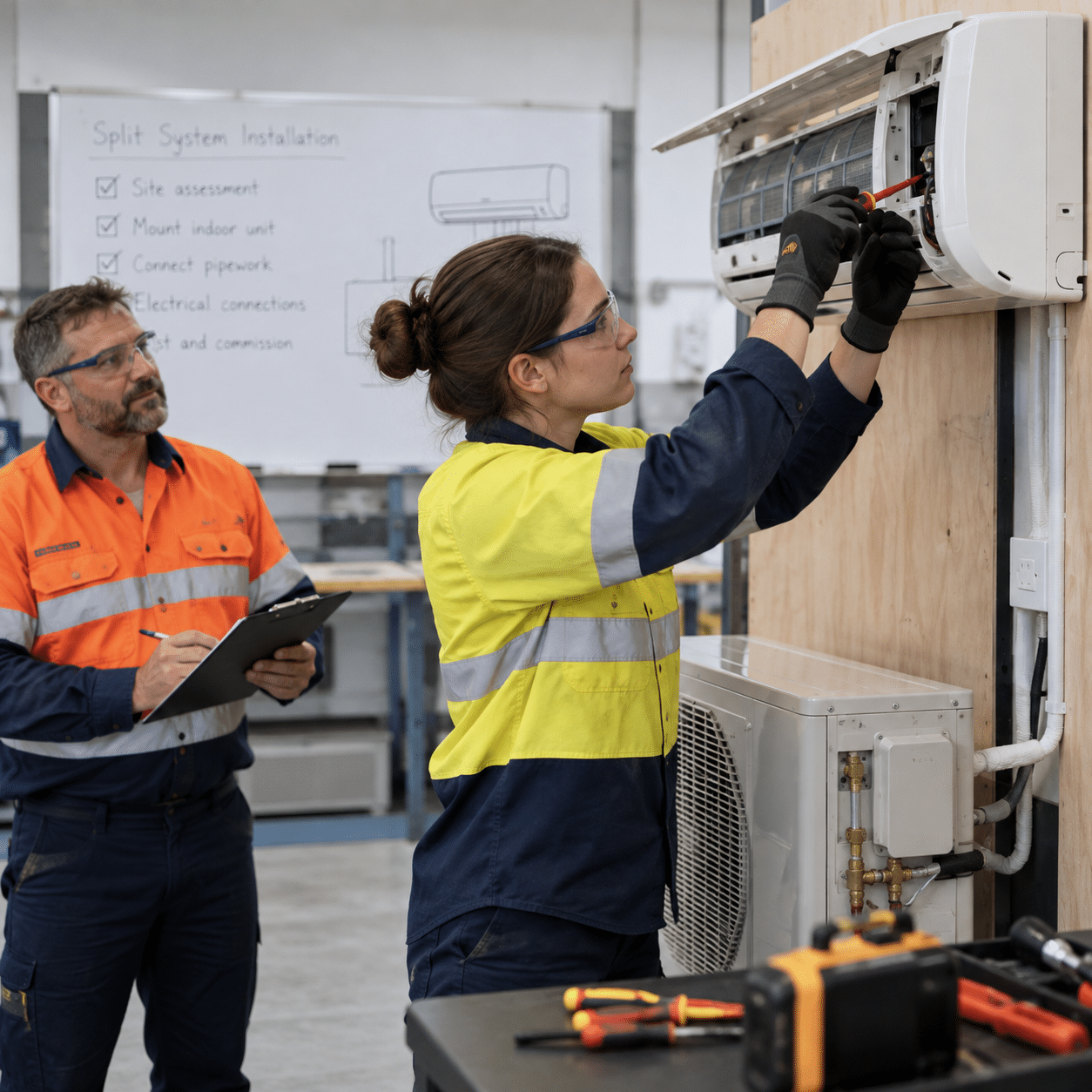
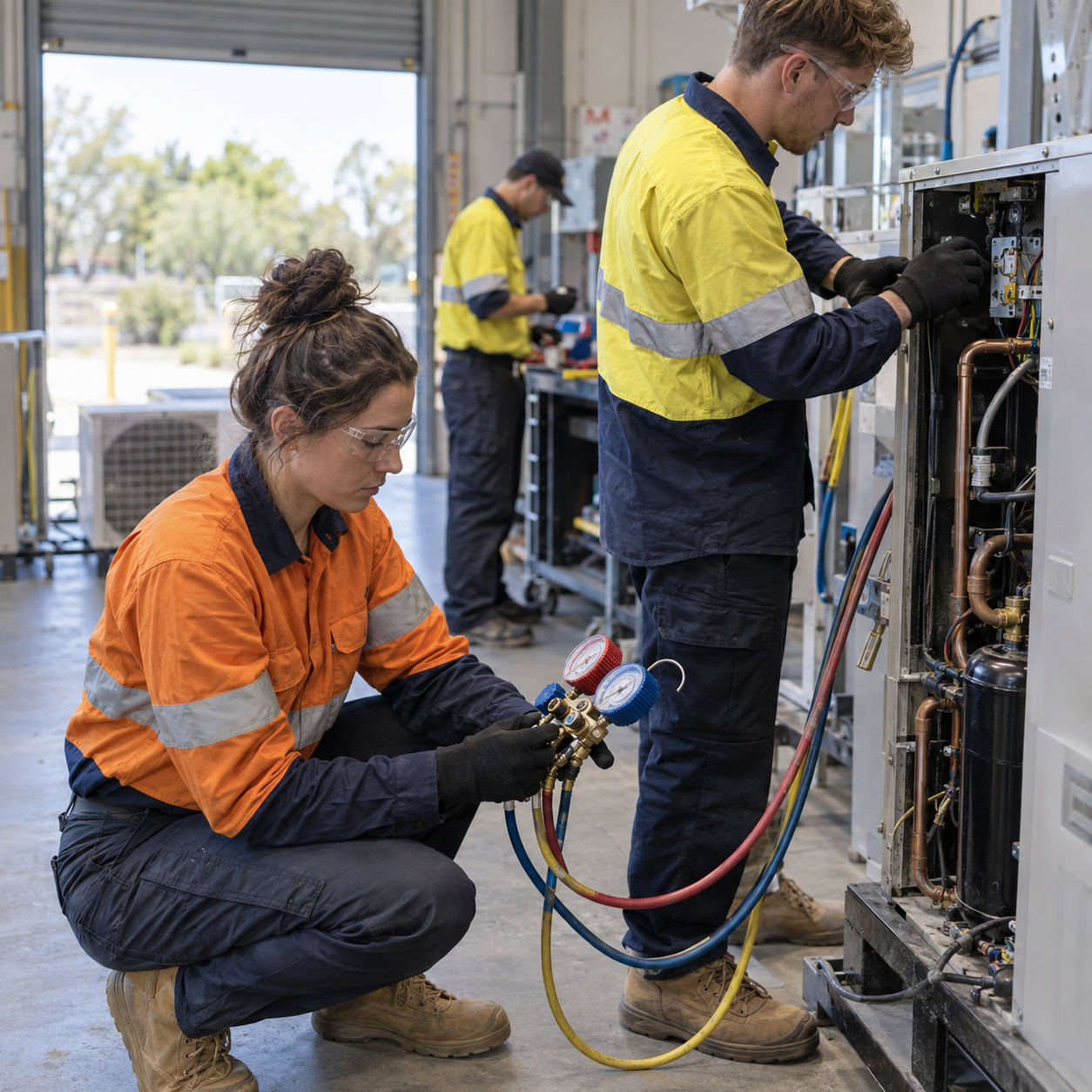
If you have little or no trade experience, a structured training pathway with practical workshop requirements is often the right starting point. You need theory, supervised skill development and evidence that you can perform to the required standard.
If you have been working in the field for years, Recognition of Prior Learning may reduce the time significantly. RPL assesses the skills and knowledge you already have against the qualification requirements. But it is not a shortcut for people who cannot prove competency. Good providers will tell you that upfront.
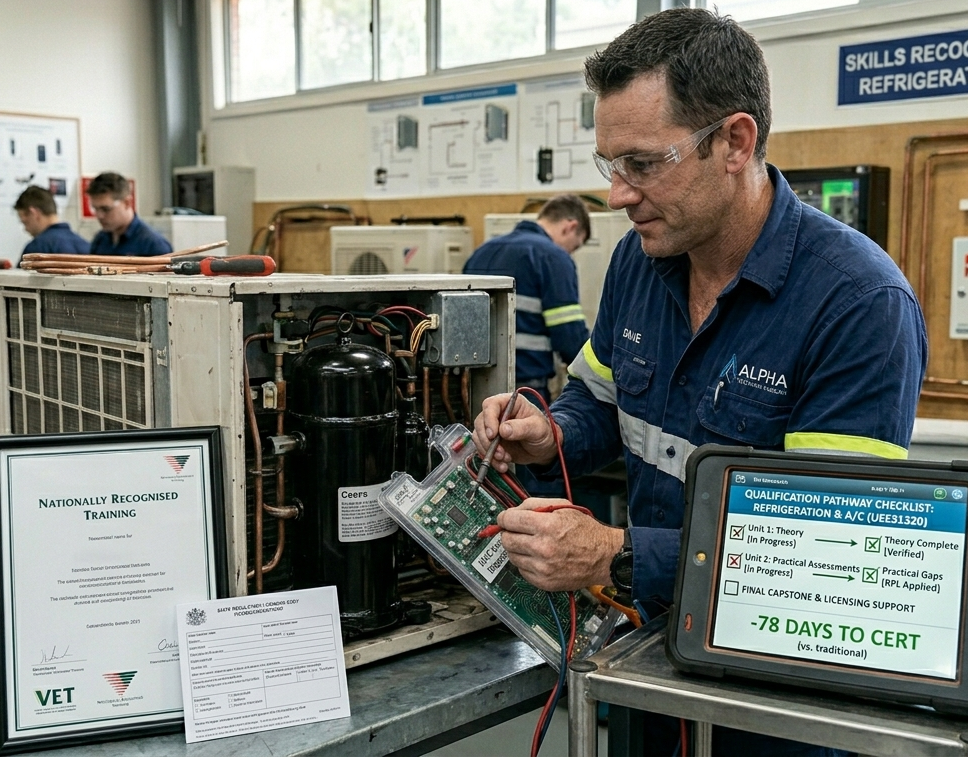
If you are somewhere in the middle – experienced but with gaps – a blended model often makes the most sense. You can complete theory online, attend practical sessions to build and verify hands-on skills, and keep working while progressing through the units.
That is why flexible delivery matters so much for adult learners. Speed comes from fitting training around your life, not forcing your life around training.
What a modern trade qualification pathway looks like
The outdated image is a classroom, fixed timetables and years of waiting. For working adults, that model can be a career killer.
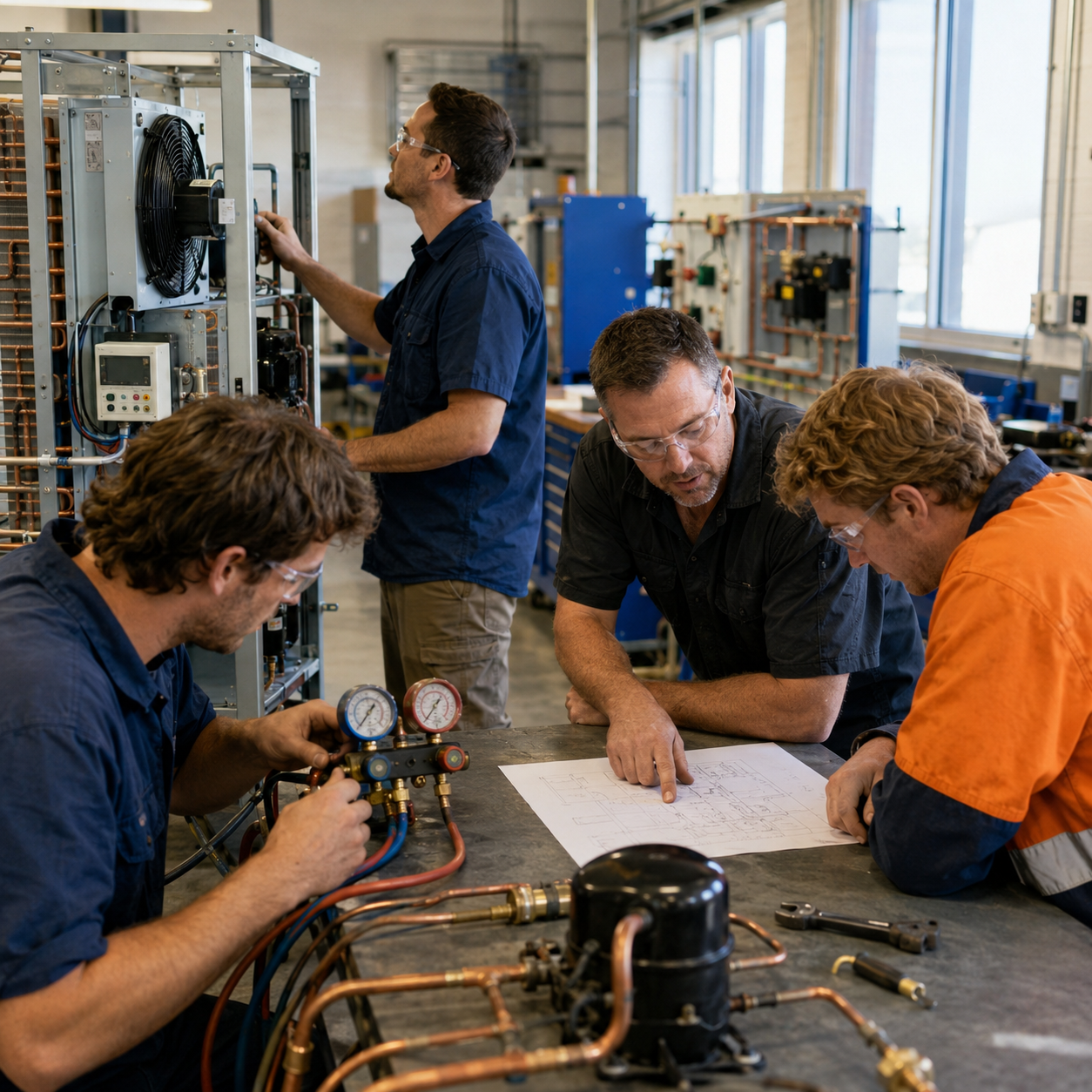
A stronger option is blended delivery. You complete theory at your own pace through an LMS, track progress unit by unit, and attend scheduled practical workshops run by trainers who still work in the industry. This gives you structure without taking away your ability to earn a living.
That model also solves a common problem: people can understand the work on site, but struggle with the paperwork and evidence requirements attached to nationally recognised training. A good provider does not leave you to figure that out alone. They help you stay compliant, complete assessments properly and keep moving.
The payoff is obvious. You finish sooner, avoid long breaks from work and get to the wage uplift faster.
How to choose the right provider
Not all training is equal, and this is where people lose time and money. If you are serious about how to get a trade qualification, do not just compare fees. Compare outcomes.
Look for nationally recognised training, clear unit requirements, practical workshop access and support that extends beyond enrolment. Ask how progress is tracked. Ask what happens if you fall behind. Ask whether trainers are active industry professionals or just classroom instructors.
You should also ask hard questions about licensing support. In some trades, the qualification is only one part of the bigger picture. If your end goal involves a licence, you need to know what comes next and whether the provider can guide you through that process.
A provider worth trusting will be direct about timelines, evidence, attendance requirements and what depends on your own effort. Fast-tracked does not mean watered down. It means better delivery, better support and fewer wasted steps.
Why adults avoid the traditional route
The traditional route still works for some people. But for an adult already in the workforce, it often creates three problems.
First, it is slow. Years spent on a lower wage bracket can cost far more than investing in a streamlined qualification pathway.
Second, it is rigid. Fixed schedules do not work well when you have a mortgage, kids, shift work or site responsibilities.
Third, it can be financially backwards. If a faster, compliant option gets you qualified and earning more sooner, the return on investment is usually stronger.
That is exactly why providers like Alpha Technical Training focus on accelerated, flexible delivery. The goal is simple: help capable adults get qualified without putting their income on hold.
What you will need to prove
A trade qualification is based on competency, not wishful thinking. You will need to show that you can meet the standard in both theory and practical application.
That usually includes written assessments, practical demonstrations, workplace evidence and completion of required units. If you are seeking RPL, you may need references, job histories, photos, videos, site documents or other proof of your experience.
This is where support makes a real difference. Plenty of experienced workers have the skills but not the documentation. A strong training team helps you gather the right evidence instead of letting the process drag out for months.
Common mistakes that slow people down
The biggest mistake is waiting too long. Plenty of tradies spend years saying they will sort out the qualification later, while missing jobs, licence opportunities and higher rates in the meantime.
The second mistake is choosing based on the cheapest price. Cheap training can become very expensive if support is poor, workshop access is limited or the course does not align with your actual goal.
The third mistake is overestimating RPL. Experience helps, but it has to match the units and be backed by evidence. If there are gaps, the smartest move is usually a structured pathway that fills them fast.
The real value of getting qualified
A trade qualification gives you more than compliance. It gives you leverage.
You can apply for roles that are closed to unqualified workers. You can improve your earning potential. You can move closer to licensing. In many cases, you gain the credibility to take on more specialised work or build toward running your own operation.
That matters even more in technical trades such as air conditioning and refrigeration, where qualifications and licensing pathways are tied directly to the kind of work you can legally perform. If you want better jobs and better money, being almost qualified is not enough.
Your next move matters more than perfect timing
There is no perfect moment to start. Work will stay busy, bills will keep coming, and family commitments will not disappear. The tradies who move ahead are usually not the ones with the most spare time. They are the ones who choose a pathway that fits real life and stick with it.
If you’re serious about earning more, working legally at a higher level and building a stronger future in the trade, stop treating qualification as something for later. The right training pathway can compress the timeline, protect your income and get you where you want to go much sooner.