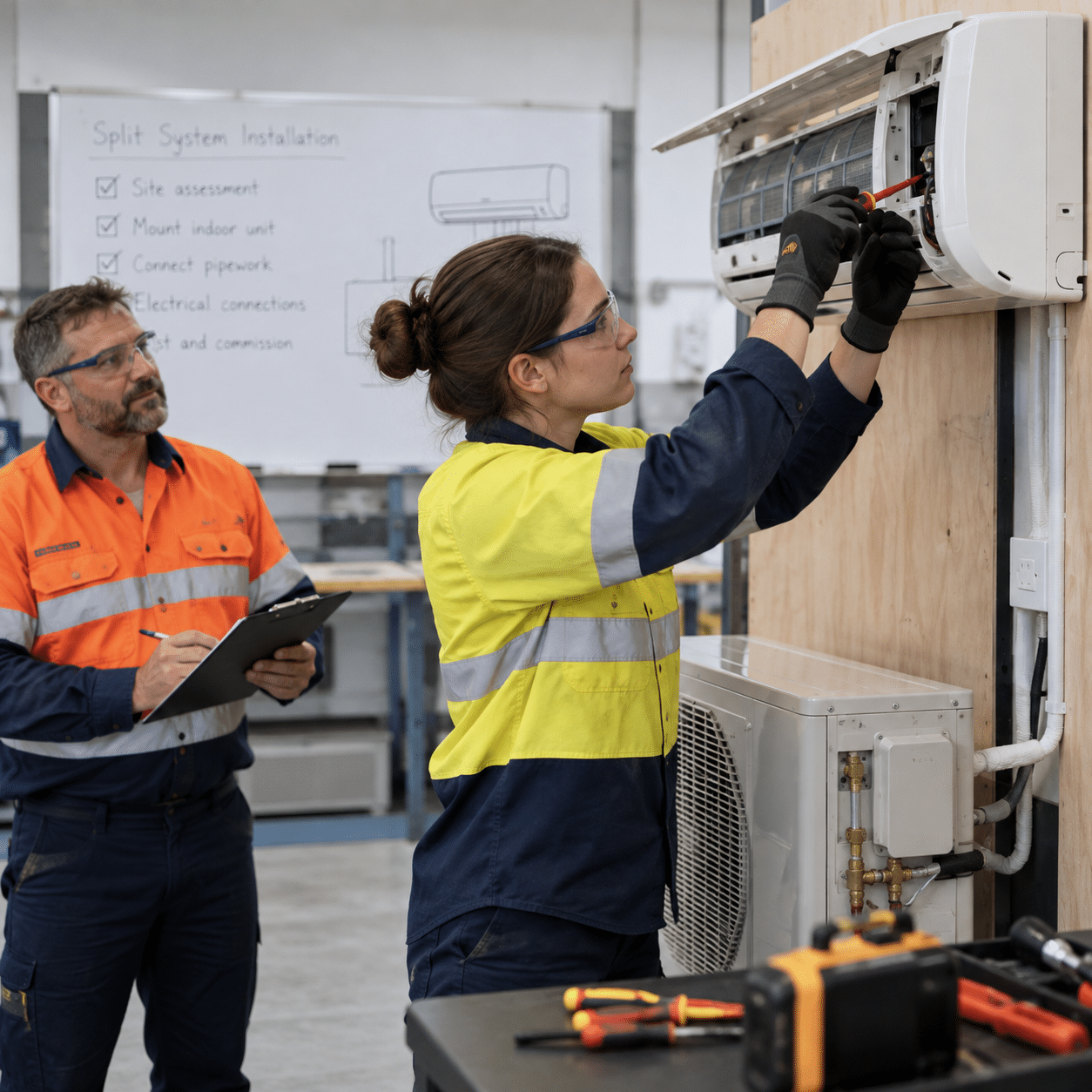
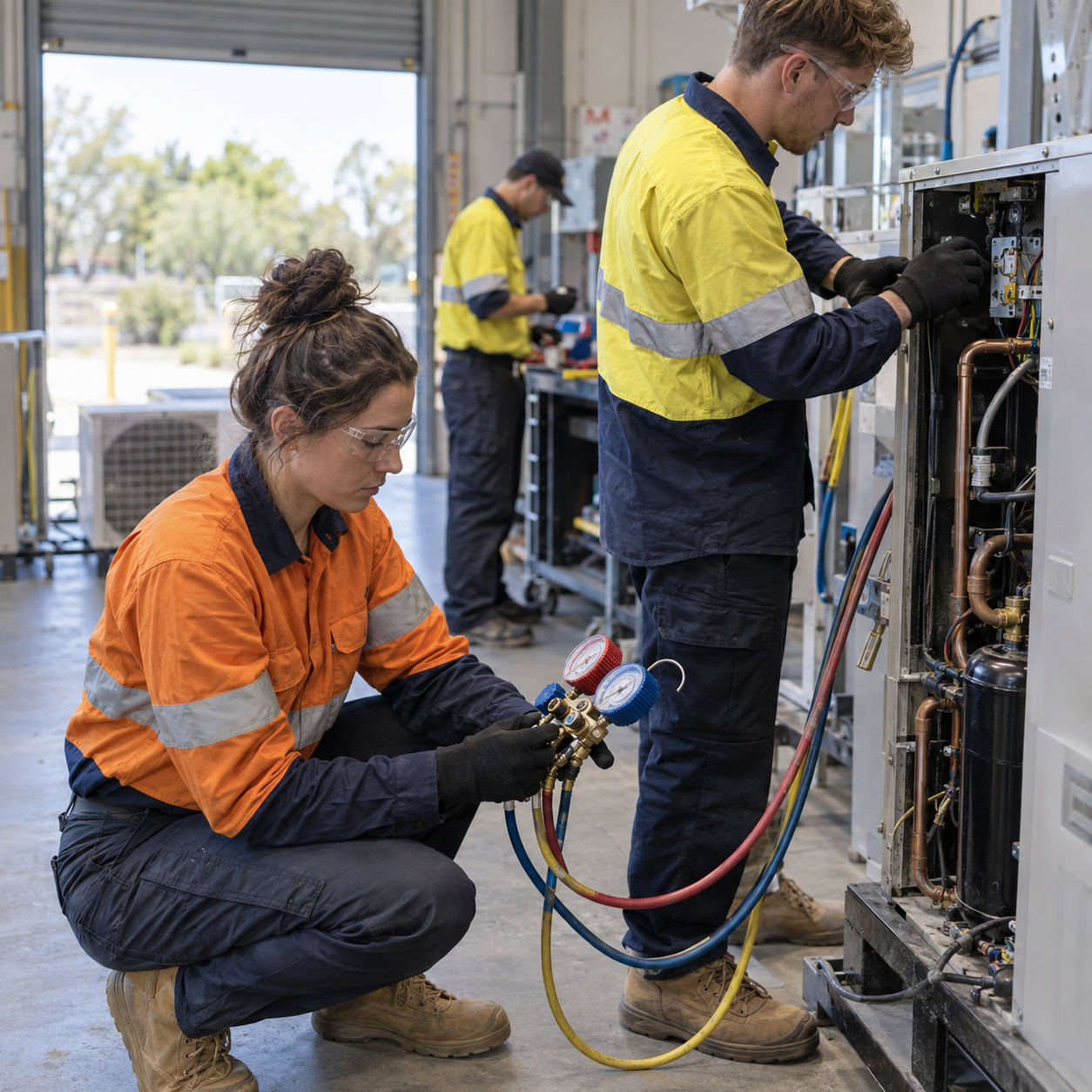
If you are already doing the work but still getting paid like an offsider, fast track trade qualifications can change the equation quickly. For a lot of Australian tradies, the real problem is not capability – it is being stuck without the formal ticket that opens better jobs, higher rates and a pathway to licensing.
That gap costs money every week. It can also limit who can legally sign off work, tender for bigger projects or move into specialist areas such as air conditioning and refrigeration. When you have bills, family commitments and full-time work, going back to a traditional training model often feels unrealistic. That is exactly why accelerated pathways have gained so much traction.
What fast track trade qualifications actually mean
Fast track trade qualifications are not a shortcut around standards. They are an accelerated way to complete a nationally recognised qualification using a structure built for adults who are already working, already capable, or already gaining relevant industry exposure.
The key difference is delivery. Instead of stretching learning over years in a fixed apprenticeship model, a fast-tracked program compresses the timeline through focused theory, structured assessment, practical workshops and tighter support. You still complete the accredited units. You still need to demonstrate competency. You just do it in a way that respects the fact that you are not starting from zero.
That matters because many adult learners are not school leavers. They are mature-age workers, trade assistants, technicians, installers or people changing direction from related industries. They need a pathway that matches real life, not one designed around a first-year apprentice timetable.
Why more tradies are choosing a faster pathway
The biggest driver is return on investment. The longer you stay unqualified, the longer you stay capped.
A formal qualification can improve your earning capacity, expand the type of work you can take on and move you closer to licensing outcomes. In sectors like refrigeration and air conditioning, qualification is not just about a certificate on the wall. It is tied to compliance, safety and legal work rights. If you want to progress, the credential is not optional.
Speed matters here, but flexibility matters just as much. Most adult students cannot afford to step away from income for study. They need to keep working while they train. A blended model – online theory, practical intensives and structured progress tracking – makes that possible.
There is also a confidence factor. A lot of capable workers delay training because they assume the process will be confusing, slow or built around classroom time they simply do not have. When the pathway is organised properly, with clear milestones and support, the barrier drops.
Fast track trade qualifications vs a traditional apprenticeship
This is where the decision becomes practical.
A traditional apprenticeship can still be the right option for younger entrants with no experience, stable employer support and the time to commit to a multi-year pathway. It provides broad exposure and a familiar framework. But it is not always the best fit for adults who are already on the tools.
Fast track trade qualifications are better suited to people who need momentum. If you have relevant work history, transferable skills or current industry involvement, spending years in a slow-moving structure can be financially inefficient. You may be ready for a model that recognises your experience and moves you through the same accredited curriculum faster.
The trade-off is that accelerated training demands commitment. You need to stay organised, keep up with online theory and show up prepared for practical training. A faster timeline is a major advantage, but only if you are ready to work to it.
Who gets the most value from an accelerated pathway
Not everyone needs the same training model. The strongest candidates for fast-tracked study are usually people who already have a reason to move quickly.
That includes experienced workers who have learnt on the job but never formalised their skills, trade assistants who want to move into qualified roles, and mature-age career changers who cannot justify apprentice wages for years. It also includes people in specialised sectors where qualification directly improves job access and income.
Air conditioning and refrigeration is a strong example. It is a field where technical knowledge, compliance and licensing requirements matter from day one. If you want to work legally, competitively and at a higher level, a structured accelerated qualification can make the difference between staying stuck and moving forward.
What a quality fast-track program should include
This is where people need to be careful. Faster is only useful if the training is legitimate, compliant and supported properly.
A credible fast-track model should deliver nationally recognised training, not watered-down content. It should include clear assessment requirements, practical skills development and real progress visibility. You should know what units you are completing, what evidence is required and how your competency is being measured.
The best providers also build around how adults actually study. That usually means self-paced online theory through an LMS, practical workshop blocks, trainer access and a clear support system that keeps students moving. If the provider cannot explain the learning structure, compliance framework and practical components clearly, that is a warning sign.
Another factor is post-training support. In some trades, the qualification is one part of the journey and licensing is the next. Guidance on that process can save months of confusion.
Why flexibility is not a bonus – it is the whole point
For working tradies, flexibility is not about convenience. It is what makes training possible at all.
A rigid delivery model often fails because it ignores how adult students live. They are managing jobs, overtime, travel, children, mortgages and everything else that comes with real responsibility. If training only works for people with empty calendars, it does not work for most of the market.
That is why blended delivery has become so effective. You handle theory when it suits you, track your progress properly, then complete practical workshop requirements in a structured setting. Done well, this gives you control without losing accountability.
Alpha Technical Training has built its model around exactly that reality, especially for tradies entering air conditioning and refrigeration. The goal is simple – reduce wasted time, maintain compliance and help students reach qualification and licensing outcomes sooner.
The financial case for moving sooner
Most people look at course fees first. That is understandable, but it is only part of the calculation.
The more useful question is what delay is costing you. If qualification helps you move into higher-paid work, broaden your employability or start working towards licensing, every extra month without it has a financial impact. Lost earning potential adds up fast.
For many adult learners, a payment plan on an accelerated course makes more sense than dragging out low wages for years. You are not just buying training. You are buying time back, income progression and a faster path to work you can legally and confidently perform.
Of course, the exact return depends on your trade, location, current experience and goals. But the principle is consistent – if a qualification removes a bottleneck in your career, speed has value.
How to tell if you are ready for fast track trade qualifications
The right time is usually when you are already feeling the cost of staying where you are.
If you are turning down opportunities because you are not qualified, if your pay has plateaued, or if you are relying on others to supervise or sign off work, that is a sign. If you know you have the ability but not the paper trail, that is another one.
You should also be honest about your capacity. Accelerated study suits people who want a clear outcome and are prepared to stay accountable. You do not need unlimited spare time, but you do need intent. The people who finish fastest are usually the ones with a strong reason for doing it.
That might be better money, job security, legal compliance or a plan to work for yourself. Whatever the driver, clarity helps.
The real question is not whether faster is possible
The real question is whether staying unqualified still makes sense for you. If the answer is no, then the value of a faster, flexible and compliant pathway becomes obvious pretty quickly.
A good training model should not force you to choose between earning an income and getting qualified. It should help you do both, with structure that respects your time and standards that hold up in the real world. If you are serious about moving from capable to certified, the smartest next step is the one that gets you there sooner without cutting corners.