The day you complete a Certificate III, you have more than a piece of paper. You have proof of practical capability that can change the jobs you can pursue, the responsibility you can take on and the income ceiling you are prepared to accept. Career progression after Cert III is not automatic, though. The tradies who move ahead fastest make a deliberate decision: use the qualification as a platform, not a finish line.
For electricians, refrigeration and air conditioning technicians, and construction workers, the next move should match where you want your career to lead. That may mean becoming the go-to specialist on complex systems, supervising a crew, moving into project work or building the skills to run a business. The strongest pathway is rarely about doing more study for the sake of it. It is about choosing training and experience that create better work opportunities.
A Cert III changes what you can aim for
Before a Cert III, many workers are limited to assisting, carrying out basic tasks under direction or relying on an employer to define their progression. Once you hold a nationally recognised trade qualification, the conversation changes. You can put yourself forward for more technical roles, demonstrate verified competence to employers and take greater ownership of your career direction.
That does not mean every qualified worker immediately steps into a senior role. Experience still matters. Employers look for people who can diagnose faults calmly, work safely, communicate with clients and keep a job moving when conditions change. But a Cert III removes a major barrier. It gives your experience structure and makes your capability easier to recognise.
The difference can be substantial. An experienced but unqualified worker may have years on the tools but still struggle to access the same roles as a qualified peer. A Cert III helps turn practical knowledge into a recognised career asset.
Choose the progression route that suits your end goal
There is no single best next step after a Certificate III. The right decision depends on whether you want deeper technical work, people leadership, project responsibility or business ownership. Being clear on that early prevents wasted time and training that does not improve your position.
Become a specialist, not just another pair of hands
Specialisation is often the fastest route to becoming more valuable on site. In electrical, refrigeration and air conditioning work, employers regularly need technicians who can confidently handle more advanced equipment, controls and fault-finding. Complex systems create higher-value work because fewer people can diagnose and resolve issues without repeated call-backs.
For example, a refrigeration mechanic who builds capability in commercial systems, controls or VRV technology can position themselves beyond routine residential work. An electrician who becomes known for accurate fault-finding, testing or industrial work can become the person a supervisor calls when the job is difficult.
Specialist training works when it is connected to the work available in your market. If your employer services commercial sites, targeted commercial skills can make you more useful immediately. If you want to move into a different sector, choose training that gives you credible practical exposure, not just theory completed online.
Move into leading hands and supervision
Technical ability gets you noticed. Reliability and leadership get you promoted.
A leading hand or supervisor needs to do more than complete their own tasks. They need to plan the day, allocate work, check quality, communicate with builders and clients, and support less experienced workers without losing production time. That step up suits tradies who enjoy solving problems across the whole job rather than staying focused on one task.
Start building those habits before a formal title appears. Take ownership of toolboxes, organise materials, help an apprentice understand the reason behind a task and give your supervisor accurate updates before they have to chase you. These actions show that you can reduce pressure on the people above you.
There is a trade-off. Supervisory roles can mean less time on the tools and more responsibility for schedules, workmanship and people. For some tradies, that is exactly the progression they want. For others, technical specialisation delivers a better balance of satisfaction and earning potential.
Build a pathway towards project and operations roles
Large jobs need people who understand how work is installed as well as how it is planned. That makes experienced, qualified tradies valuable in project coordination, estimating, procurement, site management and operations.
This move is particularly strong for workers who can read plans, think ahead and communicate clearly with different trades. You do not need to become an office person overnight. Start by learning how quotes are put together, why material choices affect margins, how programme delays happen and what information needs to be documented on site.
The best project people have credibility because they understand real site conditions. They know that a plan can look perfect until access is restricted, another trade is behind schedule or a delivery misses its window. Your Cert III and field experience can give you a practical advantage that cannot be copied from a textbook.
Prepare for business ownership with clear eyes
Many tradies complete a Cert III because they eventually want more independence. Running a business can create greater control over the work you take on, your team and your income. It also brings administration, cash flow pressure, customer expectations and the responsibility of keeping work flowing.
The smart approach is to build business capability while you are still employed or contracting. Learn how profitable jobs are scoped, how variations are recorded, how client communication prevents disputes and how productive teams are managed. Pay attention to the parts of a job that happen before and after the tools come out.
Business ownership is not the only definition of success. A senior technician or site supervisor in a strong company can earn well while avoiding many of the risks of operating a business. The right choice depends on your appetite for responsibility, not the pressure to follow someone else’s path.
Turn your qualification into a stronger pay conversation
A Cert III gives you a reason to reassess your value, but a pay rise is strongest when it is tied to evidence. Rather than simply saying you are now qualified, show how you have improved the business outcome.
Keep a record of the jobs you complete, the systems you have worked on, positive client feedback and situations where you resolved a fault efficiently. If you have reduced rework, trained junior staff, handled urgent jobs or taken responsibility for higher-value work, make that visible. Managers are more likely to back an increase or promotion when they can see the return.
Timing matters too. Raise the conversation after you have delivered results, not only when you have received your certificate. Qualification plus proven performance is far more compelling than qualification alone.
Make experience work harder for you
Career progression after Cert III depends on what you do repeatedly after training ends. The workers who advance are not always the loudest. They are the ones whose supervisors trust with difficult jobs, demanding clients and tasks that cannot be redone.
That trust is built through consistency. Turn up prepared. Ask better questions. Finish documentation properly. Keep learning from faults instead of hiding them. When a job goes wrong, focus on the fix and the lesson rather than the blame. These are practical behaviours, but they separate a worker who stays stuck from one who becomes indispensable.
It also pays to be selective about employers. A business that only gives you the same basic work every week may offer stability, but it can slow your development. Look for workplaces where experienced people are willing to teach, where quality is expected and where there is a visible step up for people who perform.
Training should fit around work, not stop it
For working tradies, the biggest barrier to progression is often not motivation. It is time. Taking months away from paid work is unrealistic when you have rent, a mortgage, family commitments and a ute to keep on the road.
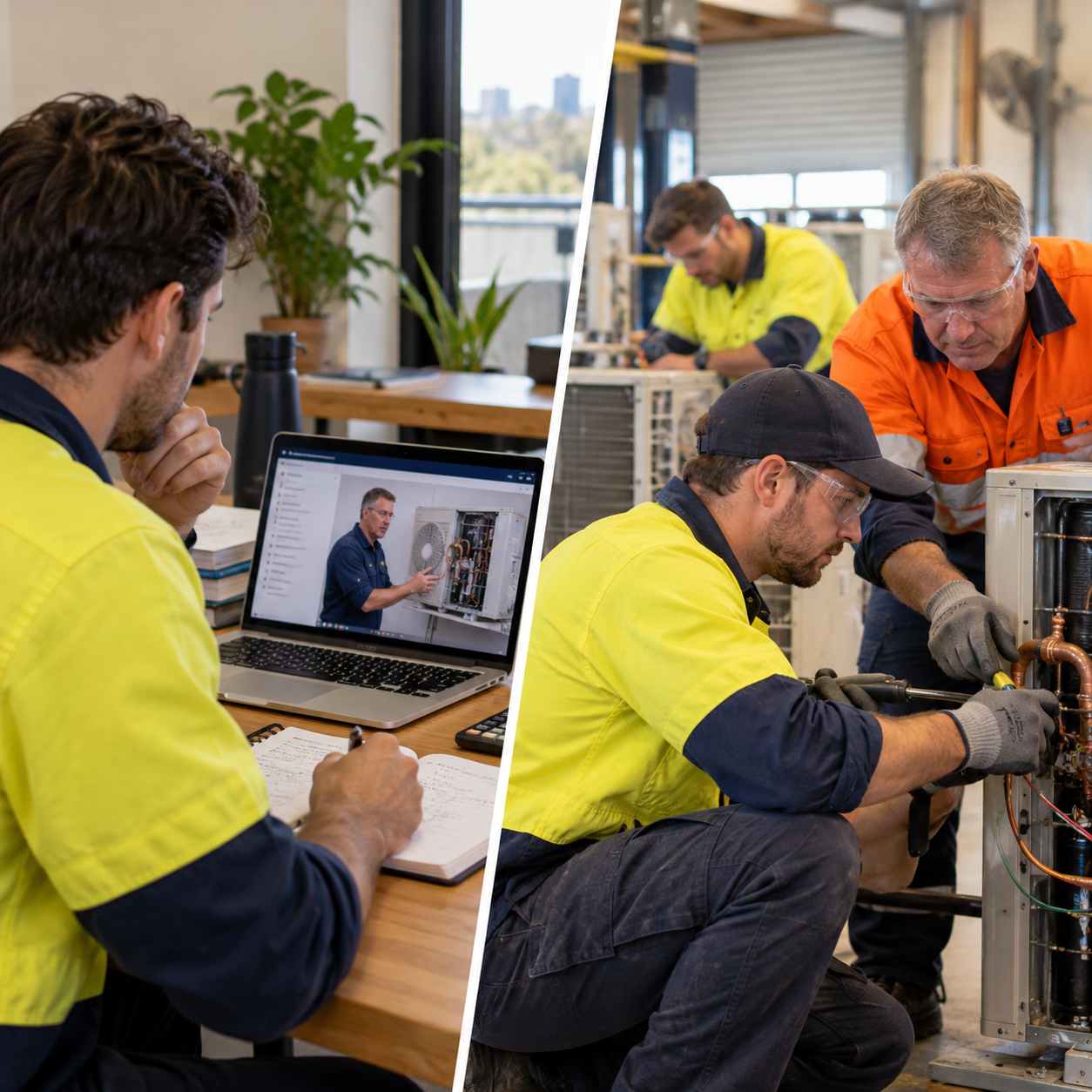
That is why flexible, practical training matters. The right program lets you build recognised skills while continuing to work, with structured theory, clear assessment requirements and hands-on support that reflects real industry conditions. It should move you forward without dragging you back into a classroom routine that does not suit adult workers.
Alpha Technical Training supports trade professionals through blended learning and practical workshops led by active industry people. The focus is straightforward: help capable workers turn effort and experience into meaningful career momentum.
Your Cert III is evidence that you can do the work. What happens next comes down to the standard you set, the skills you add and the opportunities you are prepared to pursue. Choose a direction, get visible experience in that direction and keep putting yourself in reach of the next level.