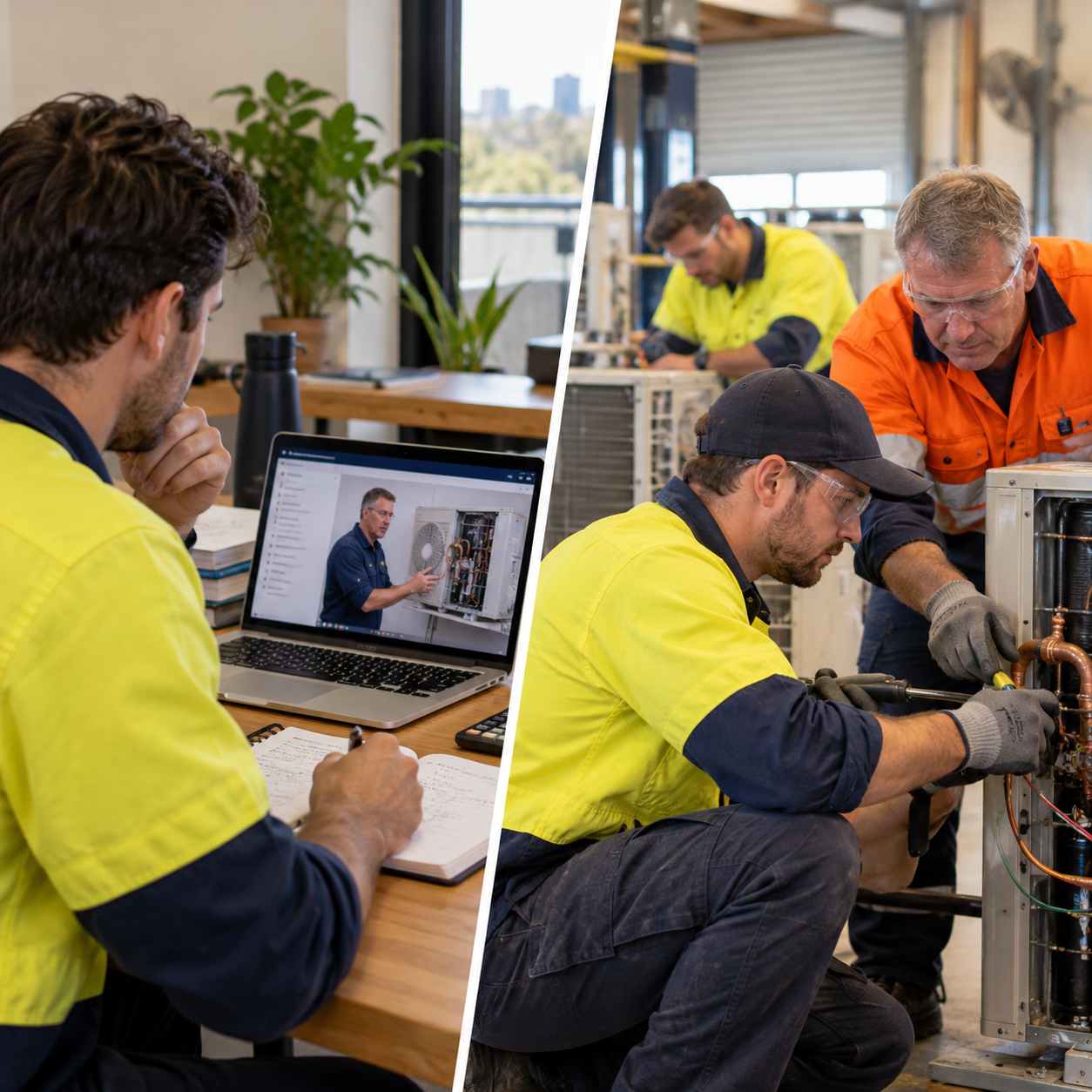
A refrigeration business is not built on tools alone. It is built on the confidence to diagnose faults properly, communicate clearly with customers and finish work to a standard that earns repeat calls. If you want to start a refrigeration business in Australia, the fastest path is not taking every job you can find. It is choosing a clear market, building recognised technical capability and setting up systems that let you deliver reliable work from day one.
The opportunity is real. Commercial clients cannot leave a failed cool room, display cabinet or freezer until next week. Food businesses, medical facilities, hospitality venues and retailers need technicians who show up, solve the problem and protect their operation. That urgency can create strong demand, but it also exposes poor preparation quickly. A business that guesses at faults, underquotes jobs or turns up without the right process burns trust and margin at the same time.
Start a refrigeration business in Australia with a clear market
Trying to serve every customer is a common early mistake. Domestic split systems, commercial refrigeration, supermarket equipment, cool rooms and specialised industrial work each require different equipment knowledge, response times and customer expectations. The right starting point depends on your current experience, practical exposure and the type of work you can confidently complete.
Commercial refrigeration can offer repeat work and ongoing relationships with businesses, but customers often expect prompt attendance and dependable communication. Residential work may be easier to market locally, although demand can be more seasonal and competitive. Cool rooms and hospitality equipment can create valuable service opportunities, but downtime matters, so your diagnostic process must be sharp.
Choose a starting lane, then become known for it. A cafe owner does not want a general promise that you “do refrigeration”. They want to know you understand the impact of a failed underbench fridge during service and can explain the next step without jargon. Specific positioning makes marketing easier and gives customers a reason to call you instead of the next name in a search result.
Build capability before you chase volume
More enquiries are not always better. Taking on jobs beyond your current capability can lead to rework, unpaid time and damage to your reputation. Early growth should be controlled. Take work that fits your skill level, document recurring faults and use each completed job to strengthen your processes.
That means having a consistent method for fault-finding, recording unit details, noting parts required and confirming what the customer has approved. The technician who works methodically will usually outperform the technician who appears busy but cannot explain where the profit went.
Qualifications create a stronger business ceiling
Your technical standard becomes your business standard. Customers may not know the difference between a pressure test and a performance check, but they recognise the result: equipment that works properly, clear explanations and fewer return visits. Recognised training gives you the structured knowledge to make better decisions under pressure rather than relying on shortcuts or guesswork.
For people building a career in air conditioning and refrigeration, the Certificate III in Air Conditioning and Refrigeration UEE32225 is a practical foundation for developing broad, job-ready trade capability. It supports the core technical understanding needed to work across refrigeration and air conditioning environments, from installation and maintenance through to testing and fault-finding.
For experienced workers, formalising existing skills can be the move that turns years on the tools into a clearer path towards independence. It is not about collecting a certificate for the wall. It is about being able to price work with confidence, identify risks earlier and step into more capable, better-paying work without being held back by gaps in knowledge.
Alpha Technical Training delivers flexible, blended learning that combines self-paced theory with structured practical workshops led by active industry professionals. For working tradies, that matters. You need a pathway that fits around job sites, family commitments and income, while still requiring genuine practical competence.
Set up the operating system, not just the business name
A professional refrigeration business needs more than a ute, a logo and a mobile number. It needs a simple operating system that prevents missed details when the day gets busy. Build this before your diary fills up, because systems are far easier to establish at ten jobs a month than at fifty.
At a minimum, create repeatable processes for these four areas:
- Booking and job intake, including equipment type, fault symptoms, site contact and access details.
- Quoting and approvals, so the scope of work, parts and customer decisions are recorded before work progresses.
- Job records, including photos, equipment information, work completed and future recommendations.
- Invoicing and follow-up, so completed work turns into timely payment and future service opportunities.
These are not office tasks that sit outside the trade. They protect your time on the tools. Good job records reduce confusion when a customer calls back months later. Clear approvals reduce disputes. Accurate invoicing shows you which work is genuinely profitable and which jobs are quietly costing you money.
Keep your administration lean at the start. Use a reliable scheduling and invoicing process, maintain clean records and review your work each week. The goal is not to build a complicated office. The goal is to make sure customer service does not fall apart when you are under a bench, on a roof or travelling between sites.
Win work by being easier to trust
Most refrigeration customers are not looking for clever marketing. They are looking for certainty. They want to know when you will arrive, whether you understand the problem and what happens next. That means your best sales tool is often a clear, professional response.
Answer enquiries promptly. Ask useful questions before attending. Give realistic arrival windows rather than vague promises. After inspecting the equipment, explain the fault in plain language and set out the practical options. Customers remember how you made a stressful breakdown feel manageable.
Your first jobs should also build proof. Ask satisfied customers for honest feedback, take clear before-and-after photos where appropriate and keep a record of successful outcomes. Over time, this evidence supports word-of-mouth referrals, which are particularly valuable in hospitality, retail and local commercial networks.
Partnerships can help too. Builders, electricians, kitchen suppliers, property managers and food-service businesses often know who needs dependable refrigeration support. Do not approach them with a generic pitch. Be specific about the work you handle, the areas you service and how you communicate when a job is urgent.
Protect your margin from the beginning
A full calendar does not guarantee a healthy business. New operators often underestimate travel, diagnosis time, consumables, callbacks, admin and time spent sourcing parts. If you only think about the hours spent physically repairing equipment, you will understate the real cost of the job.
Track each job from enquiry to payment. Review how long it took, what materials were used, whether the scope changed and whether you would take the same job again. This is where profitable businesses separate themselves from busy ones. You begin to see which clients value quality, which job types create repeat work and where your processes need tightening.
Do not build your reputation on being the cheapest option. Build it on turning up prepared, working safely, communicating clearly and leaving customers with a solution they understand. Price pressure will always exist, especially in crowded markets. Reliability is what gives your business staying power.
Start small, but start with standards
You do not need a large team or a warehouse to begin. You need a defined service offer, credible technical capability, practical systems and the discipline to improve after every job. Start with the work you can complete well, build relationships with customers who value dependable service and expand only when your processes can support it.
The refrigeration businesses that last are rarely built by the person who rushed in first. They are built by the tradie who invested in their capability, treated every job record as valuable and made reliability their competitive advantage.