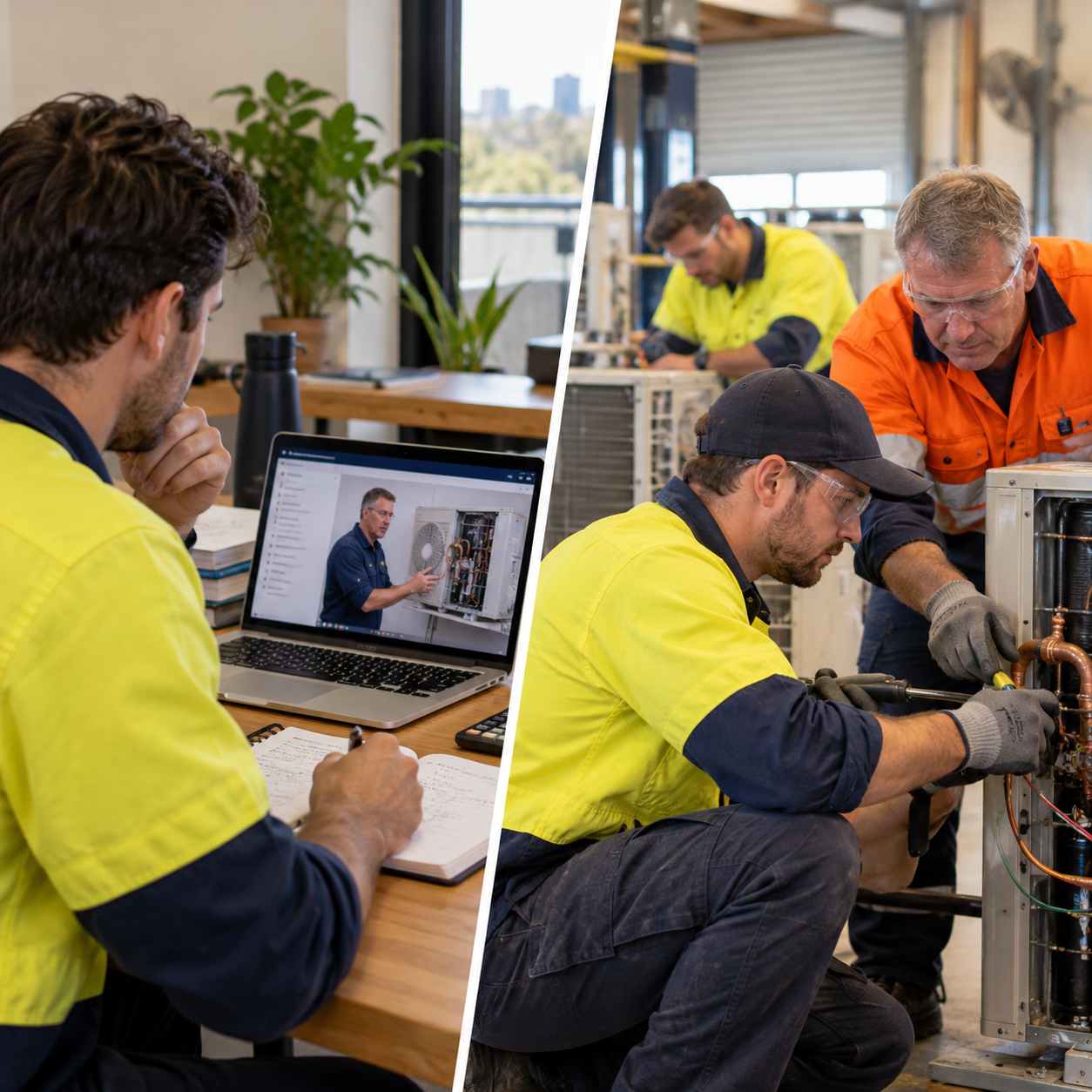
The practical assessment is where experience has to show up on demand. You may have done the job hundreds of times at work, but assessment conditions are different: every step matters, safety is visible, and an assessor needs clear evidence that you can complete the task to the required standard without being carried by a mate, supervisor or routine.
To prepare for practical assessments properly, stop treating the workshop as a final hurdle. Treat it as the moment you prove you are ready to perform safely, methodically and independently. The strongest candidates do not rely on luck or memory alone. They rehearse the process, close their knowledge gaps and learn how to stay composed when something does not go to plan.
Know what the assessor needs to see
A practical assessment is not simply about getting equipment running or finishing a job that looks tidy. The assessor is observing how you work from start to finish. That includes preparation, hazard control, tool selection, testing, communication, fault-finding, workmanship and final checks.
This is why experienced workers can still stumble. On site, you may know the shortcut that saves ten minutes. In an assessment, a skipped check can remove the evidence needed to demonstrate competency. The goal is not to work slowly. It is to work in a deliberate sequence that makes your decisions easy to follow.
Before the day, read the task instructions and assessment criteria carefully. Identify what you must physically do, what you may need to explain, and what documents or calculations must be completed. If anything is unclear, raise it before the assessment rather than making assumptions on the day.
Turn the task into a repeatable sequence
Break the job into stages you can run through in the same order every time: review the task, inspect the work area, identify hazards, select and check tools, complete the work, test the result, rectify any issues, and leave the area safe and clean.
That sequence will vary between electrical, refrigeration, air conditioning and construction tasks, but the principle stays the same. A repeatable routine reduces the chance of missing a critical step when you are under pressure. It also prevents the common mistake of rushing into the hands-on work before you have confirmed the requirements.
Write your own short process map in plain language. Do not try to memorise a textbook paragraph. Use prompts that reflect how you actually work: isolate, verify, inspect, measure, complete, test, record, clean up. The right words are the ones that trigger the right action.
Practise the parts that cost people marks
Most people practise the task they enjoy. That is understandable, but it is not the fastest route to a pass. The better approach is to focus on the parts where you hesitate, second-guess yourself or rely on someone else to check your work.
For a fault-finding task, that may mean interpreting readings and explaining what they indicate rather than jumping straight to replacing a component. For an installation task, it may mean measuring accurately, selecting the correct materials and checking the finished work against the specification. For a refrigeration or air conditioning assessment, it may mean following the test procedure in the correct order and recording results clearly.
Practical competence is built through repetitions with feedback. Do the task once, identify where the sequence broke down, then do it again correctly. One focused hour on a weak point is worth more than several hours repeating work you can already complete without thinking.
Use realistic conditions where possible. Set up your tools as you would in the workshop. Work from the instructions rather than memory alone. Time yourself occasionally, but do not chase speed at the expense of safe, accurate work. A fast result that requires rework is not efficient.
Build safety into every movement
Assessors do not separate safety from technical skill. Safe work is technical skill. Your preparation should show that you can identify risks before they become incidents, use equipment correctly and maintain control of the work area throughout the task.
Avoid treating safety checks as words you say at the beginning and forget five minutes later. Make them visible in your actions. Check your equipment before use. Keep leads, tools and materials organised. Use suitable personal protective equipment. Confirm the work area remains safe as the task changes.
If you identify a problem, do not hide it in the hope it will disappear. Stop, assess the issue and follow the correct process. Candidates sometimes think a setback automatically means failure. It does not. In many cases, how you respond to a fault, damaged item or unexpected result demonstrates stronger judgement than a task that runs perfectly from the start.
Prepare for practical assessments by explaining your decisions
You may be assessed while working, not after the fact. That means you need to explain key decisions without talking yourself into trouble. Keep your answers short, factual and connected to the task.
If asked why you chose a tool, test or material, explain its purpose. If asked what a measurement means, state the result and what you will check next. If you are unsure, do not guess wildly. Refer back to the task requirements, available information or the correct procedure.
A good rule is to narrate only the important points. You do not need to fill every silence. Calm, clear communication gives the assessor confidence that you understand the work rather than simply following a memorised routine.
Practise this with another tradesperson or trainer. Ask them to interrupt you with simple questions while you complete the task. At first it can feel distracting. After a few sessions, you will be able to keep working, answer clearly and return to your sequence without losing your place.
Get your tools, paperwork and mindset sorted early
Last-minute preparation creates avoidable mistakes. The night before is for confirming details, not trying to learn an entire procedure from scratch. Check what you are required to bring, organise your tools and ensure they are clean, serviceable and easy to access.
Use this final check:
- Review the task instructions and required evidence.
- Inspect tools, test equipment and personal protective equipment.
- Pack required documents, identification and stationery.
- Plan your travel so you arrive early without rushing.
- Get proper sleep and eat before the assessment.
Arriving early gives you time to settle in, listen to instructions and set up your workspace with purpose. Arriving flustered can turn a simple task into a difficult one because your attention is already divided.
Nerves are normal, especially when your qualification goals and earning potential are on the line. The answer is not to wait until you feel completely relaxed. The answer is to trust a process you have practised enough times that you can follow it even when your heart rate is up.
Use feedback as a performance tool
Feedback is not a judgement on whether you are a good tradie. It is information about the standard you need to demonstrate. If a trainer tells you that your documentation is incomplete, your testing sequence is unclear or your work area needs better control, take that seriously and fix it before assessment day.
The fastest progress happens when you turn feedback into one specific action. Instead of thinking, “I need to be better at testing,” decide, “I will practise the test sequence three times and explain each reading aloud.” Specific practice produces visible improvement.
Alpha Technical Training’s practical workshops are designed to give tradespeople a structured environment to practise the work, receive direct feedback and build evidence-ready habits before assessment. The value is not just more time on the tools. It is knowing exactly where your current performance sits and what needs tightening up.
When the task does not go perfectly
A practical assessment can include small problems: a reading that is outside expectations, a component that does not behave as expected, a calculation that needs checking, or a step you realise you have missed. The wrong response is panic or pretending nothing happened.
Pause and return to your method. Confirm the task requirements, inspect your previous steps and test logically. Explain what you are checking and why. This demonstrates control, even when the outcome is not immediate.
There is a trade-off here. Overthinking every tiny detail can waste time, while rushing creates errors. Your practice should help you find the middle ground: deliberate enough to verify your work, efficient enough to keep moving.
The practical assessment is your chance to show that your experience has structure behind it. Prepare with a clear sequence, practise your weak points and make safe, accurate decisions visible. When you walk into the workshop knowing how you will start, work and finish, confidence stops being a feeling and becomes a result of preparation.