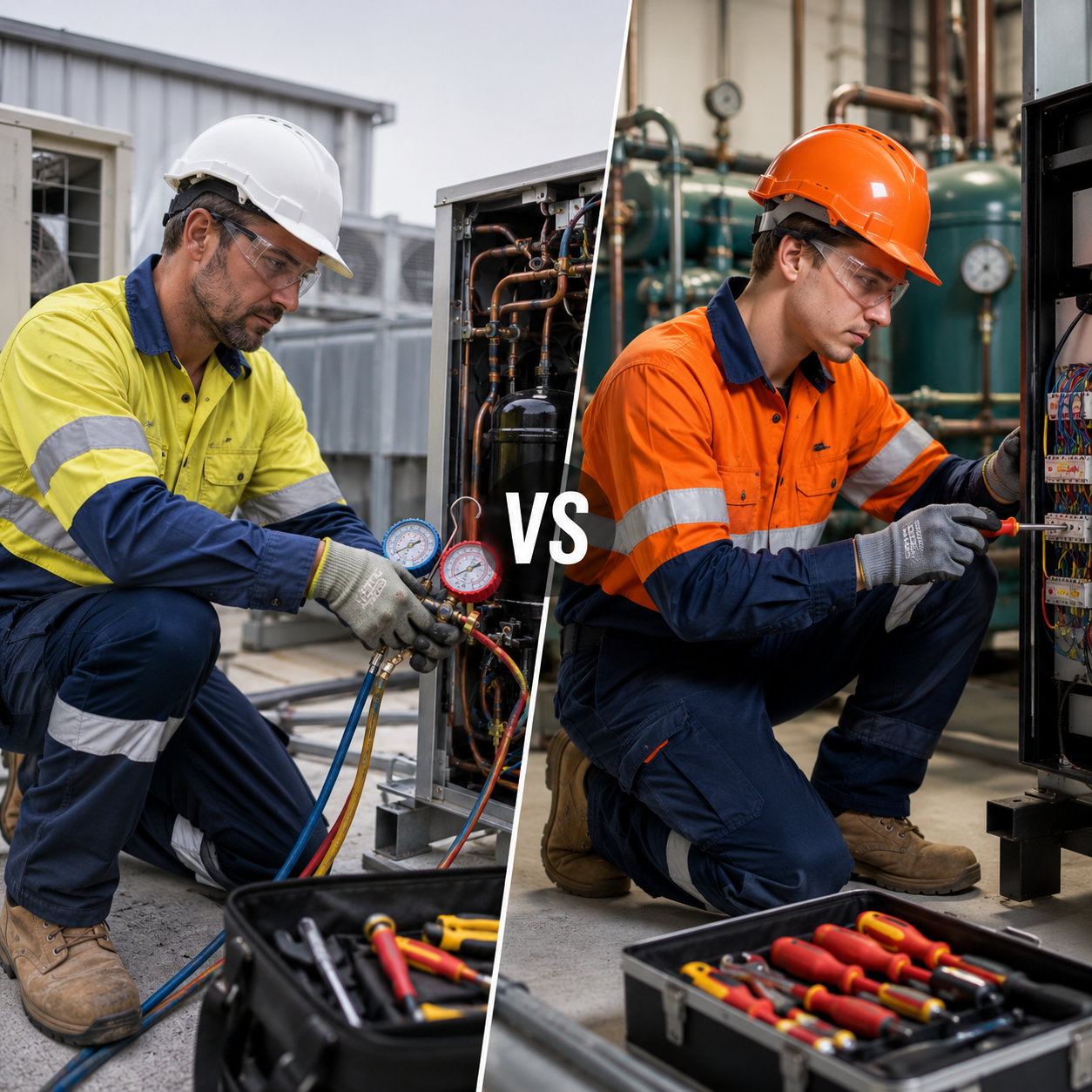
A qualified refrigeration mechanic can diagnose a failed compressor, commission a split system and work confidently across changing equipment. But getting there is not a one-size-fits-all process. The Cert III refrigeration vs apprenticeship decision comes down to one question: are you starting from zero, or do you already have valuable industry experience that should count?
For an adult already working around air conditioning, refrigeration, electrical or mechanical systems, committing to the standard first-year apprentice model can feel like putting your career into reverse. For someone new to the trade, however, an apprenticeship can provide the jobsite repetition and supervision needed to build solid foundations. The right route is the one that gives you recognised capability without wasting the experience you have already earned.
Cert III refrigeration vs apprenticeship: the real difference
The Certificate III in Air Conditioning and Refrigeration is the nationally recognised trade qualification that demonstrates competence across refrigeration and air conditioning work. An apprenticeship is an employment and training arrangement commonly used to complete that qualification while working under supervision over several years.
They are not always competing outcomes. In many cases, an apprentice completes a Certificate III as part of their apprenticeship. The difference is the pathway and pace.
A traditional apprenticeship is designed for people entering the trade with limited experience. You are employed as an apprentice, develop skills gradually on the job and complete formal training alongside work. It is a proven model, particularly when you have a good employer, consistent exposure to relevant work and a supervisor who takes training seriously.
A flexible Certificate III pathway is built for a different person: the worker who may already be installing units, assisting with fault-finding, handling tools, reading plans, completing related trade work or running jobs under an experienced technician. They need a structured way to identify existing competence, fill genuine skill gaps and complete the required training and assessment without stepping away from work unnecessarily.
That distinction matters. Time in a ute does not automatically equal competence, but neither should years of real work be ignored simply because it was not completed under a conventional apprentice title.
When a traditional apprenticeship is the stronger choice
If you are new to refrigeration and air conditioning, a traditional apprenticeship remains a practical starting point. The trade is hands-on. You need repeated exposure to equipment, faults, installations, workplace procedures and different job conditions before the work becomes second nature.
A strong employer can give you that exposure in sequence. You might begin with basic installation support and materials handling, then progress into pipework, electrical connections, system commissioning, preventative maintenance and diagnostics. The learning is gradual because the work is real, and every unfamiliar problem has an experienced person nearby.
This pathway can suit school leavers, career changers with no directly related background, and workers who want the security of learning within one established business. It also makes sense where an employer has the time, range of work and commitment to develop you properly.
The trade-off is pace. Your progression is often tied to the business you work for, the work they win and the tasks they allow you to perform. If your employer mainly installs residential split systems, for example, you may need to actively seek broader experience in service, commercial refrigeration or larger systems. An apprenticeship gives you a framework, but it does not guarantee varied experience on its own.
When a flexible Cert III pathway makes more sense
For experienced workers, the issue is rarely motivation. It is usually time. You may be supporting a family, working full-time, managing a business or already earning more than an entry-level apprentice wage. Starting again from the bottom may not be financially or professionally realistic.
A flexible Certificate III in Air Conditioning and Refrigeration pathway can be a better fit when you have substantial, relevant evidence of skills but need formal training and assessment to close the gap between experience and recognised qualification. The process should not be treated as a shortcut around competence. It should be a disciplined assessment of what you can already do, what you still need to learn and how you will prove each requirement.
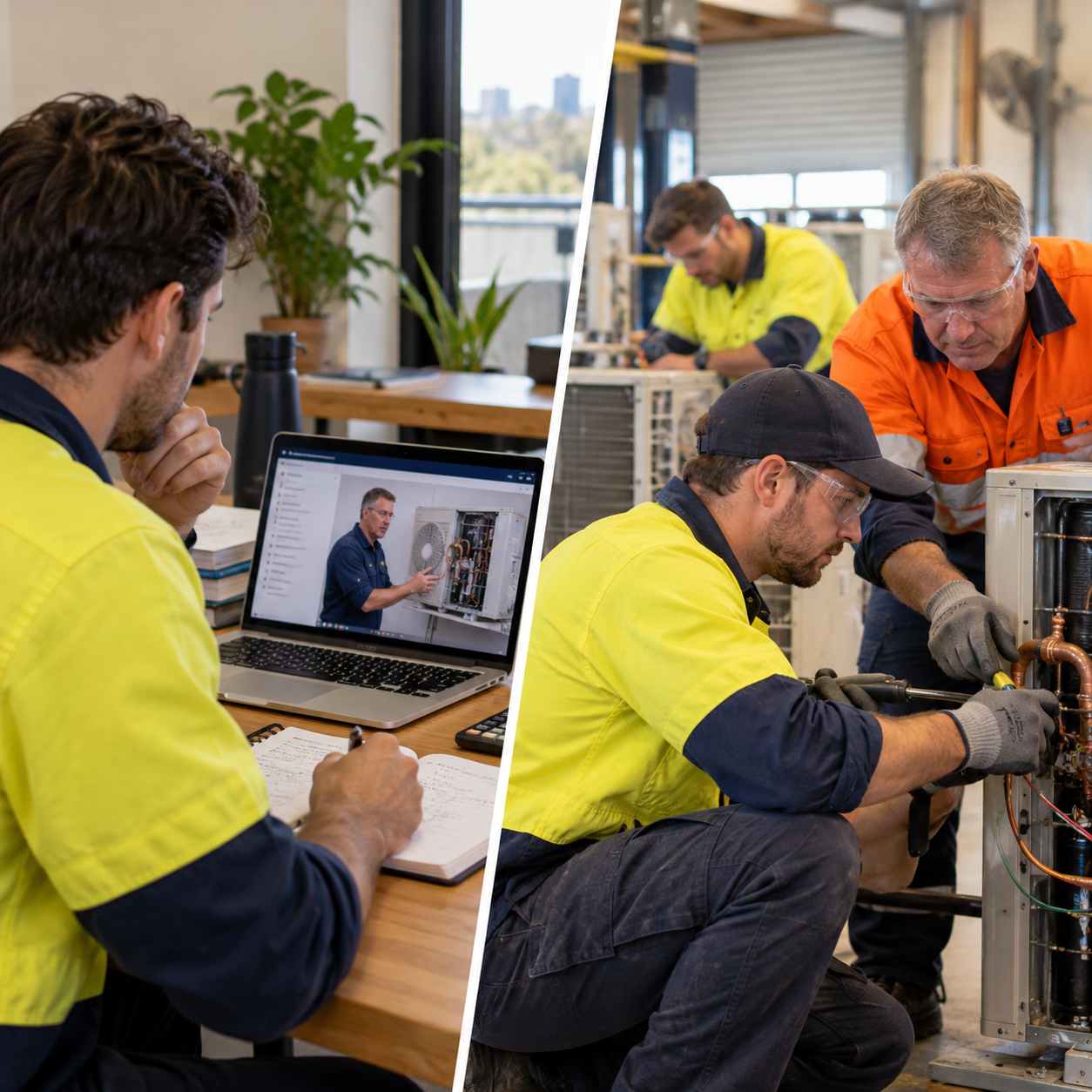
This is where blended learning has a clear advantage. Theory can be completed through structured online learning around work commitments, while practical workshops allow you to demonstrate skills in a controlled setting with qualified trainers. You keep earning, keep building experience and focus your training time where it delivers the greatest return.
The strongest candidates are often workers from adjacent trades or roles. Think electrical workers who regularly assist with HVAC equipment, experienced trade assistants, maintenance workers, mechanical technicians or people already employed in refrigeration businesses. They may not be starting from scratch, but they still need to be honest about the areas they have not yet performed.
A quality training provider will test the evidence, not just accept a job title. Photos, job records, supervisor statements, videos, previous study and practical demonstrations can all form part of the picture. If gaps appear, they need to be addressed through training and hands-on assessment. That protects the value of the qualification and ensures you leave with capability, not just paperwork.
Do not choose based on speed alone
Fast matters when your career has stalled. It matters when better roles require a formal qualification, when your employer wants you to take on more responsibility, or when you are ready to move beyond assisting work. But speed without capability is a poor trade.
The better question is: what evidence can you produce today, and what work can you genuinely perform independently to the required standard? If the answer is limited, an apprenticeship or a longer supervised development plan may be right for you. If the answer is substantial and verifiable, an accelerated training pathway could prevent years of duplicated learning.
Be wary of anyone who promises a result without properly checking your background. Refrigeration and air conditioning work requires technical judgement. You need to understand the system, not just memorise a process. A good pathway will challenge you in theory and practice, because that is what employers and customers expect once you carry more responsibility.
Compare the pathways against your current position
Before choosing, assess your situation honestly. Four factors usually make the answer clear:
- Your existing experience: Have you completed relevant work repeatedly, or mainly observed and assisted?
- Your access to practical work: Can your current role provide opportunities to build and demonstrate the required skills?
- Your income and responsibilities: Can you realistically move into an entry-level apprenticeship arrangement, or do you need to keep working at your present level?
- Your training discipline: Flexible learning gives you control, but it also demands consistency. Online theory and workshop preparation cannot be left until the last minute.
There is no prize for choosing the longest route, and no value in choosing the quickest one if it leaves gaps in your ability. The best decision is based on evidence, available work exposure and the standard you want to reach.
What completion should look like
Whether you complete the Certificate III through an apprenticeship or an accelerated pathway, the outcome should be practical confidence. You should be able to approach a job methodically: assess the system, follow safe work processes, select the right tools, interpret information, complete the task and communicate clearly with the people around you.
That confidence creates career momentum. It puts you in a stronger position for higher-responsibility work, broader job opportunities and a more credible long-term trade career. The qualification matters because it records your competence. The real payoff is what you can do with it.
Alpha Technical Training supports working tradies through flexible, structured training that combines self-paced theory with practical workshops led by active industry professionals. The focus is clear: recognise legitimate experience, close the gaps properly and help capable workers move forward without putting life on hold.
If you are new to the trade, build your foundations through quality supervision and consistent jobsite learning. If you are already doing the work, do not let an outdated pathway keep your career stalled. Get your experience assessed honestly, commit to the gaps, and choose the route that turns your effort into recognised progress.