Your career change does not need to mean starting at the bottom again. A trade qualification for career change can turn the skills you already use on site, in maintenance, in construction or in technical work into recognised capability that employers can see and value.
For plenty of adults, the real problem is not work ethic or practical ability. It is being stuck in a role with limited progression because the paperwork does not match the experience. You may be doing parts of the job already, watching less capable workers move ahead, or relying on an employer that controls your opportunities. A recognised trade pathway gives you a clearer route forward.
Why a trade qualification changes the career conversation
A career change into the trades is often framed as a leap into the unknown. In reality, it can be a calculated move towards work that is practical, in demand and built around measurable skills. The right qualification does more than add a line to your resume. It gives structure to your knowledge, confirms what you can do and positions you for roles that are closed to unqualified workers.
That matters whether you are moving from general labouring, facilities maintenance, manufacturing, warehouse work or a completely different industry. Employers need people who can arrive prepared, work safely, diagnose problems and finish work to standard. Formal training demonstrates that you have worked through the theory as well as the hands-on component.
The upside is not only better job access. Qualified tradespeople generally have more control over the kind of work they pursue, the sectors they enter and the direction of their income over time. You are building an asset that follows you between employers, projects and locations.
Start with the work you want to do
Do not choose a course because its name sounds broad or because someone on site says it is the quickest option. Start with the workday you want in two or three years.
If you enjoy fault-finding, systems and technical problem-solving, electrical or air conditioning and refrigeration may suit you. If you prefer visible progress and physical project work, carpentry, bricklaying, painting, plastering or wall and floor tiling can offer a strong fit. The best pathway is the one that matches your aptitude, prior exposure and willingness to build real competence.
Be honest about the trade-offs. Technical trades can demand confidence with calculations, documentation and diagnostics. Construction trades can involve early starts, changing sites and physically demanding work. Neither is an easy shortcut. The value comes from choosing a field you can stay committed to long enough to become genuinely capable.
A useful test is to ask yourself three questions: What work have I already had exposure to? What problems do I enjoy solving? What type of jobs do I want access to next? Your answers will usually point to a more suitable qualification than a generic search for “the best trade”.
Trade qualification for career change: experience counts
Many career changers assume they must commit to a traditional multi-year pathway regardless of what they have already done. That is not always the case. If you have substantial, relevant trade experience, a skills-based pathway may allow your existing capability to be assessed against the requirements of a nationally recognised qualification.
This is not about cutting corners. It is about avoiding unnecessary repetition. Evidence still matters. You may need to demonstrate your experience through work history, references, photos, job records, practical tasks and knowledge assessments. Where there are gaps, targeted training and practical workshops can help you close them.
For someone who has spent years installing equipment, assisting qualified tradespeople, completing maintenance tasks or working in a related construction role, this approach can be far more realistic than putting life on hold. It recognises that experience has value – provided it can be verified and brought up to the required standard.
Choose training that works around real life
The biggest barrier for adult learners is rarely motivation. It is time. You may have a full-time job, family commitments, a mortgage and no capacity to sit in a classroom five days a week.
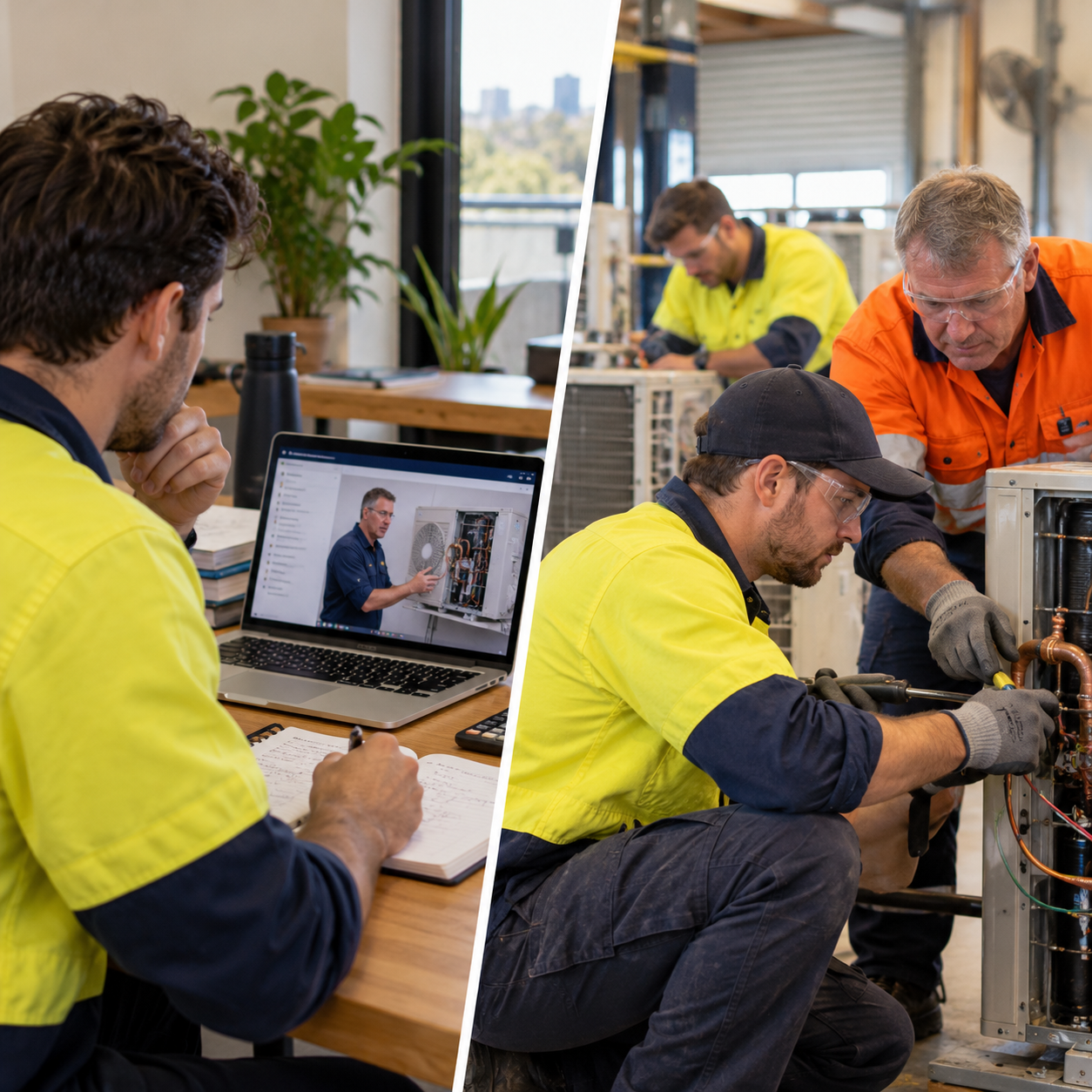
That is why delivery matters as much as the qualification itself. A blended model can combine self-paced online theory, structured learning through an online platform and scheduled practical workshops. You can make progress during the week, then focus your hands-on time on the tasks that need direct observation, coaching and feedback.
Flexibility does not mean being left alone with a login. Look for a provider that gives you a clear training plan, practical support, transparent evidence requirements and trainers who understand current industry expectations. If the process is vague before you enrol, it is unlikely to become clearer once you begin.
At Alpha Technical Training, training is built for people who need recognised outcomes without stepping away from work. The focus is practical progress: understand the requirements, complete the work, build your evidence and keep moving.
What separates a strong pathway from a dead end
A qualification should move you towards better work, not simply fill your spare time. Before committing, assess whether the course aligns with the roles you want and whether the provider can explain the pathway in plain language.
Ask how much practical training is involved, how competence is assessed and what support is available if you need to strengthen a particular area. Check that the qualification is nationally recognised and that the training organisation is registered to deliver it or clearly explains its delivery arrangements. These details protect the value of the time and effort you invest.
Also consider the pace. Faster is worthwhile when it reflects your existing experience and your ability to complete the work properly. Faster is not worthwhile if it leaves you underprepared for a practical assessment or unable to perform confidently on the job. The goal is efficient progress with standards intact.
Build momentum before you enrol
The people who get the most from a career change do not wait for the perfect moment. They prepare. Start collecting evidence of relevant work you have done. Update your resume with specific tasks rather than broad job titles. Write down equipment you have worked on, systems you have installed, materials you have used and problems you have helped solve.
Talk to people doing the trade you are considering. Not for motivational slogans, but for an accurate picture of the work. Find out what a normal week looks like, which skills separate beginners from dependable workers and where demand sits in your area. That information will sharpen your decision and help you arrive at training with purpose.
Then set a realistic study routine. Two focused sessions during the week and protected time for practical requirements will beat a grand plan you abandon after a fortnight. Career change is built through consistent action, not one burst of enthusiasm.
The return is bigger than a certificate
A trade qualification can change how employers assess you, but its longer-term value is personal as well. You become less dependent on being given a chance and more able to show why you deserve one. You gain a recognised foundation to pursue better roles, specialise in areas that interest you and create a career with more room to grow.
There will be effort involved. You will need to study when you are tired, organise evidence and accept feedback in practical training. But staying in a stalled role has a cost too. Another year without recognised skills can mean another year of limited options.
Choose a pathway that respects the experience you already have, challenges the gaps you need to close and fits the life you are building. The strongest career change is not the one that looks quickest on paper. It is the one that puts you in a better position to earn, progress and take pride in the work you can prove you do.