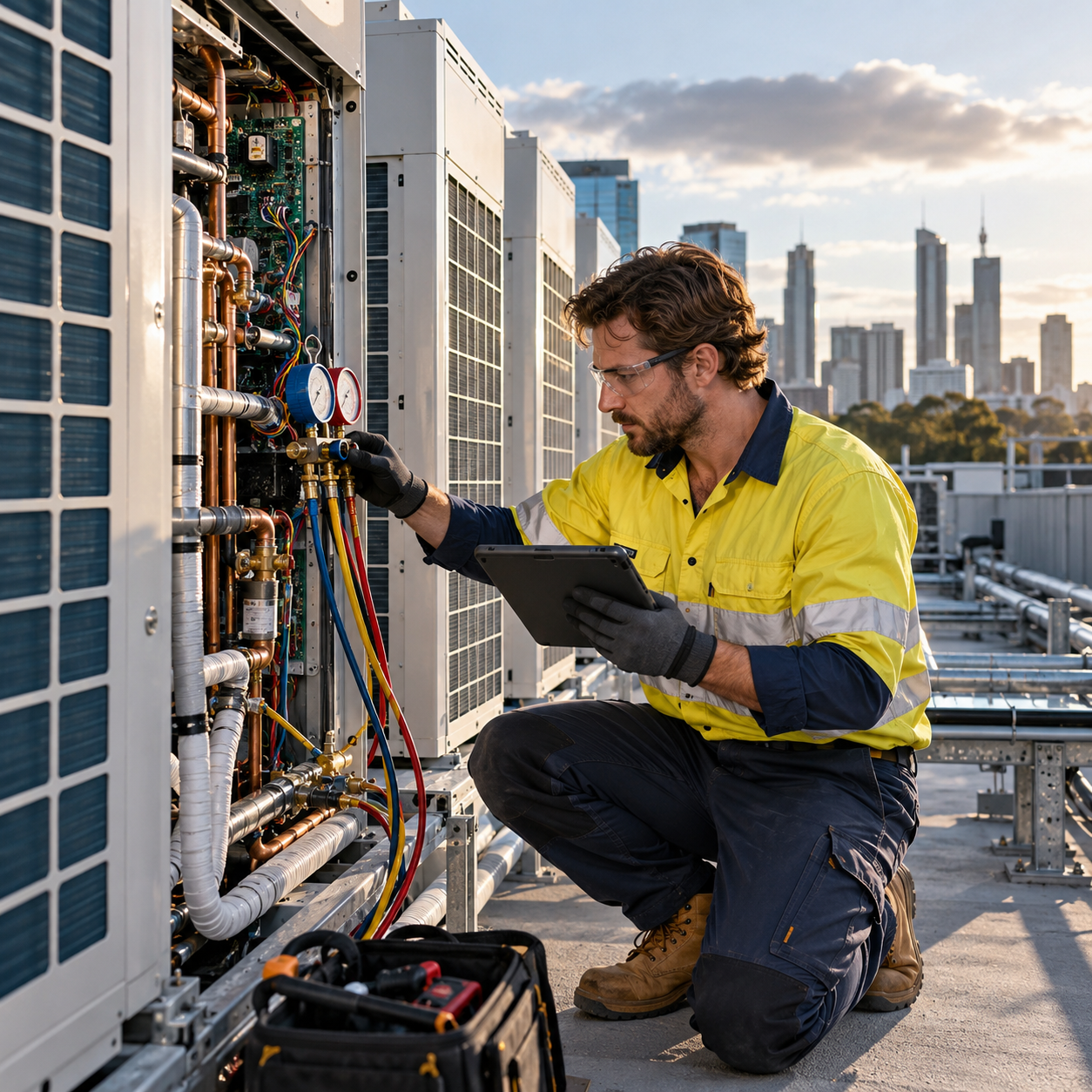
The work is changing well beyond fitting a split system and checking pressures. HVAC technology trends Australia is seeing are pushing refrigeration and air conditioning technicians towards smarter controls, lower-emissions equipment and more demanding commissioning work. For tradies, that creates a clear divide: those who can work confidently with modern systems will access better projects and broader responsibilities; those who rely only on older methods risk being left on routine work.
This is not about chasing every new gadget. It is about building the practical capability employers, contractors and customers need right now – then using that capability to move your career forward.
HVAC technology trends Australia is driving
Heat pumps are moving into more buildings
Heat pumps are no longer a niche conversation. They are increasingly selected for homes, apartments, commercial spaces and hot-water applications because they transfer heat rather than create it through direct electric resistance. That can make them an efficient choice when the system is correctly selected, installed and commissioned.
For technicians, the opportunity sits in the detail. A heat pump that is oversized, poorly located or set up with the wrong controls can disappoint quickly. Customers do not judge a system by its brochure rating. They judge it by comfort, running costs, noise and whether it works when conditions get tough.
That means strong technicians need to understand more than the refrigeration circuit. They need to assess airflow, load, drainage, defrost operation, electrical supply, control settings and the way the building is actually used. The best career move is not simply being able to install a heat pump. It is being the person who can diagnose why one is not delivering.
VRF and VRV systems demand control knowledge
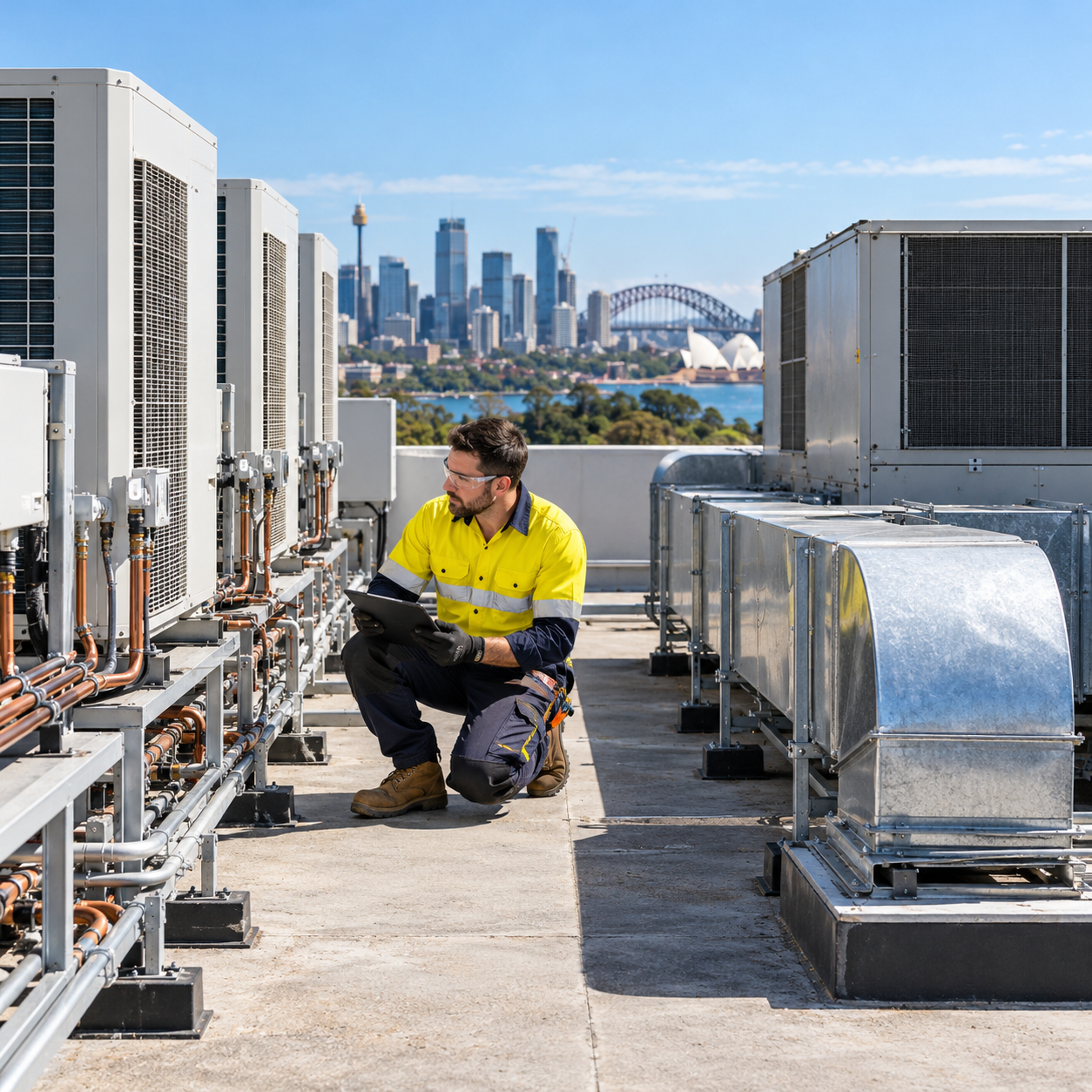
Variable refrigerant flow systems, including VRV systems, remain a major part of commercial fit-outs and larger residential projects. Their appeal is obvious: multiple indoor units, zoning flexibility and sophisticated capacity control from one connected system.
Their complexity is equally real. A fault may be linked to addressing, communications, pipework design, branch selection, commissioning settings or an issue at a single indoor unit affecting the wider network. Guesswork costs time. It can also create expensive callbacks.
This is where targeted systems training produces a direct return. Technicians who can read fault information, follow manufacturer procedures and commission a multi-zone system methodically are more valuable on site than workers who can only replace parts. Specialist programs such as Daikin VRV System Short Courses can help experienced technicians close that gap without stepping away from work for long periods.
Smarter controls are becoming standard work
The thermostat is no longer the whole control strategy. Modern HVAC systems may connect with building management systems, occupancy sensors, remote monitoring platforms, demand-response settings and mobile interfaces. Commercial clients increasingly want visibility over energy use, faults and maintenance needs, not just a unit that switches on.
This does not mean every refrigeration mechanic needs to become a software developer. It does mean you must be comfortable with control logic, communication faults, sensors and commissioning sequences. You need to know what the system should do before you can prove why it is not doing it.
A practical example is a comfort complaint in an office. The mechanical equipment may be operating correctly, but a poorly positioned sensor, incorrect time schedule or conflicting zone setting can make the space feel too warm or too cold. The technician who isolates the actual cause protects the contractor’s margin and builds trust with the client.
Lower-GWP refrigerants change the job on site
Refrigerant transition is reshaping equipment selection and service practices. Lower global warming potential options are becoming more common across different applications, and many technicians will encounter mildly flammable A2L refrigerants as equipment evolves.
This is not a trend to treat casually. New refrigerant classes bring different safety requirements, recovery processes, ventilation considerations, tools and manufacturer instructions. The fundamentals still matter – accurate leak testing, evacuation, charging, measurement and documentation – but the margin for shortcuts is smaller.
There is also no one-size-fits-all answer. Older installed equipment will remain in service for years, while new projects may use different refrigerant technologies depending on system type, capacity, location and client requirements. A technician who understands the transition can work effectively across both worlds. A technician who assumes every unit is the same risks avoidable errors.
Indoor air quality is now part of the conversation
People have become far more aware of ventilation, filtration and indoor air quality. In schools, offices, healthcare settings, retail spaces and homes, clients are asking better questions: Is there enough outside air? Are filters being maintained? Why does one room feel stale? Can the system manage humidity as well as temperature?
Good answers require a whole-system mindset. More ventilation can improve air quality, but it may also increase heating and cooling loads. Higher-grade filtration can be beneficial, but it can raise static pressure if the fan and ductwork are not considered. Humidity control can improve comfort, but it must be designed around the climate and the building’s use.
That is the trade-off modern technicians need to explain clearly. The right outcome is not the biggest unit or the most expensive add-on. It is a correctly assessed system that balances comfort, energy use, air quality and maintainability.
Commissioning is becoming a career advantage
As systems become more connected, commissioning separates installers from high-value technicians. Installation gets equipment into place. Commissioning proves that it performs as intended.
On a modern job, that can involve confirming airflow and temperature performance, checking condensate drainage, testing safety functions, validating control sequences, confirming communications and documenting setpoints. In larger systems, it can also mean working with electricians, controls contractors and building managers to resolve issues that sit between trades.
This is where experienced workers can accelerate their value. If you already understand site realities, fault-finding and customer expectations, formal training helps you turn existing experience into a stronger, more structured skill set. You are not starting from scratch. You are strengthening the capability that lets you take on more technical work with confidence.
What skills should you prioritise first?
The right next step depends on the work you want more of. If your goal is domestic installation and service, heat pump operation, split-system diagnostics and electrical fundamentals should be high priorities. If you want commercial work, concentrate on VRF or VRV systems, advanced controls, airflow and structured commissioning.
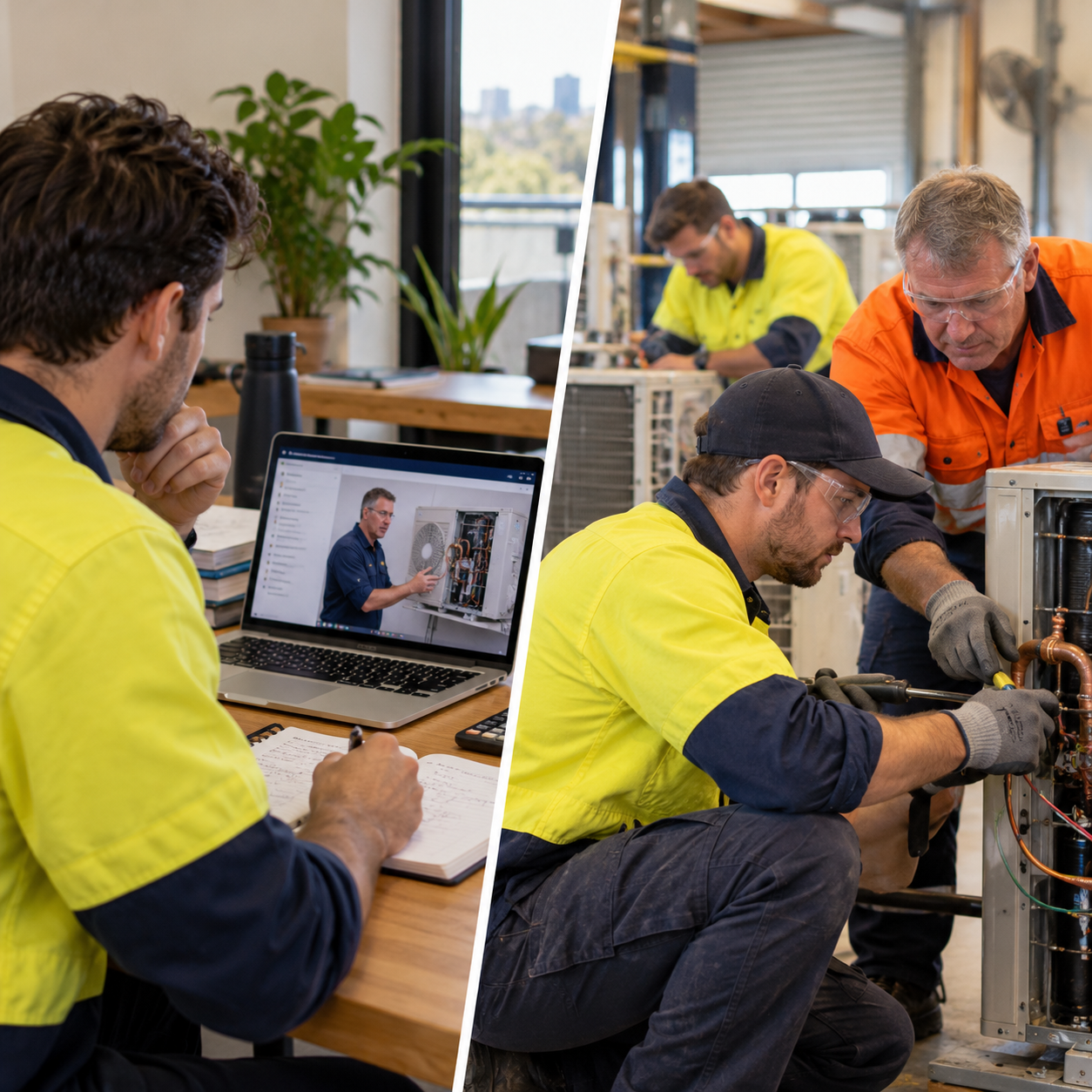
For technicians who are already working but feel held back by gaps in theory or formal recognition, a blended pathway makes sense. Online learning lets you progress around work and family commitments, while practical workshops put the critical tasks in your hands. That combination matters because the trade rewards people who can explain the theory, apply it safely and troubleshoot under pressure.
Alpha Technical Training focuses on that practical progression: recognised refrigeration and air conditioning training supported by active industry professionals, structured learning and hands-on workshops. The point is not to spend years collecting information. It is to build usable competence that improves the jobs you can take on.
The trend behind every other trend: higher expectations
Customers expect quieter systems, lower running costs, cleaner air and fast fault resolution. Builders want fewer delays. Employers want technicians who can work independently on equipment that is more complex than it was five years ago. Those expectations are not going backwards.
The strongest response is deliberate skill building. Learn the systems appearing on current projects. Get comfortable with controls rather than avoiding them. Treat commissioning as a professional standard, not an optional final check. Keep your practical knowledge current as refrigerants and equipment change.
The tradies who move early will not just keep pace with HVAC technology. They will be the people others call when the job is too technical, the fault is too difficult or the system has to perform properly the first time.