If you’re already doing the work but still getting blocked by the lack of a formal ticket, an accelerated HVAC qualification pathway can change your timeline fast. For a lot of working tradies, the problem is not ability. It is time, access, and finding a training model that fits around full-time work, family commitments, and the need to keep earning.
That is where the right pathway matters. The goal is not to cut corners. The goal is to complete the same nationally recognised outcomes in a smarter way, with structure, compliance, and practical support built in from day one.
What an accelerated HVAC qualification pathway actually means
An accelerated HVAC qualification pathway is not a shortcut in the risky sense. You are still completing accredited units, meeting evidence requirements, and proving competency to the required standard. What changes is the delivery model.
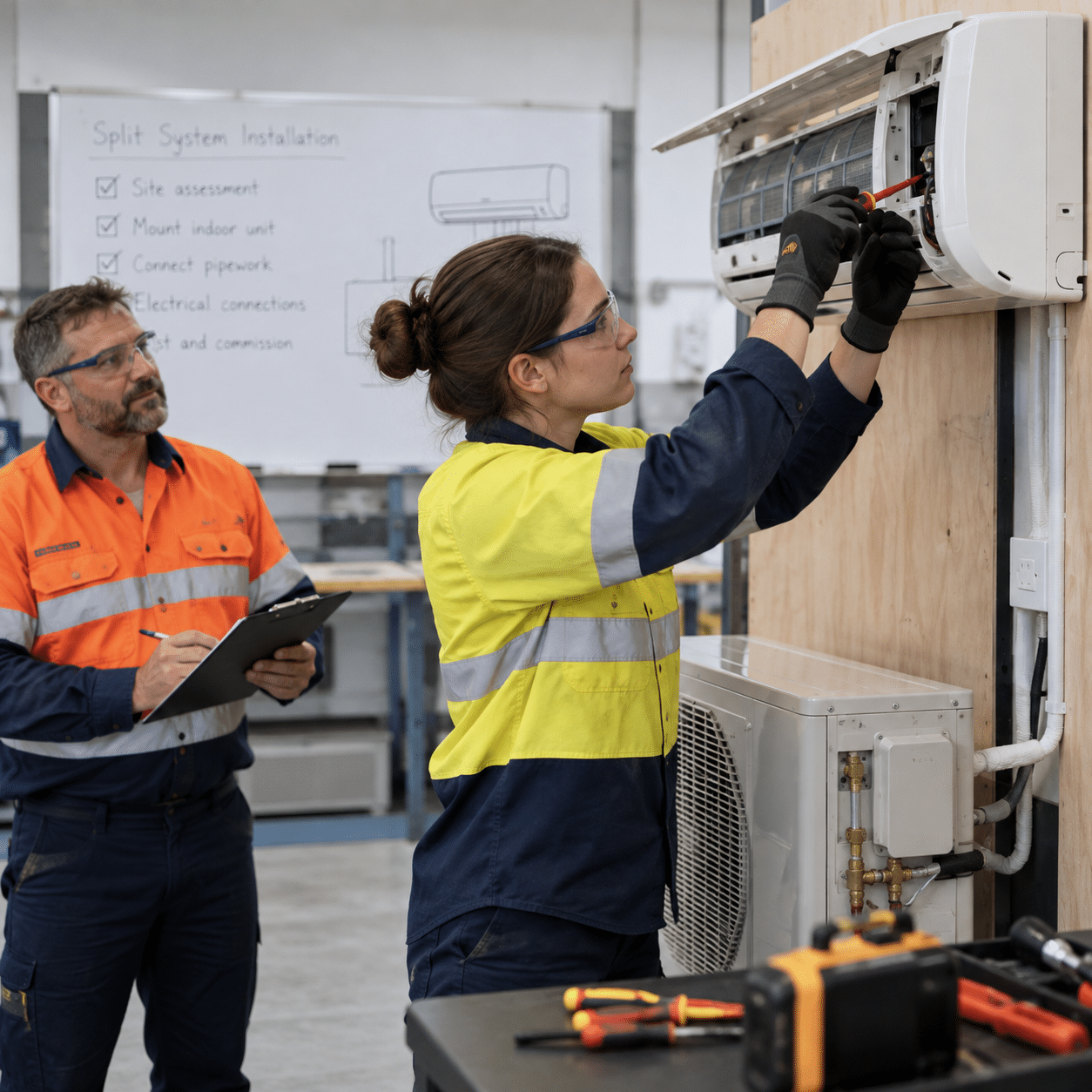
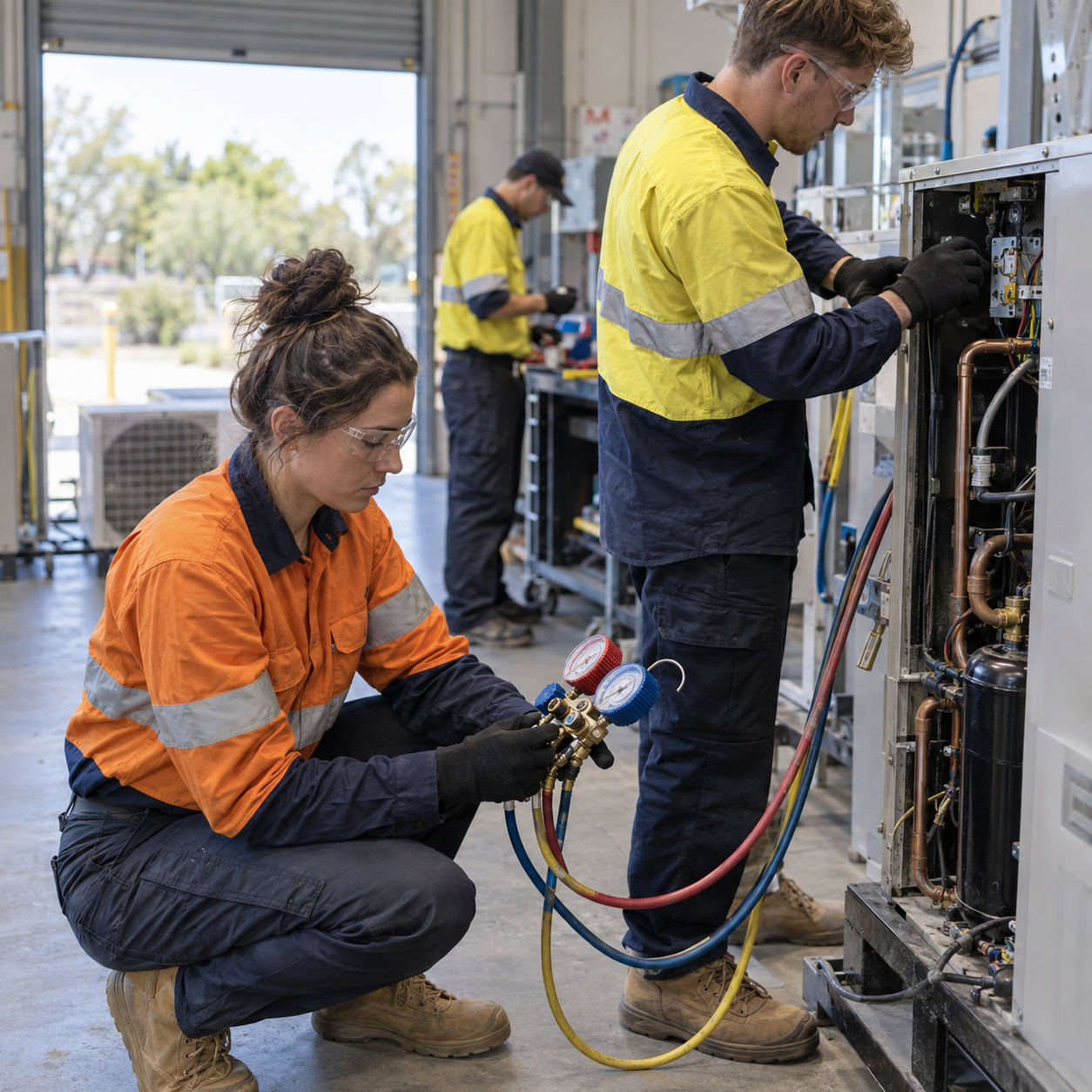
Instead of waiting on the pace of a traditional apprenticeship or losing weekdays to classroom attendance, accelerated training is built for adults who need momentum. Theory is typically handled through self-paced online study. Progress is tracked through an LMS so you can see what is done, what is due, and what is holding you back. Practical skills are then consolidated in structured workshop blocks with trainers who know the trade, not just the textbook.
That combination matters because speed without structure usually falls apart. Speed with a clear system is different. It lets capable workers move quickly while still meeting compliance obligations.
Why tradies are choosing faster qualification routes
The biggest reason is simple – delayed qualification costs money. If you are stuck in a lower-paid role because you are not formally qualified, every extra month has a real earnings impact. It can also limit the work you are legally able to carry out, restrict your ability to move into better employers, and delay your path towards licensing.
For many adults, the traditional model just does not fit real life. You might be working six days a week, supporting a family, or already doing air conditioning and refrigeration tasks under supervision. Going backwards into a long, rigid training schedule is not practical.
A faster pathway appeals because it matches how adults learn best. You bring existing industry exposure, jobsite context, and urgency. You do not need fluff. You need a system that helps you convert experience into recognised outcomes as efficiently as possible.
Accelerated HVAC qualification pathway vs traditional apprenticeship
This is where the decision becomes clearer.
A traditional apprenticeship can be the right fit for school leavers or people starting from zero with no industry access. It provides a steady entry point and long-term workplace development. But for an adult already in the workforce, it can feel painfully slow. Progress often depends on employer capacity, scheduling, and training arrangements that were not designed for someone trying to qualify fast.
An accelerated HVAC qualification pathway is usually better suited to experienced workers, career changers with transferable skills, and tradies who need flexibility. You can continue earning while studying. You can complete theory after hours. You can attend practical sessions in planned blocks rather than losing constant work time. Most importantly, your progress is visible and managed.
The trade-off is that accelerated pathways demand discipline. If you need someone chasing you every week, self-paced learning can become a problem. The better providers solve that with structured check-ins, progress tracking, and support that keeps students moving. Without that support, flexible learning can drift. With it, the model works.
What to look for in a fast-track HVAC training provider
Not all accelerated delivery is equal. If you are comparing options, speed should never be the only selling point.
First, check that the qualification is nationally recognised and that the provider is clear about compliance requirements. If the language is vague, that is a warning sign. You want straight answers about units, assessment, practical attendance, and what is required for completion.
Second, look at how the training is delivered. A blended model is often the strongest option because it gives you flexibility without removing hands-on learning. Online theory on its own is not enough in a practical trade. On the other hand, a fully face-to-face model can make it nearly impossible to stay employed while studying.
Third, ask how student progress is managed. Good providers do not just enrol you and disappear. They track milestones, identify delays early, and give you a clear roadmap from enrolment through to qualification and, where relevant, licensing support.
Finally, ask who is teaching the practical side. Active industry professionals bring a different standard of training. They know what happens on real sites, what assessors expect, and where students usually come unstuck.
The real benefit is not speed alone
Speed gets attention, but return on investment is what matters.
Qualifying faster can mean earlier access to better-paid roles, a stronger position when negotiating wages, and a shorter path to the licences and tickets needed for more independent work. That is the commercial value of acceleration. You are not just saving time. You are reducing the period where your earning capacity is capped by missing credentials.
There is also a confidence factor that does not get talked about enough. Plenty of capable workers know they are under-credentialed. They avoid certain jobs, hold back from applying for stronger roles, or keep relying on someone else’s licence. Formal qualification removes that ceiling. It gives you proof, portability, and a more secure footing in the industry.
That said, speed only pays off if the qualification is delivered properly. A rushed, poorly supported course can end up taking longer if students fall behind, fail to gather evidence, or miss practical requirements. The best outcome comes from a provider that pushes hard on momentum while keeping the training compliant and well supported.
Who this pathway suits best
This model is a strong fit for adults who are already working, have some technical background, and need a realistic way to study without stepping out of the workforce. It also suits people who are motivated by a clear financial outcome. If your goal is to become qualified sooner, move towards licensing, and increase your earning potential, an accelerated pathway makes commercial sense.
It may also suit people transitioning from adjacent trades. Electrical workers, mechanical workers, service technicians, and maintenance staff often already understand tools, safety, site routines, and fault-finding logic. That does not replace HVAC competency, but it can make the learning curve more manageable.
It is less suitable for someone who wants a very loose schedule with no accountability. Fast-track training rewards consistency. If you can commit to weekly progress and scheduled practical attendance, you are likely to move well. If not, even the best system will struggle to carry you.
The licensing question matters
This is where many students think too narrowly. Getting qualified is a major step, but for HVAC and refrigeration work, qualification and licensing are not always the same thing.
A smart training decision looks beyond course completion. You should understand how your qualification supports the next stage of your career, what additional licensing steps may apply, and what evidence or documentation you will need later. Providers that offer guidance beyond the classroom save students a lot of stress because the transition from training to legal, licensed work can be more complex than people expect.
This is one reason support matters so much. The fastest pathway on paper is not necessarily the fastest pathway in practice if you are left to sort out the next steps alone.
Why the model is gaining ground in Australia
Australia has no shortage of people who want to get qualified. The shortage is in pathways that actually fit adult life.
Rigid delivery models were built around old assumptions – fixed schedules, younger learners, and slower progression. Today’s students are often older, already employed, and highly focused on outcome. They want recognised training that respects their experience, their time, and the fact that bills still need to be paid while they study.
That is why providers like Alpha Technical Training are getting attention. The offer is straightforward: complete accredited training in a faster, more flexible format, stay on track through structured support, and move towards qualification and licensing without putting your life on hold. For the right student, that is not just convenient. It is the difference between staying stuck and moving up.
If you are serious about HVAC as a career, waiting for the perfect time usually costs more than starting with the right structure. The better move is to choose a pathway that respects your workload, backs your progress, and gets you qualified while the opportunity is still in front of you.