TL;DR
Yes—HVAC businesses can be highly profitable in Australia, but profitability depends on several factors, including pricing, recurring maintenance work, business efficiency, licensing and the owner’s experience.
A well-managed HVAC business can benefit from:
- Strong demand for heating, ventilation and air conditioning services
- Recurring maintenance and servicing income
- Emergency call-out work
- Commercial contracts
- Residential installations
- Growing demand for energy-efficient systems
If you’re wondering whether the industry will continue to grow, read our guide on Are HVAC Technicians in Demand in Australia?
According to the Australian Taxation Office’s small business benchmarks, HVAC businesses operate across a wide range of expense ratios depending on turnover, making efficient cost control critical to profitability.
Whether you’re an experienced technician or planning to start your own company, the right qualifications, licences and business systems can significantly improve your chances of building a successful HVAC business.
Are HVAC Businesses Profitable?
The short answer is yes.
HVAC remains one of Australia’s strongest trade industries because heating, cooling and refrigeration systems are essential for homes, offices, hospitals, schools, warehouses, shopping centres and industrial facilities.
Unlike many businesses that rely on discretionary spending, HVAC companies often provide essential services.
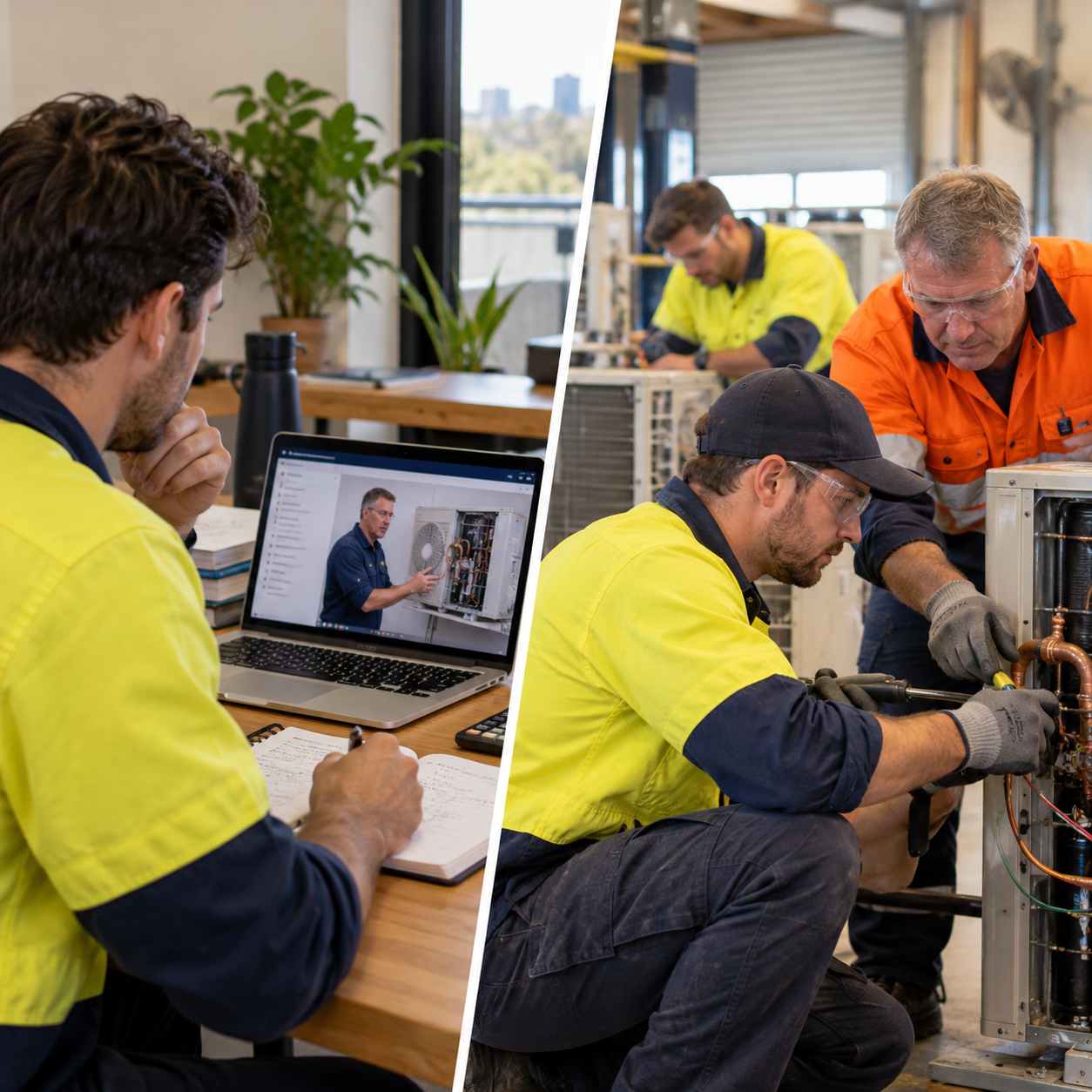
Many successful business owners first complete a nationally recognised Certificate III in Air Conditioning and Refrigeration before starting their own company.
People don’t wait long to repair:
- Broken air conditioners
- Refrigeration systems
- Commercial cooling equipment
- Ventilation systems
This creates consistent demand throughout the year.
Curious about what technicians actually earn before starting a business? Read our guide to HVAC Salary in Australia.
Why HVAC Businesses Can Be So Profitable
1. Strong Industry Demand
Australia continues to invest heavily in:
- Residential housing
- Commercial developments
- Hospitals
- Data centres
- Warehouses
- Manufacturing
- Government infrastructure
Every new building requires HVAC installation, while existing systems require servicing, repairs and replacement.
The Australian HVAC services industry remains a multi-billion-dollar market with long-term growth supported by construction, population growth and ongoing maintenance demand.
2. Recurring Revenue
One of the biggest advantages of HVAC businesses is recurring work.
Many successful businesses generate ongoing income through:
- Annual maintenance agreements
- Commercial servicing contracts
- Preventative maintenance
- Emergency breakdown support
- Asset management programs
Recurring revenue helps smooth seasonal fluctuations and improves cash flow.
3. Emergency Call-Out Premiums
Air conditioning failures rarely happen at convenient times.
Businesses often pay premium rates for:
- After-hours repairs
- Weekend call-outs
- Public holiday work
- Emergency refrigeration repairs
Restaurants, supermarkets and hospitals cannot afford prolonged downtime, making emergency response a valuable revenue stream.
4. Commercial Projects
Commercial HVAC projects generally generate higher revenue than residential work.
Examples include:
- Office buildings
- Hospitals
- Shopping centres
- Hotels
- Universities
- Data centres
- Industrial facilities
These projects often involve larger contract values and ongoing maintenance opportunities.
How Profitable Is an HVAC Business?
Profitability varies depending on business size, pricing and efficiency.
Industry benchmarks suggest that well-run HVAC businesses typically achieve healthy net profit margins, while top-performing operators can reach even higher levels through efficient operations, recurring maintenance work and disciplined pricing.
The Australian Taxation Office also publishes industry benchmarks showing that total expenses as a percentage of turnover vary by business size, giving owners a useful reference point when assessing their performance.
Rather than focusing only on revenue, successful owners closely monitor:
- Gross profit
- Net profit
- Labour efficiency
- Billable hours
- Vehicle costs
- Inventory management
- Customer retention
What Makes an HVAC Business Successful?
Profitability isn’t just about technical skills.
Successful HVAC businesses usually excel in five key areas.
Qualified Staff
Customers expect licensed, qualified technicians who can complete work safely and professionally.
Investing in recognised training helps build credibility and opens the door to more complex and higher-value work.
Efficient Scheduling
Reducing travel time and increasing billable hours significantly improves profitability.
Many successful businesses use scheduling software to optimise technician routes and minimise downtime.
Recurring Maintenance
Maintenance contracts provide predictable income.
Commercial clients often prefer scheduled servicing because it reduces unexpected equipment failures and extends asset life.
Strong Reputation
Positive online reviews, referrals and repeat customers reduce marketing costs and improve long-term profitability.
Smart Pricing
Underquoting is one of the biggest reasons trade businesses struggle.
Successful HVAC businesses price work to cover:
- Labour
- Materials
- Overheads
- Warranty obligations
- Vehicle costs
- Future growth
Can a Sole Trader Build a Profitable HVAC Business?
Absolutely.
Many Australian HVAC businesses begin as sole traders.
As demand grows, owners often expand by hiring:
- Apprentices
- Qualified technicians
- Office administrators
- Sales consultants
Scaling gradually allows owners to build systems without taking on excessive financial risk.
What Are the Biggest Challenges?
Like any business, HVAC companies face challenges.
Common issues include:
- Seasonal demand fluctuations
- Recruiting qualified technicians
- Cash flow management
- Equipment costs
- Vehicle expenses
- Insurance
- Licensing compliance
- Rising material prices
Businesses that plan effectively are generally better positioned to manage these challenges.
Do Qualifications Matter?
Yes.
Customers increasingly expect technicians to hold recognised qualifications and appropriate licences.
For many technicians, completing a nationally recognised Certificate III in Air Conditioning and Refrigeration is an important step toward building a long-term career and eventually running their own business.
Because licensing requirements differ across Australian states and territories, the exact pathway will depend on where you intend to operate.
Many business owners also require:
- ARC Refrigerant Handling Licence
- State contractor licences (where applicable)
- Business registrations
- Appropriate insurance
Is Now a Good Time to Start an HVAC Business?
For many experienced technicians, yes.
Several trends continue to support industry growth:
- Population growth
- Increasing temperatures
- Energy-efficient building upgrades
- Commercial construction
- Data centre expansion
- Hospital developments
- Industrial automation
- Replacement of ageing HVAC systems
These factors create ongoing opportunities for businesses that deliver quality workmanship and reliable service.
Frequently Asked Questions
Are HVAC businesses profitable in Australia?
Yes. Many HVAC businesses operate profitable service, maintenance and installation operations. Profitability depends on pricing, efficiency, recurring revenue, overhead management and business systems.
What is the biggest source of profit?
For many businesses, recurring maintenance contracts, commercial servicing agreements and emergency repairs provide some of the most stable and profitable income streams.
Can one person run an HVAC business?
Yes. Many businesses begin as sole traders before expanding into larger teams as demand increases.
Do I need qualifications to start an HVAC business?
You’ll generally need recognised qualifications and the licences required in your state or territory before carrying out regulated HVAC work. Requirements vary across Australia.
Is commercial HVAC more profitable than residential?
Commercial work often involves larger contracts and ongoing maintenance agreements, although profitability depends on pricing, efficiency and the type of projects undertaken.
Final Thoughts
Starting an HVAC business can be a rewarding step for experienced technicians who want greater independence and long-term earning potential. Australia’s continued investment in housing, commercial construction, infrastructure and energy-efficient buildings is creating sustained demand for professional HVAC services, giving well-run businesses strong opportunities to grow.
Success, however, relies on more than technical ability. Building a profitable business requires recognised qualifications, the right licences for your state or territory, sound financial management and a focus on customer service. For many technicians, gaining the appropriate training and understanding the licensing pathway is the foundation for transitioning from employee to business owner with confidence.