TL;DR
Yes. HVAC technicians are in strong demand across Australia, and the outlook remains positive for the foreseeable future.
Several factors are driving this demand, including:
- Australia’s growing population and housing developments
- Rising temperatures and increased reliance on air conditioning
- Commercial construction and infrastructure projects
- Growth in data centres, hospitals and logistics facilities
- An ageing workforce creating skills shortages
- Increased demand for energy-efficient HVAC systems
Qualified technicians can earn $100,000–$120,000+ annually, with experienced specialists often earning significantly more depending on their location, industry and licences. If you’re also wondering what qualified technicians typically earn, read our guide to HVAC Salary Australia: How Much Do HVAC Technicians Really Earn?
If you’re considering a trade career with long-term job security, HVAC is one of Australia’s strongest options.
Are HVAC Technicians in Demand?
The simple answer is yes.
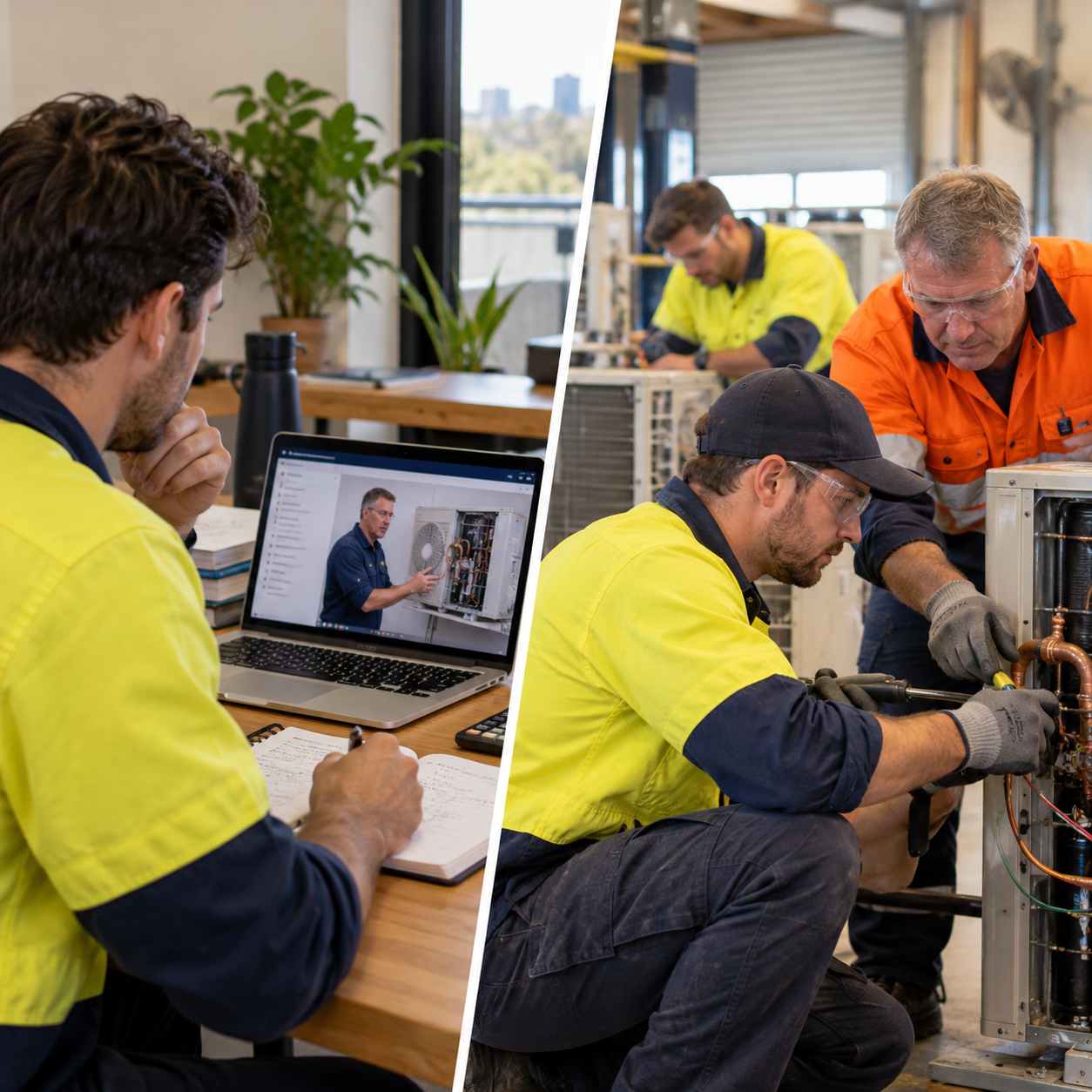
Australia continues to experience a shortage of qualified heating, ventilation, air conditioning and refrigeration (HVAC&R) technicians across residential, commercial and industrial sectors. Becoming a qualified technician usually starts with completing a nationally recognised Certificate III in Air Conditioning and Refrigeration.
Employers are actively recruiting skilled technicians, and many businesses report difficulty finding qualified workers with the right training and licences.
The demand isn’t limited to one city or state—it exists nationwide, although the licensing requirements differ depending on where you work.
Why Is Demand So High?
Several long-term trends are driving demand.
1. Australia’s Population Continues to Grow
Australia’s population has surpassed 27 million and continues to increase through natural growth and migration.
More people means:
- More homes
- More apartments
- More shopping centres
- More schools
- More hospitals
- More office buildings
Every one of these buildings requires heating, cooling and ventilation systems that need to be installed, maintained and repaired.
Source: Australian Bureau of Statistics (ABS)
2. Australia’s Climate Increases Demand
Australia is one of the world’s hottest developed countries.
As temperatures continue to rise, more households and businesses rely on air conditioning throughout the year.
Existing systems also require regular servicing, maintenance and eventual replacement.
This creates ongoing work for qualified HVAC technicians—not just new installations.
3. Commercial Construction Is Growing
Large commercial projects require teams of HVAC professionals.
These include:
- Hospitals
- Universities
- Airports
- Hotels
- Shopping centres
- Warehouses
- Office towers
- Manufacturing facilities
Commercial HVAC projects are typically larger and more complex, creating demand for experienced technicians and specialists.
4. Data Centres Are Expanding
Australia is experiencing rapid investment in data centres driven by cloud computing and artificial intelligence.
These facilities depend on highly specialised cooling systems operating 24 hours a day.
Reliable HVAC infrastructure is critical because overheating can result in equipment failures and significant financial losses.
This has created new opportunities for technicians with commercial and industrial experience.
5. The Industry Faces a Skills Shortage
Many experienced HVAC technicians are approaching retirement.
At the same time, fewer young Australians are entering the skilled trades.
Industry groups continue to highlight shortages across several construction and engineering trades, including refrigeration and air conditioning.
As experienced workers leave the workforce, employers compete for qualified replacements.
Which States Need HVAC Technicians?
Demand exists across every Australian state and territory.
However, the type of work and licensing requirements vary.
New South Wales
Strong demand across:
- Residential service
- Commercial maintenance
- Construction
- Government infrastructure
Victoria
Growing opportunities in:
- Commercial construction
- Apartment developments
- Healthcare
- Facility management
Queensland
Demand driven by:
- Warm climate
- Tourism
- Residential air conditioning
- Commercial projects
Western Australia
One of Australia’s highest-paying markets due to:
- Mining
- Oil and gas
- Industrial refrigeration
- FIFO opportunities
South Australia
Growth in:
- Defence projects
- Manufacturing
- Commercial buildings
Tasmania, ACT and Northern Territory
Although smaller markets, qualified HVAC technicians continue to be sought after across government, healthcare, education and commercial sectors.
Which HVAC Jobs Are Most In Demand?
Current demand is particularly strong for:
- Air conditioning installers
- Service technicians
- Refrigeration mechanics
- Commercial HVAC technicians
- Industrial refrigeration technicians
- Chiller specialists
- Controls and BMS technicians
- Maintenance technicians
- Commissioning technicians
- HVAC supervisors
Specialist skills often command higher salaries due to their complexity and scarcity.
Does Experience Matter?
Absolutely.
Most employers prefer candidates with recognised qualifications and practical experience.
Experienced technicians often move into roles such as:
- Senior technician
- Team leader
- Service manager
- Project manager
- Estimator
- Business owner
These positions generally offer higher earning potential and greater responsibility.
Do You Need Qualifications?
Yes.
Most professional HVAC roles require nationally recognised training.
The most common pathway is completing a Certificate III in Air Conditioning and Refrigeration.
This qualification provides the technical knowledge and practical skills needed to work in the industry.
Depending on your state or territory, you may also need licences or authorisations before carrying out certain types of work.
Because licensing rules differ across Australia, it’s important to understand the specific requirements where you intend to work.
What About Licensing?
One of the biggest misconceptions is that there is a single Australian HVAC licence.
There isn’t.
Each state and territory has its own licensing framework for electrical and refrigeration work.
Many technicians also require an ARC Refrigerant Handling Licence (RAC01) to legally handle refrigerants.
Other contractor or trade licences may apply depending on the state and the work being performed.
Choosing a training provider that understands these requirements can make the pathway much clearer.
How Much Can HVAC Technicians Earn?
While demand is high, salary depends on experience, location and industry.
Typical earnings include:
| Experience | Typical Salary |
|---|---|
| Apprentice | $45,000–$65,000 |
| Newly Qualified | $75,000–$95,000 |
| Experienced Technician | $100,000–$120,000 |
| Senior Commercial Technician | $120,000–$150,000+ |
| FIFO & Mining | $150,000–$200,000+ |
Higher salaries are commonly found in commercial HVAC, industrial refrigeration, mining and remote work.
Future Outlook
Industry trends suggest demand will remain strong throughout the coming years.
Key drivers include:
- Population growth
- Climate change
- Energy-efficient building upgrades
- Government infrastructure spending
- Commercial developments
- Expansion of hospitals
- Warehousing and logistics
- Data centres
- Renewable energy projects
These factors indicate ongoing opportunities for qualified HVAC professionals.
Is HVAC a Good Career?
For many Australians, HVAC offers an excellent balance of:
- Strong earning potential
- Job security
- Career progression
- Practical work
- Opportunities to specialise
- Potential to start your own business
Because HVAC systems are essential across homes, businesses and industry, qualified technicians are likely to remain in demand for many years.
Frequently Asked Questions
Is there a shortage of HVAC technicians in Australia?
Yes. Many employers report ongoing difficulty finding qualified HVAC technicians, particularly those with commercial experience and the appropriate licences.
Is HVAC a future-proof career?
HVAC is considered one of Australia’s more resilient trades because buildings will always require heating, cooling and ventilation systems, and demand continues to grow with population and infrastructure.
Which state has the highest demand?
Demand exists nationwide. Western Australia, New South Wales, Victoria and Queensland currently offer some of the strongest employment opportunities, although licensing requirements differ between states.
Can overseas HVAC technicians work in Australia?
Many experienced overseas technicians can work towards Australian qualifications and licensing pathways, although the exact requirements depend on their experience and the state in which they intend to work.
Is Certificate III required?
A nationally recognised Certificate III is the standard qualification for most HVAC technician roles and is often an essential step towards licensing where required.
Final Thoughts
If you’re asking whether HVAC technicians are in demand in Australia, the evidence points to a clear answer: yes. Ongoing population growth, major infrastructure investment, warmer climates, and the transition to more energy-efficient buildings are creating sustained demand for skilled professionals across the country.
While licensing and regulatory requirements vary between states and territories, one thing remains consistent: employers value technicians who hold recognised qualifications and understand industry standards. If you’re planning a long-term career in the trade, investing in the right training can improve your employability, expand your licensing opportunities and position you for higher-paying roles as the industry continues to grow.