A long apprenticeship timetable can feel impossible when you already have a full-time job, a family and bills that do not wait. The best courses for working tradies are not simply the shortest options. They are the ones that turn existing site experience into recognised capability, build the practical skills employers need, and fit around the work that is paying your wage now.
For many experienced workers, the real problem is not ability. It is being stuck doing skilled work without the formal qualification that opens better roles, stronger earning potential and more control over where your career goes. The right training pathway closes that gap without asking you to put your life on hold.
What makes the best courses for working tradies?
A course is only useful if you can finish it. That sounds obvious, but many workers enrol in programs that look good on paper and then discover the timetable clashes with site hours, travel or family commitments. Flexible delivery matters, but it must still include structured learning, assessed practical work and clear milestones.
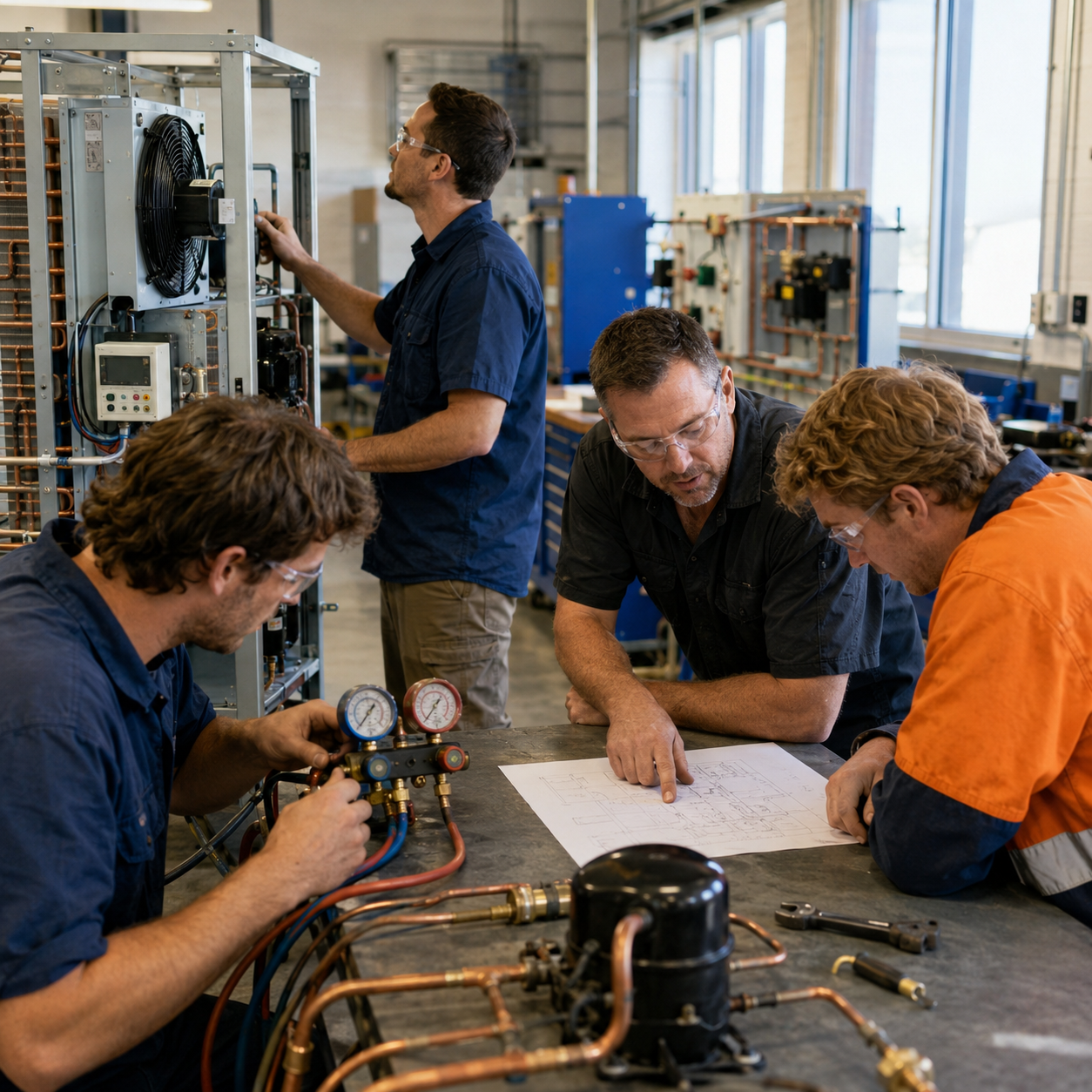
Look for a program that combines self-paced theory with scheduled practical workshops. Online learning gives you room to work through units after hours or on quieter days. Practical sessions give you access to equipment, guided feedback and the chance to demonstrate the work properly. You need both. Theory alone will not prepare you for the standard expected in technical trades, while workshop-only training can drag out unnecessarily if it is not supported by organised online study.
The strongest courses also recognise that experienced tradies do not all start from zero. If you have years on the tools, you should be able to show what you know, identify genuine gaps and focus your effort where it counts. That does not mean cutting corners. It means training with purpose rather than repeating knowledge you already use every day.
Choose outcomes, not course names
A flashy course title will not improve your prospects on its own. Before you commit, ask what the course enables you to do at work, what skills you will be assessed on, and whether the training aligns with the trade direction you actually want.
If you want to move into electrical work, an electrotechnology qualification is a different commitment from a short low-voltage skill set. If your future is in HVAC, a broad air conditioning and refrigeration qualification gives you a more complete foundation than a single-product course. If you already work in construction, a trade qualification in carpentry, bricklaying, painting, plastering or tiling can formalise the skill set you have built on site.
The best option depends on your starting point and end goal. A short course can be the right move when you need a tightly defined competency for your current role. A full qualification makes more sense when you want a bigger career shift and a recognised trade outcome.
High-value course pathways for busy tradies
The following pathways suit workers who want practical progress without stepping away from employment. They are not interchangeable, so choose based on the work you want to be trusted with in the future.
Certificate III in Electrotechnology Electrician
For workers serious about an electrical trade pathway, Certificate III in Electrotechnology Electrician is a major career-building qualification. It is designed for people who want broad electrical knowledge and hands-on competence rather than a narrow add-on skill.
This pathway demands commitment. Electrical work requires accuracy, safety awareness, testing discipline and a solid grasp of technical theory. It is not a course to choose because it sounds profitable. Choose it because you want to build a long-term career in the field and are prepared to put in consistent effort outside work hours.
For the right worker, the return is clear: more technical capability, stronger credibility on site and access to a broader range of electrical career opportunities.
Certificate III in Air Conditioning and Refrigeration
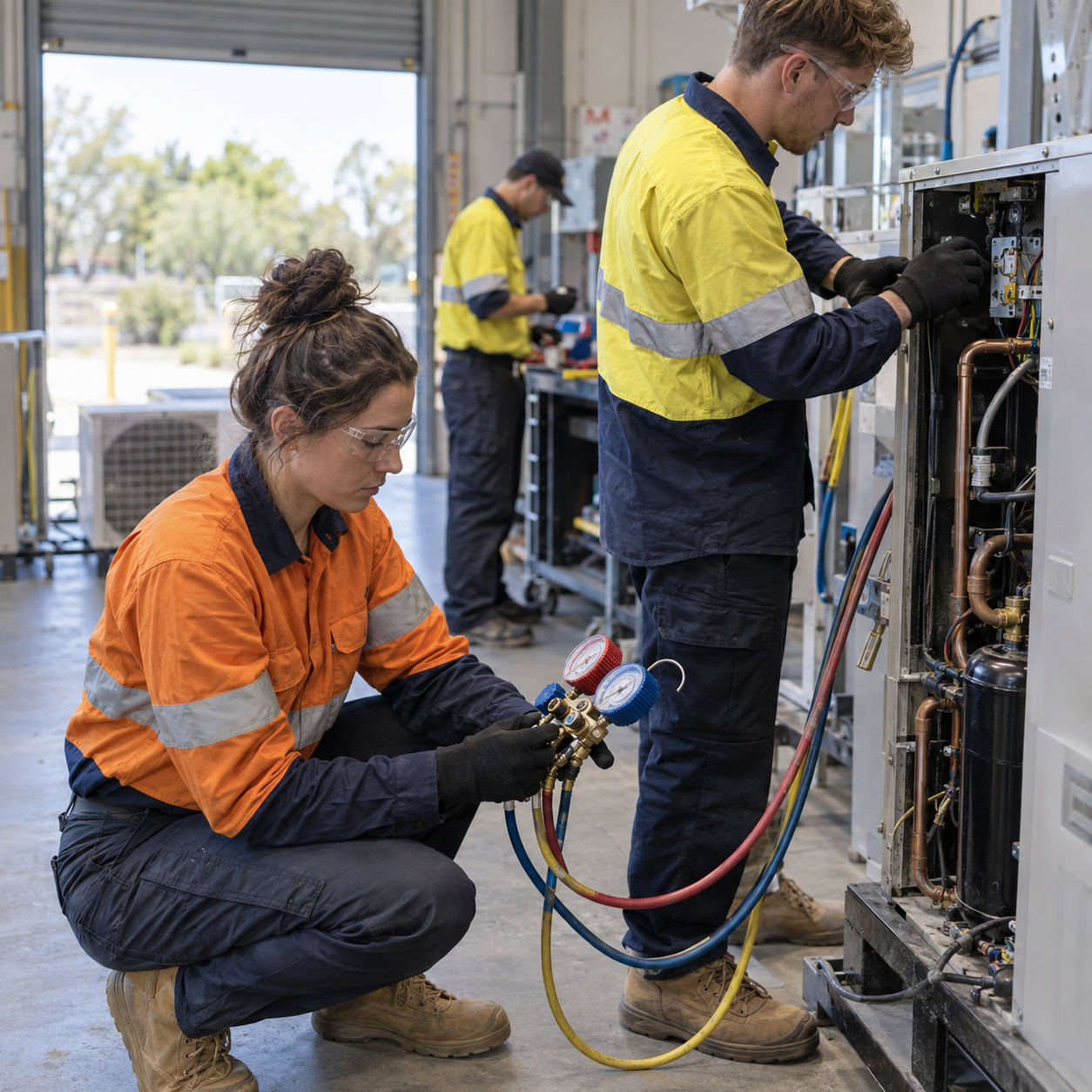
Air conditioning and refrigeration continues to reward tradies who can diagnose faults, install systems correctly and work confidently across residential and commercial environments. Certificate III in Air Conditioning and Refrigeration suits people already connected to HVAC work, as well as motivated workers looking to transition into a specialised technical trade.
The value is in the breadth. You are not learning one brand, one unit type or one quick installation task. You are building the fundamentals needed to understand systems, components, fault finding and practical installation work. That foundation matters when the job becomes more complex, the site conditions change or a customer needs answers rather than guesswork.
This is a strong choice for workers who want a trade with ongoing demand and a pathway that can support progression from basic work to more technical responsibilities.
Certificate II in Split Air-conditioning and Heat Pump Systems
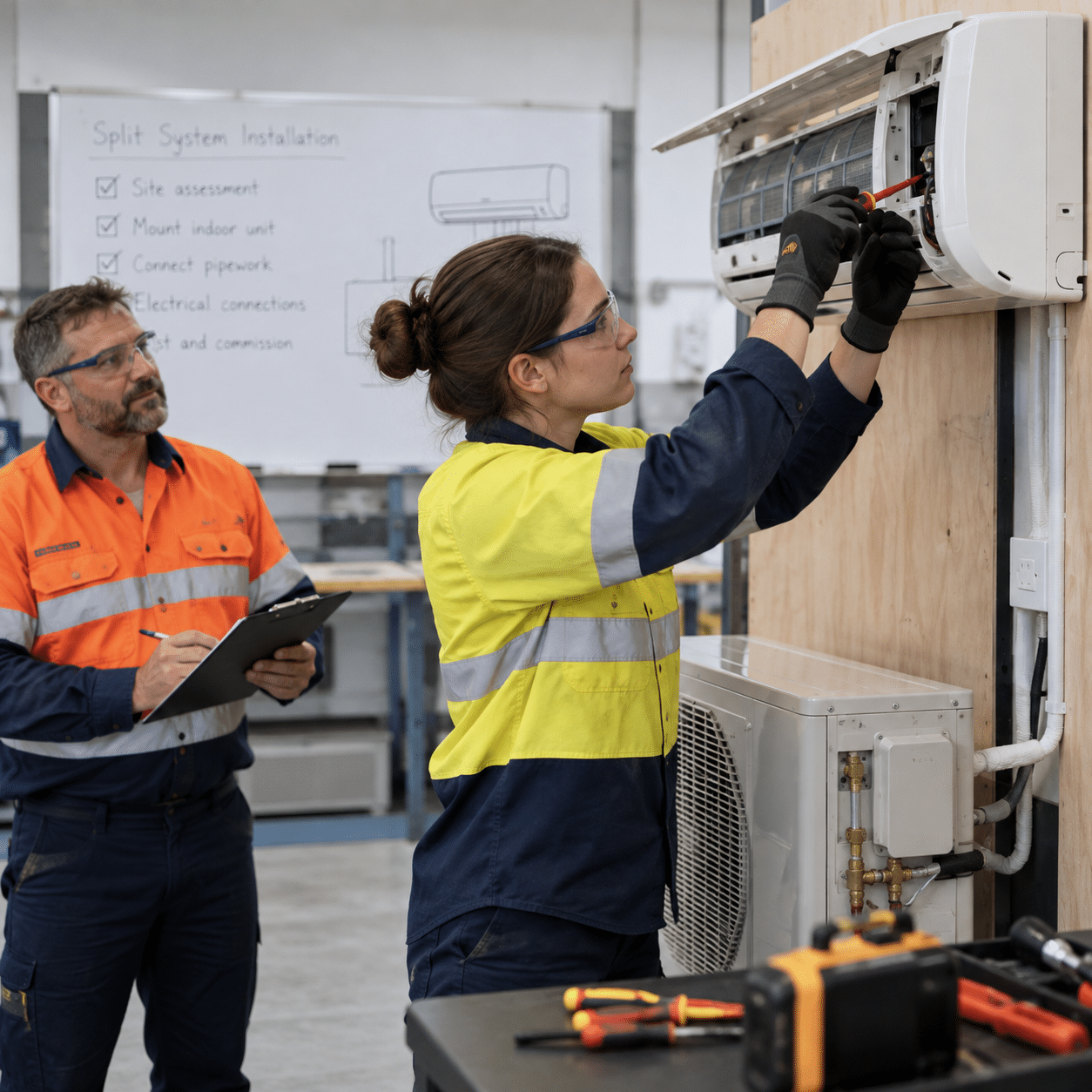
If your work is closer to domestic split systems and heat pumps, Certificate II in Split Air-conditioning and Heat Pump Systems can be a focused stepping stone. It is suited to tradies who want relevant, practical knowledge in a defined area rather than the full scope of air conditioning and refrigeration.
It is important to be realistic about the trade-off. A targeted Certificate II may get you moving sooner in a specific part of the market, but it does not provide the same depth as a Certificate III. It is a smart option when the work you want is genuinely focused on split systems, or when you need a practical entry point before committing to a larger qualification.
Low-voltage disconnect and reconnect training
Disconnect-Reconnect Low Voltage training can be highly relevant for workers whose role involves safely isolating and reconnecting specified equipment as part of their day-to-day duties. It is a focused course with a clear workplace application, particularly for trades that regularly work around appliances and fixed equipment.
Because it is specialised, it should not be treated as a replacement for a broad electrical qualification. Its value comes from solving a specific skills need efficiently. For the right worker, that can reduce delays on jobs, improve confidence around defined tasks and make them more useful to an employer.
Daikin VRV system short courses
Specialist product training is worth considering once you have a solid trade foundation or work in an HVAC environment where VRV systems are common. Daikin VRV short courses can help technicians understand system operation, installation considerations and fault-finding approaches for this type of equipment.
These courses are best viewed as an upgrade, not a starting point. Brand-specific knowledge can give you an edge on relevant jobs, but your long-term value still comes from the core trade skills that let you think through problems when the site does not match the manual.
How to study while keeping your job
Working and training at the same time is demanding, but it is manageable when the course structure respects the reality of trade work. The difference is not motivation alone. It is having a plan that survives early starts, overtime and the occasional job that runs late.
Start by treating study like a booked job, not something you will get to when life calms down. Set two or three fixed sessions each week for theory and protect them. Short, repeatable blocks are more effective than trying to force a full day of study after a brutal week on site.
Use your workday properly as well. When you encounter unfamiliar equipment, a tricky install or a fault that takes time to trace, make a note of it. Bring those questions into your training. The best adult learning happens when the unit content connects directly to what you saw in the field that week.
Practical workshops need the same discipline. Book them early, know what evidence or preparation is required, and turn up ready to perform. Waiting until the last minute is how flexible training becomes slow training.
Questions to ask before enrolling
Before choosing a provider, get clear answers about delivery, assessment and support. You should know how much theory is self-paced, how practical training is organised, what attendance is required and how your progress will be tracked.
Ask whether trainers have current industry experience. A trainer who understands site pressure, job sequencing and common mistakes can save you a lot of wasted time. Also ask how the provider supports experienced workers who have practical knowledge but need help organising their evidence and study.
Check that the qualification is nationally recognised and that the provider is an RTO. This is not paperwork for paperwork’s sake. It protects the value of the work you are putting in and helps ensure your training is built around recognised standards.
Alpha Technical Training delivers blended learning for workers who need to keep earning while building recognised trade skills. The model combines structured online theory with hands-on practical workshops, so progress is based on disciplined effort rather than waiting for the perfect time to study.
The course that changes your career is not necessarily the easiest one. It is the one that matches the work you want next, gives you practical capability you can use immediately, and has a delivery model you can stick with until the qualification is finished. Pick the pathway with a clear purpose, make the study time non-negotiable, and let your current experience become the foundation for better work ahead.