A Cert III is not a generic ticket that means the same thing in every trade. If you are asking, “what does Cert III cover?”, the straight answer is: it covers the job-ready skills, knowledge and practical evidence required for a specific trade qualification. The exact content depends on the qualification you choose, but the outcome is consistent – you build formal proof that you can perform real work to the required standard.
For working tradies, that distinction matters. You may already know how to do much of the work on site, in a plant room or at a customer’s property. A Certificate III turns that experience into a structured qualification pathway, with the theory, practical competence and assessment evidence needed to demonstrate what you can do.
What does Cert III cover in a trade qualification?
Most Certificate III trade programs combine three areas: core technical knowledge, practical job skills and workplace-style evidence. You are not simply reading material and sitting a final test. You are expected to understand the work, perform it safely and correctly, and show that your work meets the requirements set out in the qualification.
The units within a Cert III are made up of compulsory core units and elective units. Core units cover the capabilities everyone in that trade needs. Electives can shape the qualification around particular systems, methods or work settings. That is why two people with Cert III qualifications may have different strengths, even when they work in related roles.
In practical terms, a Cert III commonly covers:
- technical theory, including how systems operate, why faults occur and how to select the right method or equipment
- safe work practices, hazard controls, testing procedures and job planning
- hands-on installation, maintenance, fault-finding, repair or construction skills relevant to the trade
- interpreting drawings, specifications, manuals and work instructions
- using tools, instruments, materials and equipment correctly
- quality checks, documentation, communication and completing work to industry expectations
The point is not to memorise textbook answers. It is to be capable on the tools and able to explain the decisions behind the work.
The content depends on the Cert III you choose
“Cert III” is shorthand, not a single course. Before comparing training providers or planning your next move, identify the full qualification title and code. That tells you what the program actually assesses.
Electrical trade training
For example, the Certificate III in Electrotechnology Electrician (UEE30820) covers the broad skills needed for electrical work. Training typically includes electrical principles, safe working practices, installation methods, testing and verification, fault-finding, wiring systems, circuits, equipment and relevant documentation.
It is detailed because electrical work is detailed. You need to understand more than where a cable runs or which component has failed. You need to interpret results, follow a logical testing process and produce work that is safe, compliant and fit for purpose. Expect a combination of theory, calculations, simulated activities and practical workshop work.
Air conditioning and refrigeration
The Certificate III in Air Conditioning and Refrigeration (UEE32225) focuses on the systems and processes behind cooling, heating and refrigeration equipment. Depending on the units selected, this can include refrigeration principles, electrical controls, installing and commissioning equipment, servicing systems, diagnosing faults and working with different types of air conditioning and refrigeration applications.
A capable technician must connect theory to symptoms in the field. Poor cooling performance, abnormal pressures, electrical control faults and airflow issues do not arrive neatly labelled. A Cert III builds the methodical approach required to test, identify the cause and complete the work properly rather than replacing parts until the problem disappears.
Building and construction trades
In construction, Cert III content is equally trade-specific. A Certificate III in Carpentry may cover setting out, framing, fixing, formwork, reading plans and using construction materials. Bricklaying and Blocklaying focuses on laying masonry, setting out, structures and finishing work. Painting and Decorating, Solid Plastering, and Wall and Floor Tiling each have their own technical standards, materials, preparation methods and finishing requirements.
The common thread is practical capability. The qualification is designed around the work a competent tradesperson needs to complete, not around theory for theory’s sake.
What you will actually be assessed on
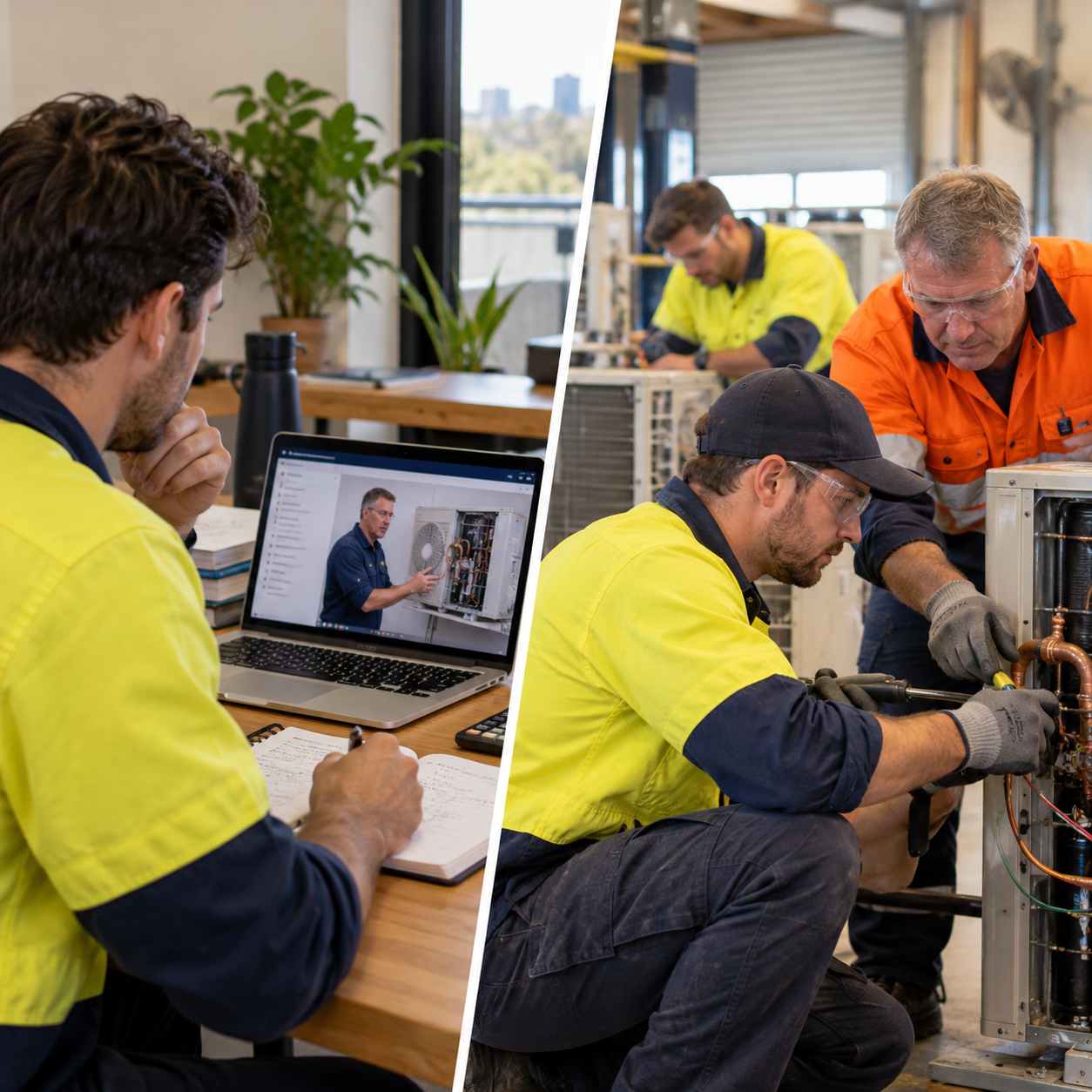
One of the biggest misconceptions is that a Cert III is just an online course. Online learning can be an efficient way to complete theory, knowledge questions and structured learning activities, particularly when you are already working full-time. But a trade qualification also needs practical assessment.
Assessment may include written questions, calculations, projects, workplace evidence, supervisor reports, photos or videos of work, verbal questioning and observed practical tasks. In workshop-based assessment, you may be asked to complete a job from start to finish while an assessor checks your process, tool use, measurements, testing, fault diagnosis and final result.
This approach protects the value of the qualification. A piece of paper only helps your career if it represents real competence. Strong assessment confirms you can do the work when conditions are not perfect, instructions need interpreting and mistakes carry consequences.
The amount of recognition you receive for skills already gained can vary. Experienced workers may be able to provide evidence of prior training, previous work and existing capability. However, experience alone is not automatically enough. The evidence still needs to match the requirements of each unit, and any gaps need to be completed through training and assessment.
How long does the learning take?
There is no honest one-size-fits-all answer. Your timeline depends on the qualification, your current experience, the evidence you can provide, how consistently you complete theory and when you attend practical workshops.
A person starting from scratch will need more development than someone who has spent years doing closely related work under supervision. Likewise, an experienced refrigeration mechanic may move quickly through familiar concepts but need targeted support in areas they have not previously performed or documented.
The fastest pathway is not the one that skips the hard parts. It is the one that identifies what you already know, focuses training on genuine gaps and gives you a clear sequence to complete every required unit. That is where blended delivery can make a difference: theory can be completed around work commitments, while practical training stays focused, structured and hands-on.
What to check before enrolling
Do not enrol based on the phrase “Cert III” alone. Ask for the full qualification code, the list of core and elective units, the assessment method and the practical workshop requirements. You should also understand what evidence is required if you are seeking recognition for prior skills.
Check whether the delivery model works with your roster. If you are on site all week, a program built around flexible online theory and planned practical sessions may be more realistic than a classroom-only timetable. Flexibility is valuable, but it still requires discipline. Progress comes from setting aside time each week, submitting evidence properly and turning up prepared for practical assessment.
It is also worth asking who delivers the practical training. Active industry professionals bring current job knowledge into the workshop. They can explain not only what the unit requires, but how the task shows up on real jobs, where people commonly go wrong and what quality work looks like under pressure.
Turn existing experience into forward progress
A Cert III can be a major step for a tradesperson who is tired of being limited by informal experience, low-value tasks or a lack of recognised credentials. It gives structure to what you know, exposes the gaps that could hold you back and creates evidence of your competence.
At Alpha Technical Training, the focus is on making that process practical for people who are already working. The right qualification should not force you to put your income and responsibilities on hold. It should give you a clear, compliant path to build stronger skills and move towards better work.
The best next step is simple: choose the exact trade outcome you want, confirm the Cert III that matches it, then assess your current experience against the units. Once you know what the qualification covers, you can stop guessing and start building a pathway that rewards the work you already put in.