A split system that looks neat on the wall can still be a poor installation. Incorrect pipework, weak drainage falls, bad cable routing or rushed commissioning can create call-backs long after the installer has left site. Split system installation training is about learning to get the full job right, from site assessment through to final checks, so your work holds up in real homes and businesses.
For tradies looking to move forward, that practical capability matters. Employers and customers do not just need someone who can mount an indoor unit. They need a technician who can work methodically, protect the equipment, identify problems early and leave a system operating as intended.
What split system installation training should teach you
Good training does not treat installation as a single task. It breaks the job into the decisions that determine whether the system will perform properly over its service life. That means understanding the equipment, the installation environment and the sequence of work before tools come out of the ute.
The theory component should give you a working understanding of refrigeration principles, electrical fundamentals, heat pump operation and the documentation that applies to the equipment you are installing. You do not need theory for theory’s sake. You need it so you can recognise why a unit is short cycling, why poor airflow affects performance, or why a drain issue can quickly become a ceiling repair.
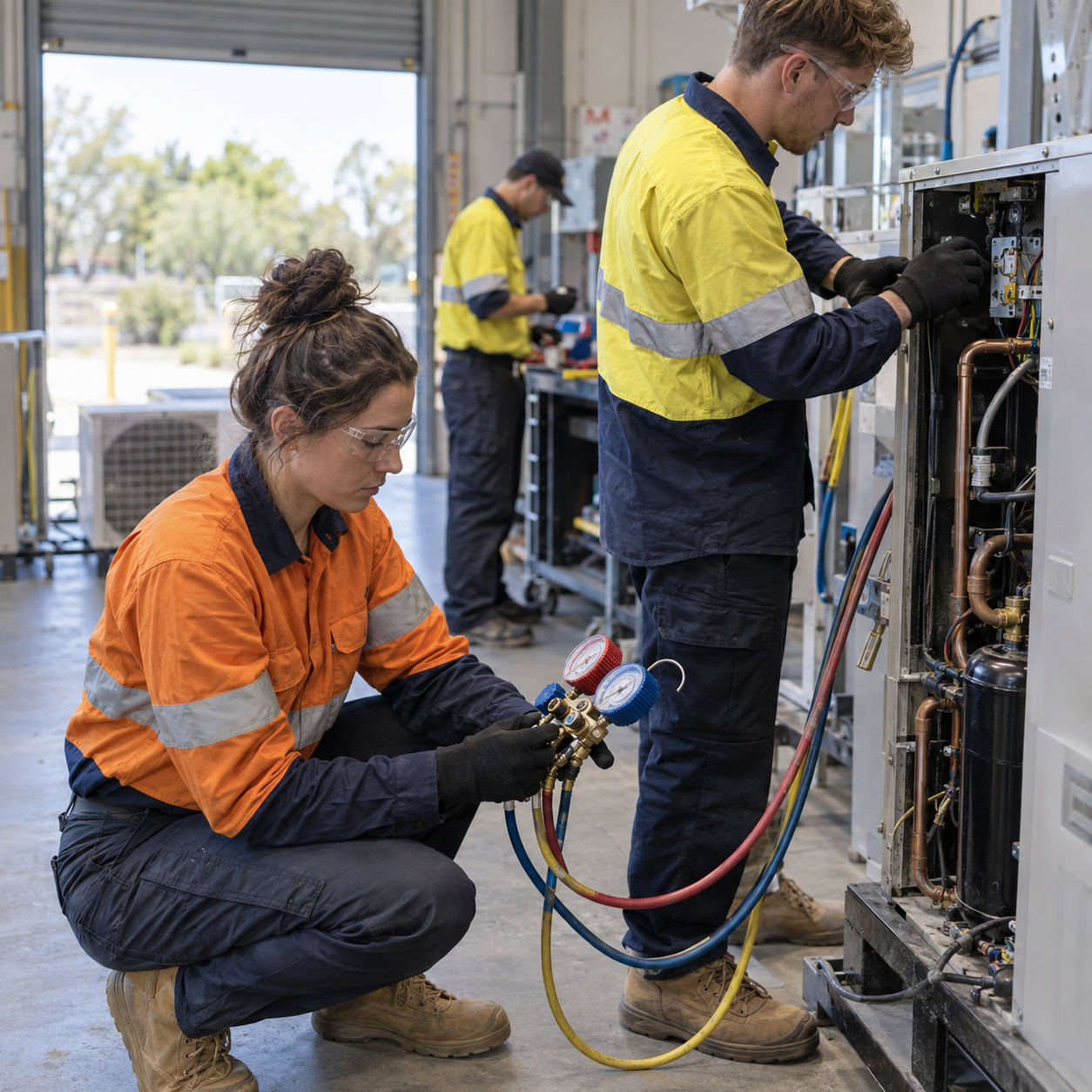
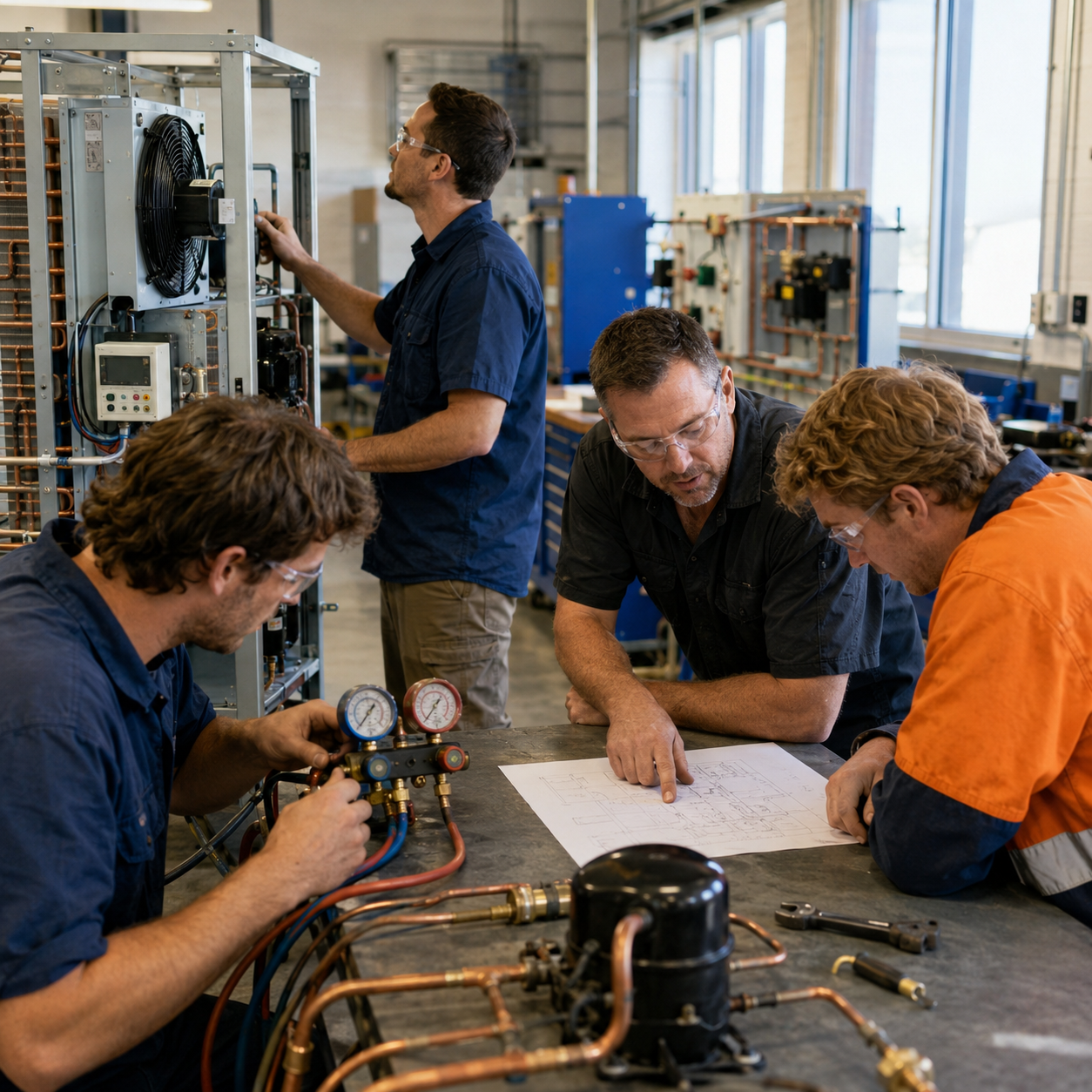
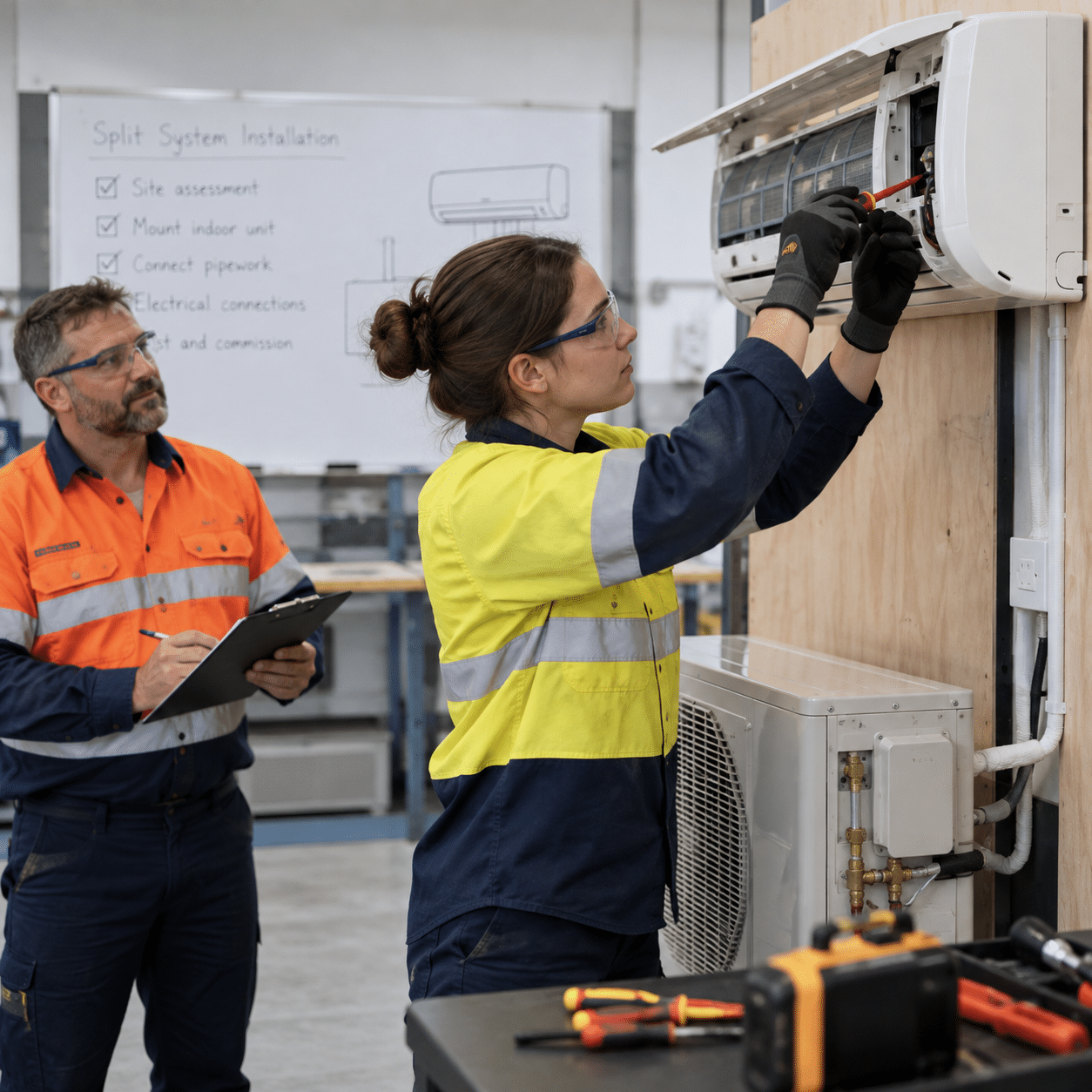
The practical component is where knowledge becomes repeatable skill. You should expect hands-on work around selecting suitable locations, mounting indoor and outdoor units, forming and connecting pipework, managing condensate drainage, routing interconnecting cable, pressure testing, evacuation and commissioning. Each stage affects the next. A rushed penetration through a wall or an outdoor unit placed without adequate clearance can turn a straightforward job into a difficult rectification.
Training should also build the habit of reading manufacturer instructions rather than relying on assumptions. Clearances, pipe lengths, electrical requirements and commissioning procedures can vary between models. The best installers are not guessing. They check the detail, then complete the work with a clear reason for every decision.
The difference between watching and doing
There is plenty of installation content online. It can be useful for seeing how experienced technicians approach a job, but watching a video is not the same as being assessed while you perform the work. A video cannot correct your flare preparation, spot a poor bend radius or ask why you selected a particular unit location.
Practical workshops create that feedback loop. You perform the task, receive direct guidance, correct errors and repeat the process until your method is sound. That is how confidence is built. It is also how experienced workers can identify gaps in habits they may have picked up on site.
A worthwhile program should use realistic equipment and job scenarios rather than keeping every activity theoretical. You need to understand the pace of a real installation, including planning the run, keeping the work area organised, communicating with others on site and completing checks before handover.
Why installation quality affects your earning potential
The refrigeration and air conditioning sector rewards people who can be trusted to complete work properly. A technician who needs constant supervision or leaves behind avoidable defects limits their own opportunities. A technician who can assess the job, work efficiently and produce a clean, reliable result becomes more valuable to an employer and more capable of taking on greater responsibility.
That does not mean speed should come before workmanship. The goal is productive work without shortcuts. Taking a few extra minutes to confirm drainage, protect pipework or complete testing properly is usually faster than returning to fix a preventable fault.
Strong split system installation training helps make your progress visible. Instead of saying you have helped on installations, you can develop demonstrated practical skills and nationally recognised training outcomes that support your next move in the trade. For workers who have spent years doing parts of the job, structured training can turn scattered experience into a clearer, more confident capability.
Split system installation training that fits around work
The traditional idea of study does not suit many working tradies. Taking extended time away from income, family responsibilities and existing job commitments is a genuine barrier. The right training model addresses that barrier without lowering the standard.
Blended delivery is effective because it separates the learning that can be completed independently from the work that needs an assessor, equipment and a practical environment. Online theory lets you work through concepts in focused blocks around your roster. Practical workshops then give you dedicated time to apply those concepts under guidance.
That structure only works if you stay accountable. Set regular study times, complete LMS activities before attending practical sessions and bring questions from your own work experience. The more prepared you are before workshop day, the more value you get from hands-on time.
Alpha Technical Training takes this results-focused approach: structured online learning, practical workshop support and training led by active industry professionals. It is designed for adults who want momentum without putting their working life on hold.
What to look for before choosing a course
Not all training pathways give you the same level of practical confidence. The right choice depends on your current experience, the work you want to perform and the qualification outcome you need. If you are completely new to the trade, you may need more foundation learning than someone who has already worked alongside experienced air conditioning technicians.
Before enrolling, look closely at how the course is delivered. Ask whether practical assessment is included, what equipment you will use, how theory support is provided and what evidence you will be expected to produce. A course that sounds quick but gives little supervised practice may leave you with a certificate and limited confidence when you are faced with a real installation.
Also consider the trainer’s current industry experience. Air conditioning equipment, controls and installation expectations change. Trainers who remain connected to field work can explain not just the textbook process, but the common site issues that delay jobs and lead to return visits.
A strong provider will be clear about expectations. You should know the commitment required, the practical workshop schedule and the standard you need to meet. Clear requirements are not a hurdle. They are what make the outcome credible.
The habits that separate capable installers
Technical skills matter, but the best outcomes come from consistent habits. Start every job by assessing the site rather than forcing the system into the first available space. Think about airflow, service access, drainage, pipe runs, noise and the customer’s actual use of the room.
Keep installation work clean and deliberate. Protect finished surfaces, manage offcuts and packaging, and avoid leaving pipework or cabling looking like an afterthought. Customers may not understand every technical detail, but they notice workmanship immediately.
Finally, treat commissioning as part of the installation, not the last five minutes of it. Confirm that the system operates correctly, review the work you have completed and make sure the customer understands basic operation and care. This is where you protect the quality of the job and your own reputation.
Build skills that create better options
Split systems are common, but competent installation is not automatic. It takes technical understanding, hands-on repetition and the discipline to follow a proven process when the job is awkward, the weather is poor or the day is running long.
The right training gives you more than a set of tasks to memorise. It gives you a practical standard to carry onto every site. Build that standard now, and the next opportunity in air conditioning is more likely to be one you are ready to take.