A capstone assessment is where capable electrical workers can lose marks for one simple reason: they treat it like a speed test. It is not. Learning how to complete electrical capstone assessments means proving you can work methodically, apply the right knowledge at the right time, communicate clearly and maintain safe work practices from start to finish.
If you have real site experience, that is a strong foundation. But experience alone does not guarantee a successful result. The assessment environment requires visible evidence of competence. Your assessor needs to see your process, not just a finished task that works.
What an Electrical Capstone Is Really Testing
An electrical capstone brings together the skills and knowledge you have developed across your training. Rather than assessing one narrow task, it checks whether you can interpret information, plan work, select tools and test equipment, carry out required work, find faults, test outcomes and complete the required documentation.
The key word is consistency. You may know how to get a circuit running quickly, particularly if you have worked in the trade for years. In a capstone, however, shortcuts can work against you. If you skip a safety check, fail to explain a test result or miss a step in your paperwork, the assessor may have no evidence that you met the required standard.
That is why preparation needs to be structured. The strongest candidates do not try to memorise every possible question. They build a repeatable approach they can use under pressure.
How to Complete Electrical Capstone Assessments
Start by getting clear on the assessment tasks before you enter the workshop. Read the learner materials, task instructions and evidence requirements closely. Know what you need to demonstrate, what documentation is expected and which areas require verbal responses. If something is unclear, ask early. Waiting until assessment day creates unnecessary pressure.
Build a task map before you practise
Break each task into its major stages. For most practical electrical activities, your map should cover planning, risk controls, equipment selection, testing, fault-finding, completion checks and documentation. This stops you from focusing only on the hands-on component while neglecting the evidence around it.
A useful approach is to write your own checklist after each practice session. Do not copy it word for word from a workbook. Put it in language that makes sense to you, then use it until the sequence becomes natural.
For example, before beginning any task, train yourself to pause and confirm the job requirements, relevant drawings or diagrams, condition of tools and test equipment, hazards, and required personal protective equipment. That pause shows control. It also reduces the chance of a small error becoming a failed task.
Know why each test is performed
Capstone candidates often remember the order of testing but struggle when asked what a result means. That is where theory revision becomes practical.
When you revise, connect every test to a purpose. Ask yourself what condition the test is confirming, what an unexpected result could indicate and what you would do next within the task requirements. If you cannot explain a reading in plain language, keep working on that topic.
Use circuit diagrams actively. Cover part of the diagram and predict where you would expect voltage, continuity or resistance readings. Then compare your expectation with the circuit logic. This develops diagnostic thinking far more effectively than rereading notes.
Practise fault-finding as a process
Fault-finding is rarely about guessing the answer. A confident technician narrows the problem through evidence. Start with the information available, check the obvious conditions, test in a logical order and record what each result tells you.
Avoid changing multiple things at once. It may get the system operating, but it does not demonstrate sound diagnostic practice. In an assessment, the assessor needs to see that you can identify the cause, not merely stumble onto a fix.
Your process should be calm and deliberate: understand the reported issue, apply the required safety procedures, inspect, test, interpret the result, identify the next check and verify the final outcome. The exact sequence depends on the task, but the principle does not change.
Prepare Your Practical Skills Under Assessment Conditions
Workshop confidence comes from repetitions that look like the real assessment, not from last-minute cramming. Practise setting up your work area neatly, using tools correctly and following each stage in order. If your training allows, ask someone to observe you and interrupt with questions. That is a useful test of whether you understand the work or are simply relying on routine.
Pay close attention to the small details that separate an acceptable attempt from a professional one. Keep conductors organised. Read labels carefully. Check connections before testing. Use the appropriate equipment for the task. Keep your work area controlled and communicate before moving to the next stage.
Speed matters only after accuracy. Rushing tends to create rework, missed checks and poor documentation. A steady candidate who follows the correct sequence will generally perform better than a fast candidate who has to retrace their steps.
Make Documentation Part of the Job
Paperwork is not an afterthought. In a capstone assessment, it is part of the evidence that supports your practical work. Candidates can complete a task successfully and still lose ground because their records are incomplete, unclear or inconsistent with what they actually did.
Practise completing forms immediately after a task while the details are fresh. Make sure your entries are legible, specific and aligned with the instructions. If you record a test result, be ready to explain what it means. If you identify a fault, document the finding and the action taken according to the assessment requirements.
Do not invent information to fill a blank. If you are unsure, refer back to the task documentation or ask the assessor for clarification where permitted. Accurate records carry more weight than hurried guesses.
Use Theory Revision That Improves Workshop Performance
Your revision should target the areas that produce hesitation in practical work. For many candidates, that includes circuit protection, earthing arrangements, test instrument use, electrical calculations, control circuits, isolation procedures and interpreting diagrams.
Instead of studying for hours without a plan, use short focused sessions. Choose one topic, answer practice questions without notes, then explain the answer aloud. Follow that with a practical example. If you are revising a control circuit, trace the circuit path on a diagram and explain what should happen when each device changes state.
This method exposes knowledge gaps quickly. It also prepares you for assessor questions, which are often designed to confirm that you understand the decisions you are making.
What to Do in the Days Before Your Assessment
The final week is not the time to learn everything from scratch. It is the time to make your existing knowledge reliable. Prioritise the tasks that feel least automatic, then practise your workflow from start to finish.
Before assessment day, make sure you have:
- reviewed the task requirements and any relevant learner resources
- practised using required test equipment correctly and safely
- refreshed your documentation and calculation skills
- prepared suitable workwear and personal protective equipment
- planned your travel so you arrive settled, not rushed
Get enough rest. A tired candidate is more likely to misread instructions, overlook a connection or lose their train of thought when questioned. Turning up organised is a performance advantage.
If You Have Experience but Feel Rusty
Experienced workers are often strong practical candidates but may not have completed formal assessments for years. That does not mean you need to start from the beginning. It means you need preparation that translates what you already know into assessable evidence.
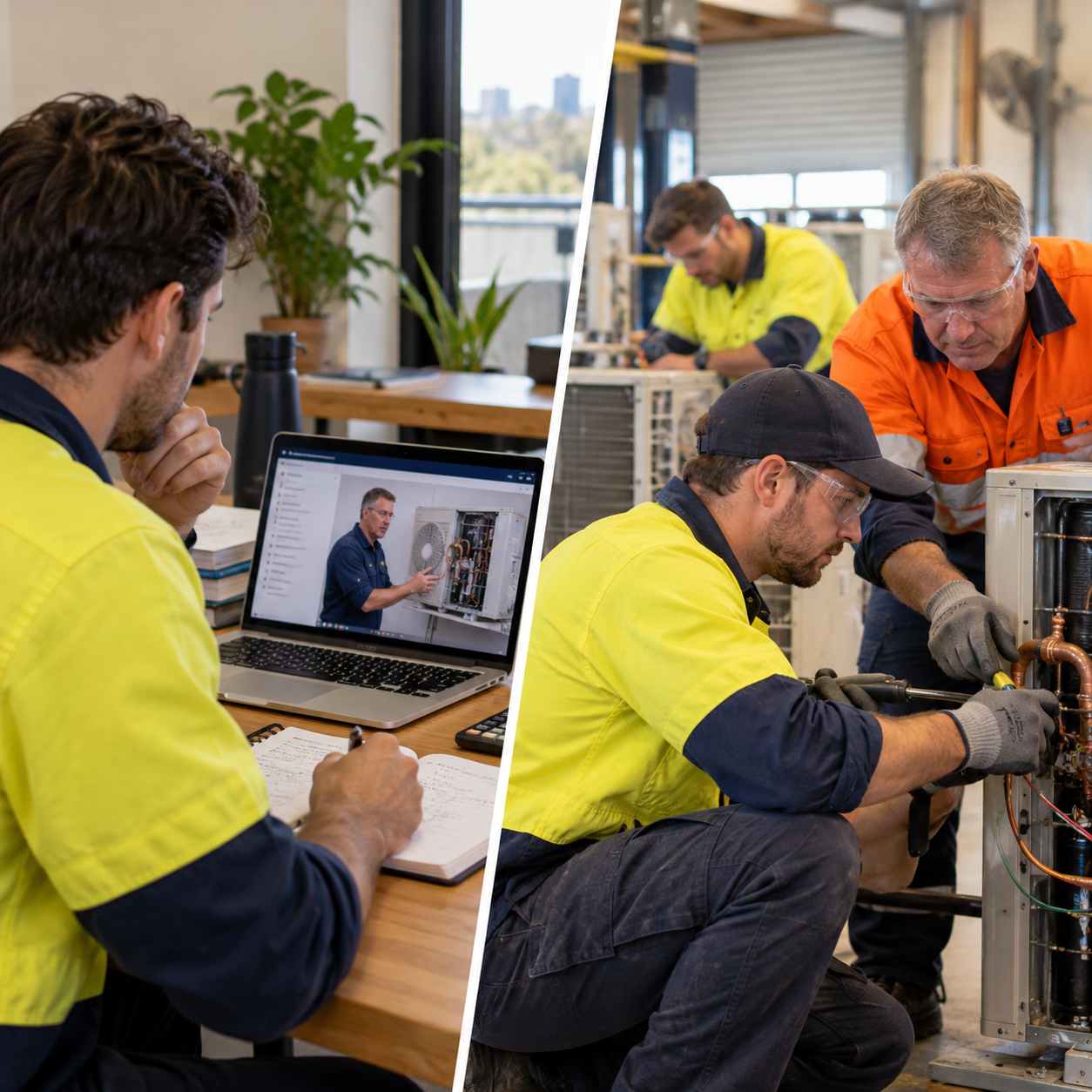
A targeted capstone preparation program can help you identify gaps, refresh core theory and rehearse practical tasks in a structured workshop environment. Alpha Technical Training supports tradespeople with blended preparation that combines self-paced theory with hands-on guidance from active industry professionals.
The goal is not to make you sound rehearsed. It is to make your competence visible, repeatable and assessment-ready.
Walk into your electrical capstone with a plan you have practised, not hope that you will remember everything on the day. When your process is organised, your testing is purposeful and your documentation matches your work, you give yourself the best possible chance to show what you can really do.