If you are already working with split systems, heat pumps or commercial equipment, the wrong course can cost you time without moving your career forward. This refrigeration certificate comparison is built for tradies who want a recognised qualification that matches where they are now and where they want to go next.
The key decision is not simply choosing the shortest course. It is choosing the qualification that reflects the work you want to perform, the systems you want to understand and the level of responsibility you want to take on. For most people comparing refrigeration training, that comes down to the difference between a focused Certificate II pathway and the broader Certificate III in Air Conditioning and Refrigeration.
Why a refrigeration certificate comparison matters
A course name can sound right while still being a poor fit for your work goals. That is why experienced workers often get stuck. They enrol in a programme that covers only a narrow part of the trade, then find it does not support the type of work, employment opportunities or technical confidence they were aiming for.
A better approach is to compare the qualification outcome first, then assess delivery, practical training, recognition of existing skills and the time you can realistically commit while working. Your current experience matters, but it should not limit your ambition. The right pathway should build on what you know while closing the gaps that hold you back.
Certificate II vs Certificate III refrigeration training
The strongest refrigeration certificate comparison starts with the scope of each qualification. These pathways serve different purposes, different experience levels and different long-term career outcomes.
| Training pathway | Best suited to | Typical focus | Career direction | |—|—|—|—| | Certificate II in Split Air-conditioning and Heat Pump Systems | People entering the trade or focusing on residential split and heat pump work | Core installation, commissioning and servicing skills for defined systems | A focused entry point into split-system and heat-pump work | | Certificate III in Air Conditioning and Refrigeration (UEE32225) | Workers seeking broad refrigeration and air conditioning competence | Diagnostics, installation, service, repair and commissioning across a wider range of systems | Broader technical roles across air conditioning and refrigeration |
Certificate II in Split Air-conditioning and Heat Pump Systems
A Certificate II pathway is a practical option when your work is centred on split air-conditioning systems and heat pumps. It is designed for people who want focused skills rather than a full trade-level qualification across refrigeration and air conditioning.
This can make sense for workers entering the industry, employees whose duties are limited to a defined system type, or tradespeople adding complementary skills to an existing service offering. The training is targeted, so the learning is more concentrated around the systems you are likely to encounter in domestic settings.
The trade-off is scope. A Certificate II is not designed to give you the same depth across fault-finding, refrigeration principles and complex equipment as a Certificate III. If your goal is to work confidently across broader air conditioning and refrigeration environments, choosing the narrower route may create another training step later.
Certificate III in Air Conditioning and Refrigeration
Certificate III in Air Conditioning and Refrigeration, UEE32225, is the better fit for people who want comprehensive trade capability. It is built for the reality of the job: diagnosing faults instead of replacing parts blindly, understanding system performance, working through commissioning issues and applying sound technical judgement under pressure.
This qualification suits experienced workers who have practical exposure but lack formal recognition, as well as motivated newcomers committed to building a long-term career in the trade. It covers a far wider technical base, including air conditioning and refrigeration systems, electrical principles relevant to the work, controls, testing and fault diagnosis.
It demands more commitment because the outcome is broader. But for a tradie who wants access to higher-value work, stronger technical credibility and a qualification that can keep pace with their career, that additional depth is usually the point.
Choose based on the work you want in two years
Do not choose solely based on the jobs you are doing this month. Ask what you want your workday to look like in two years. If you want to remain focused on residential split systems and heat pumps, a Certificate II may be the direct, practical option.
If you want to diagnose complex faults, work across a larger range of equipment or position yourself for more advanced refrigeration and air conditioning work, Certificate III is generally the stronger foundation. It gives you a wider technical language, a better understanding of system behaviour and more confidence when the fault is not obvious.
Your existing experience also changes the equation. A worker who has spent years on tools should not automatically assume they need to start from the beginning. Quality training providers assess your experience, identify the evidence required and map out the training still needed. The goal is not to repeat what you already know. It is to make sure your skills are properly assessed against the qualification requirements.
Compare delivery, not just the course code
Two providers may offer the same nationally recognised qualification, but the student experience can be very different. For working tradies, delivery is often what determines whether training gets completed or sits unfinished for months.
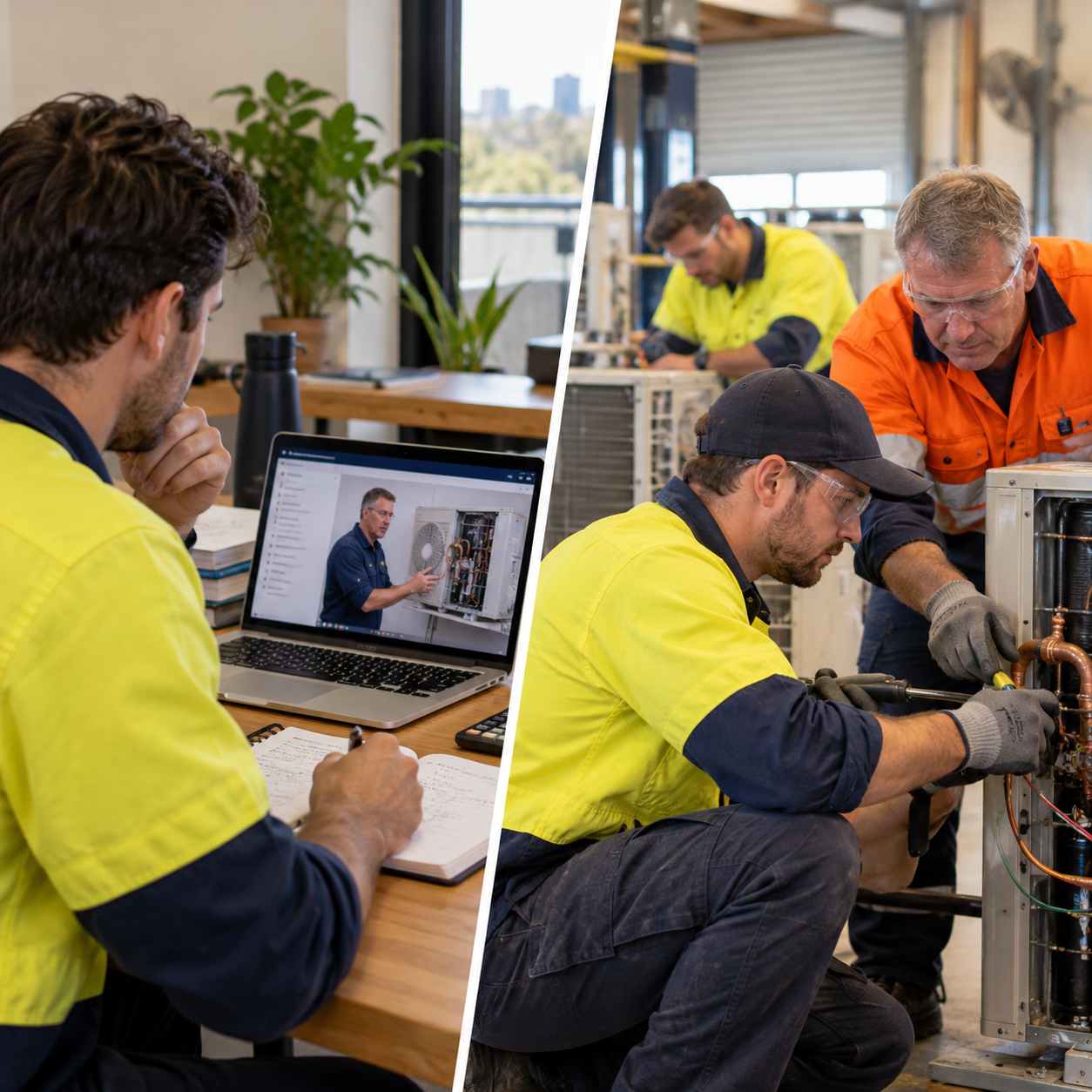
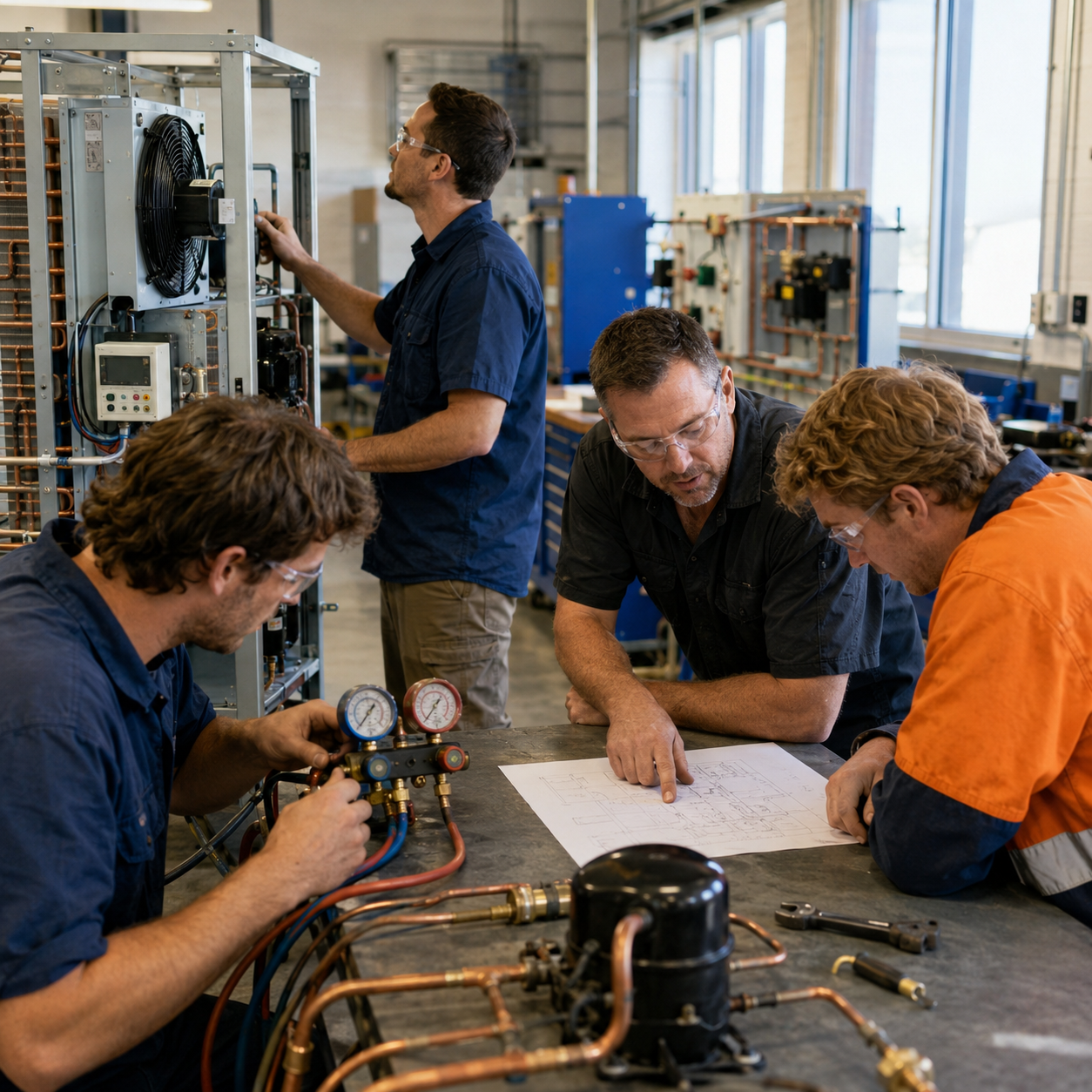
Look for a pathway that combines self-paced theory, structured online learning and practical workshops. Online modules give you flexibility around work, family and travel. Practical sessions give you the opportunity to demonstrate the skills that matter on the job, receive feedback from active industry professionals and correct gaps before they become bad habits.
The best model is organised around progress. You should know what evidence is required, what practical competencies remain and what support is available when you hit a technical roadblock. Training should fit around your work without lowering the standard of assessment.
Alpha Technical Training uses a blended-learning approach built for exactly this challenge. Students can complete structured theory around their existing commitments while progressing through practical training that keeps the focus on real trade outcomes.
Questions to ask before enrolling
Before committing to a refrigeration qualification, get clear answers about the outcome, the practical component and the support process. Ask whether the course is nationally recognised, how your previous experience can be assessed, how often practical workshops run and what equipment or tasks you will be assessed on.
You should also ask whether the provider has a clear plan for workers who are already experienced. A generic training model can be frustrating when you have genuine hands-on capability. At the same time, be wary of any pathway that promises a qualification without properly assessing the required skills. Recognition only has value when it stands up to real workplace expectations.
A Registered Training Organisation should be transparent about assessment, evidence and student support. Clear expectations are not red tape. They are what protect the value of the qualification you are working hard to earn.
The qualification should match your ambition
A Certificate II can be the right move when you need a focused pathway into split systems and heat pumps. Certificate III in Air Conditioning and Refrigeration is the stronger choice when you want broad, long-term capability across the trade. Neither option is automatically better. The right one depends on your target work, current experience and willingness to build deeper technical skill.
Do not let an unclear course comparison keep your career in the same spot. Choose the pathway that gives your effort a recognised outcome and gives your future work more room to grow.