Plenty of people start looking for an air conditioning and refrigeration course online after hitting the same wall – more experience, more responsibility, but the same pay bracket because the formal qualification is missing. If that sounds familiar, the issue usually is not ability. It is access. Traditional pathways can drag on for years, clash with full-time work, and make it hard to move forward without putting your income on hold.
That is why online study has become such a strong option for adult learners in the trade space. But there is a catch. Not every online program is built for real career outcomes. Some give you theory with no practical structure. Others look flexible on paper but leave you chasing support, evidence requirements, and licensing answers on your own. If you want a qualification that actually helps you get licensed, earn more, and work with confidence, you need to look past the word online and assess the full training model.
What an air conditioning and refrigeration course online should actually deliver
A serious air conditioning and refrigeration course online should do more than stream learning modules to your laptop. In this trade, theory matters, but practical competency, compliance and documentation matter just as much. You are not training for a desk job. You are training for a licensed, regulated field where employers and authorities expect proof that you can perform to standard.
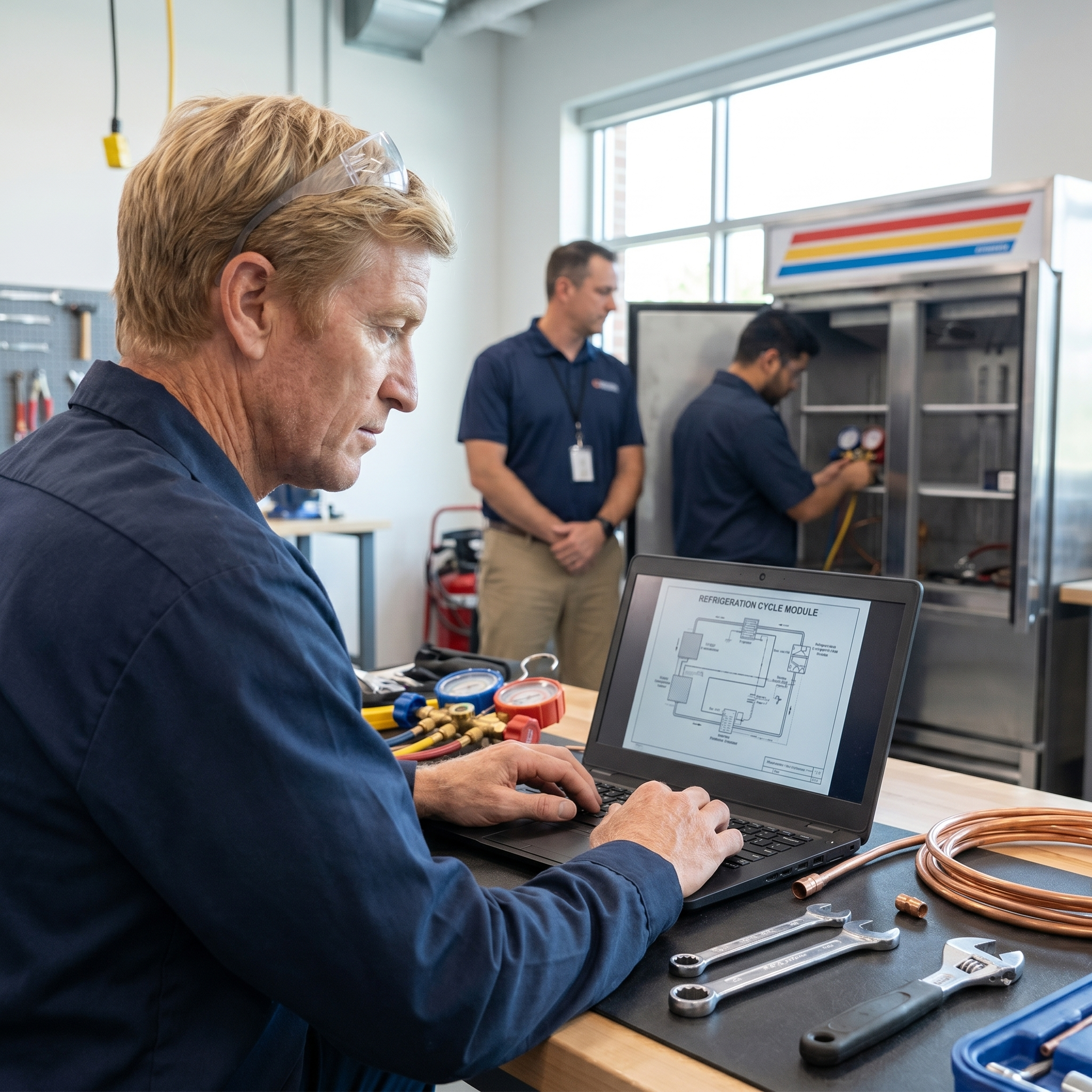
That means the right course needs a clear link between online theory and hands-on skill development. Self-paced study is valuable because it lets you keep working, manage family commitments and move faster when you have momentum. But self-paced should not mean unsupported. A strong program includes structured progress tracking, trainer access, and scheduled practical components that verify what you can actually do on the tools.
This is where many prospective students waste time. They compare courses by price alone, or by whether the learning portal looks easy to use. Those things matter, but they are not the main driver of return on investment. The bigger question is whether the course helps you move from unqualified or partially qualified worker to recognised technician without unnecessary delays.
Why flexibility matters more for tradies than for school leavers
A school leaver can often afford a slow pathway. A working adult usually cannot. If you are already on site, supporting a household, or trying to shift from general mechanical work into refrigeration and air conditioning, every extra month spent unqualified has a cost.
That cost shows up in restricted job access, lower earning capacity and missed licensing opportunities. It also shows up in fatigue. When training is poorly designed, people do not fail because they are incapable. They fall behind because the course structure does not fit real life.
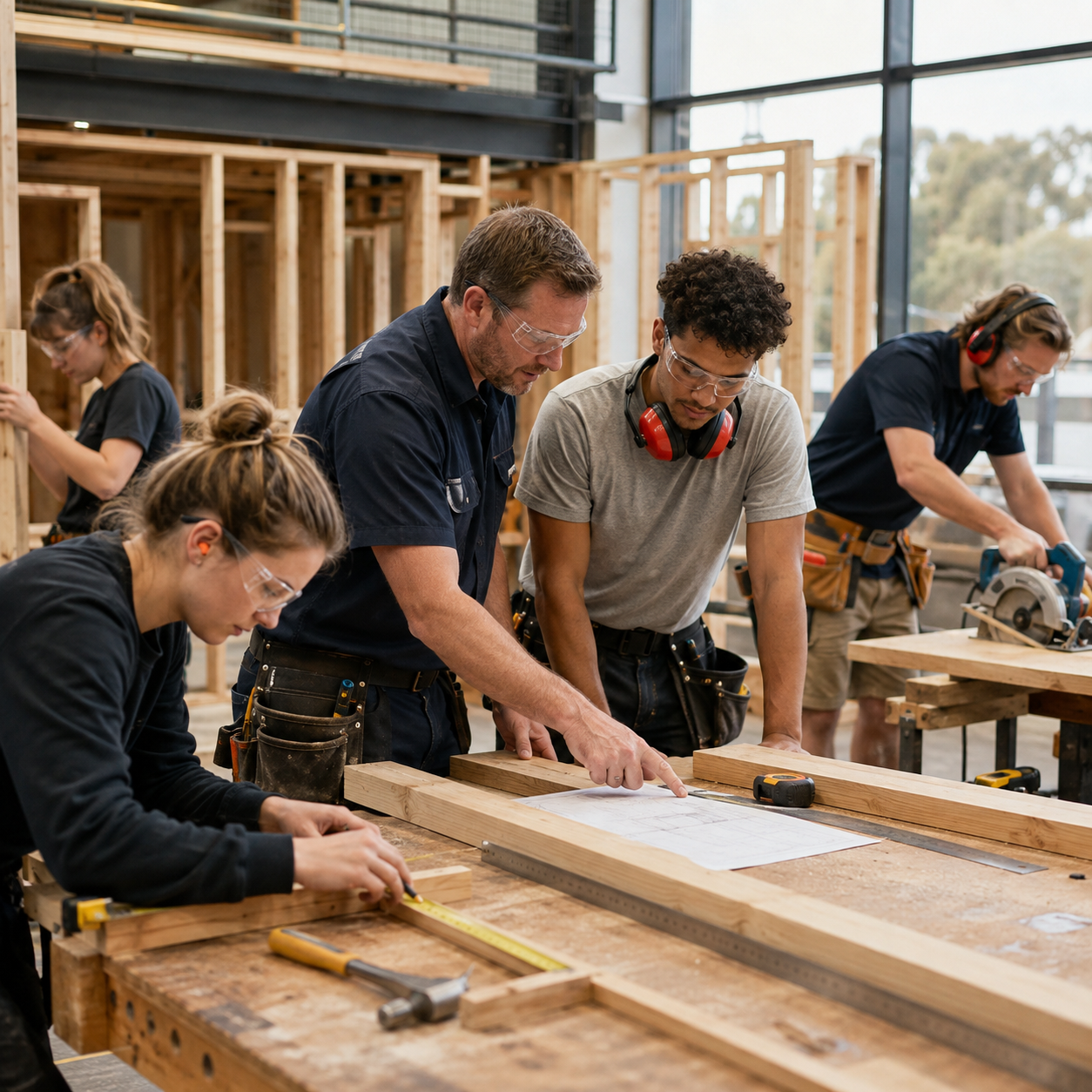
The best online options recognise that most students are balancing work, travel, family and bills. That is why blended delivery is often the smarter model. You complete theory online in your own time, then attend practical training in a structured format. It is faster than a traditional apprenticeship-only route, but it still protects training quality and compliance. That balance matters.
Online only vs blended training – the trade-off you need to understand
If a provider promotes an online-only pathway for a hands-on trade, stop and ask hard questions. Refrigeration and air conditioning work includes fault finding, installation procedures, testing, safe handling practices, electrical components, and regulated processes. You cannot build all of that from reading content alone.
Pure online delivery might suit short CPD-style learning or refresher content. It is a weaker fit for a qualification pathway unless there is a credible system for practical assessment. On the other hand, old-school classroom-heavy training can be too rigid for adults who need to keep earning.
Blended learning tends to offer the strongest middle ground. You get the convenience of online theory, the accountability of an LMS with progress milestones, and the confidence that comes from supervised practical workshops. For many Australian tradies, that is the difference between finishing and dropping off halfway through.
How to judge course quality before you enrol
Not all providers are equal, and this is where a lot of students lose money or momentum. A good air conditioning and refrigeration course online should be judged on outcomes, not marketing language.
Start with accreditation and compliance. If the course is tied to a nationally recognised qualification pathway, that gives you a stronger foundation than non-accredited training that looks attractive but does little for licensing or employment. Then look at how practical skills are delivered and assessed. If the answer is vague, that is a warning sign.
Support is another big factor. Working adults do better when the provider has actual systems in place – trainer contact, progress monitoring, clear assessment guidance and help with the admin that often slows people down. Fast-tracked study only works when the support framework is solid.
You should also ask what happens after training. Qualification is one stage. Licensing assistance, evidence preparation and guidance on the next compliance steps can save months of frustration. Providers that understand the full journey tend to produce better outcomes because they are not just selling a course. They are helping students get over the line.
The financial case for moving faster
For most adult learners, this is not really an education decision. It is an earnings decision.
If becoming qualified opens the door to better-paying roles, subcontracting opportunities or licensing pathways, then speed matters. Delaying qualification often means staying in lower-paid work longer than necessary. Even a moderate uplift in weekly income can outweigh course fees surprisingly quickly, especially if you can keep working while you study.
That is why the cheapest option is not always the smartest option. A lower-cost course that takes longer, offers weak support or creates licensing delays can be more expensive in real terms. By contrast, a structured program with payment plans, practical scheduling and strong completion support may produce a far better return because it gets you qualified sooner.
This is the logic behind accelerated vocational training. You are not paying for convenience alone. You are paying to reduce dead time between where you are now and where your trade income could be.
Who benefits most from an air conditioning and refrigeration course online?
This pathway suits a very specific type of student, and that is a strength, not a limitation. It is ideal for adults already working, people changing direction from adjacent trades, trade assistants wanting formal recognition, and experienced workers who know the job but need the paper trail to progress.
It is especially valuable for students who are disciplined enough to manage self-paced theory but still want practical structure and direct trainer input. If you need someone standing over you every day, fully online study may not suit you. But if you want control over your schedule without sacrificing standards, online plus practical workshops can be a strong fit.
For Australian workers outside metro areas, flexibility can be even more important. Travel, inconsistent shifts and family obligations often make fixed weekly classes unrealistic. A blended model gives you room to plan around life instead of putting life on hold.
What a serious provider should make easy
The training itself is only part of the experience. A serious provider should make the pathway clear from day one. You should understand what the course covers, how theory is completed, when practical training happens, what evidence is required, and what support is available if you hit a snag.
You should also know how long completion is likely to take based on your background and availability. Honest providers do not promise the same timeline for everyone because prior experience, effort and scheduling all affect the pace. But they should absolutely be able to show you a realistic fast-track pathway if you are motivated and ready to commit.
That is one reason blended training models from providers such as Alpha Technical Training are gaining traction. They are built around adult learners who need speed, structure and compliance in the same package, not one at the expense of the others.
The right course is the one that gets you qualified, not just enrolled
There is no shortage of options when you search online. The hard part is separating courses that look flexible from courses that actually move your career forward. The difference comes down to recognised training, practical assessment, support systems and a provider that understands licensing pressure in the real world.
If your goal is to become qualified faster, increase your earning potential and stop delaying the next stage of your trade career, choose a course built for that outcome. A good program should fit around your life, not derail it. And when the structure is right, getting qualified stops feeling like a years-long obstacle and starts looking like a practical next move.
The smartest time to fix a qualification gap is before it costs you another year of limited options.