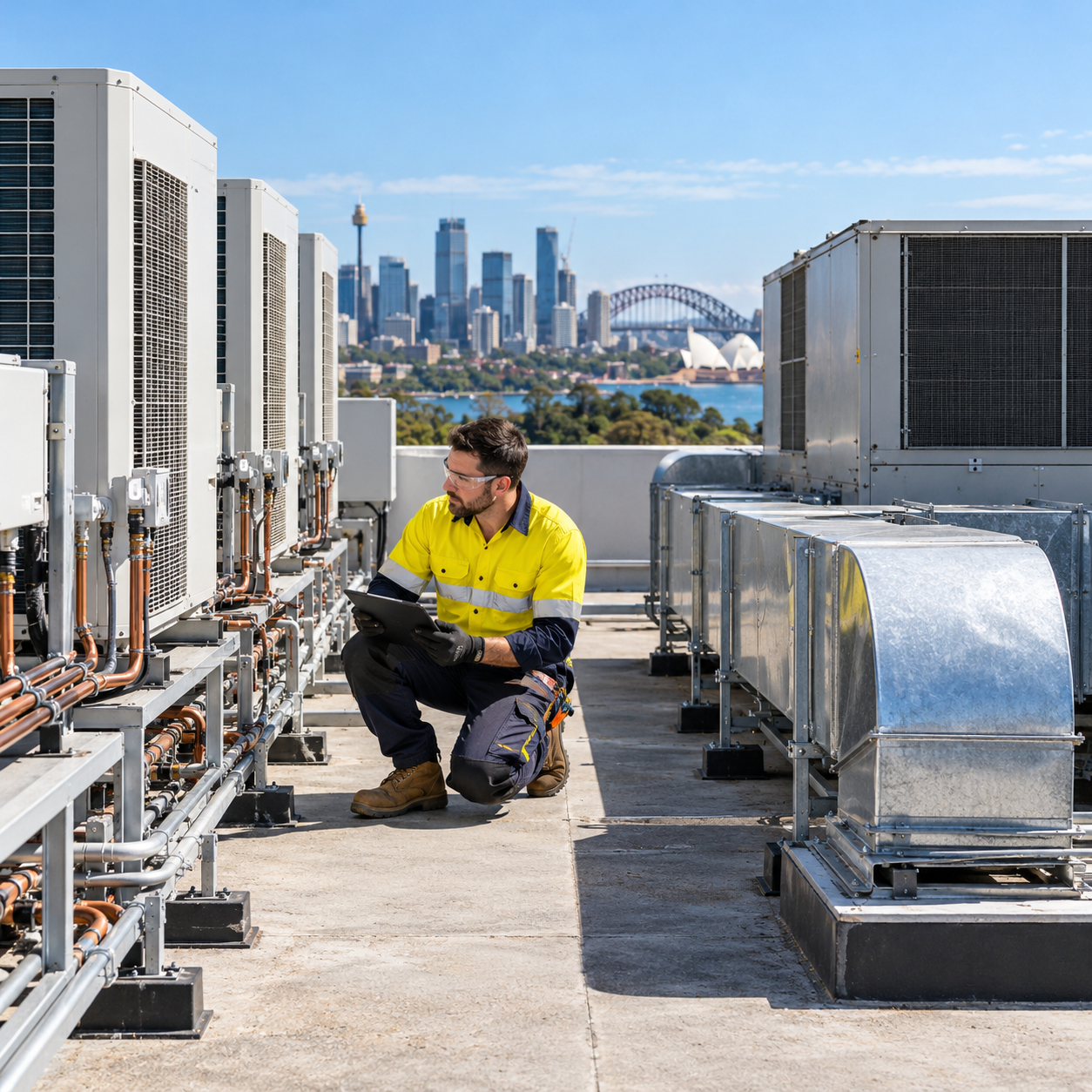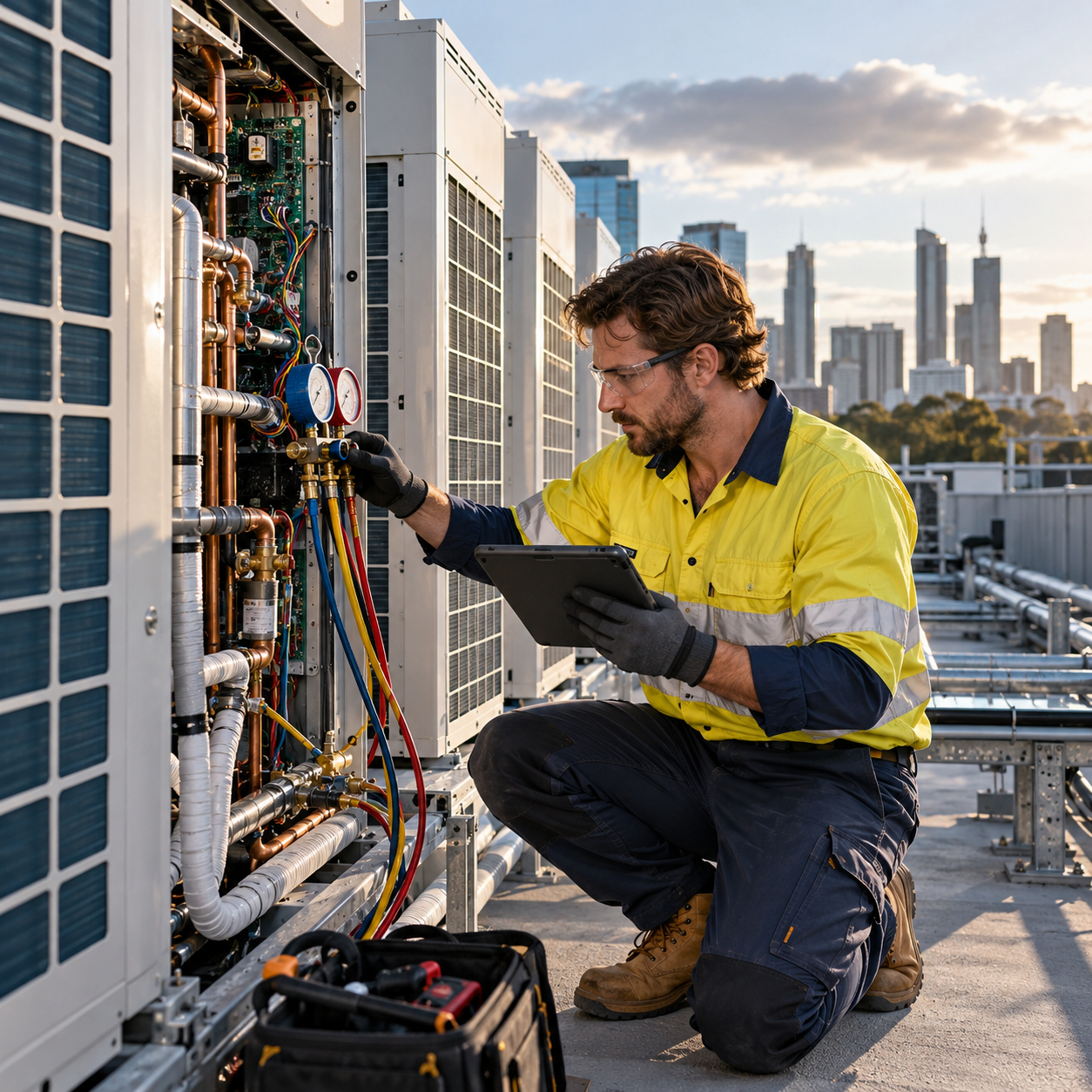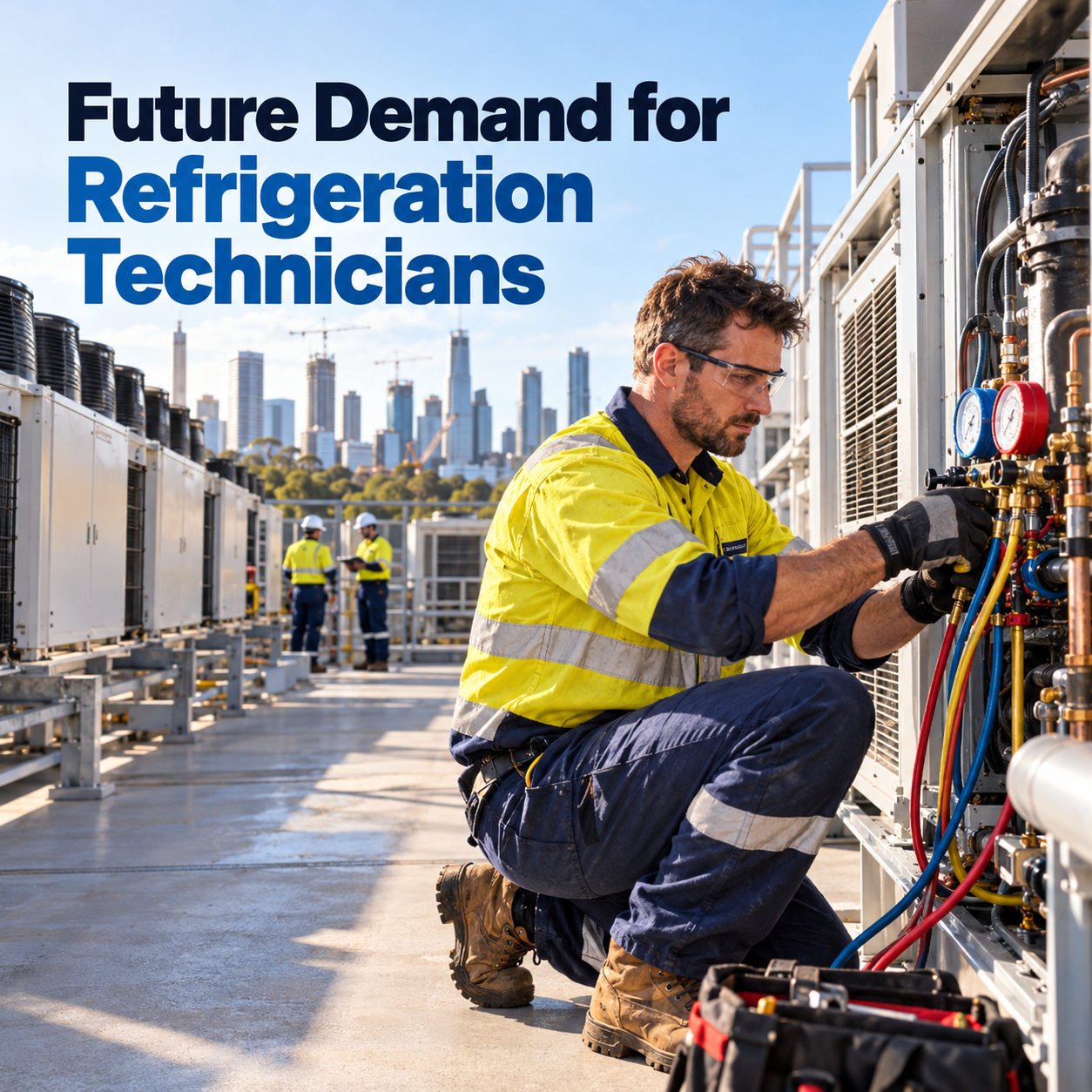
A cold room failure at a food distributor is not a job that can wait until next week. Neither is a failed air conditioning system in a medical facility, supermarket, data centre or busy office. That is the practical reason the future demand for refrigeration technicians remains strong: Australia relies on controlled temperatures every day, and the systems behind them are becoming more complex.
For workers who want a technical trade with genuine variety, refrigeration and air conditioning offers more than installation work. It can lead to fault-finding, servicing, commissioning, maintenance, upgrades and specialised systems work across residential, commercial and industrial sites. The opportunity is real, but the best opportunities will go to technicians who build recognised skills and can work confidently on modern equipment.
What is driving future demand for refrigeration technicians?
Refrigeration is essential infrastructure. Food supply chains depend on refrigerated transport, warehouses, display cabinets and cool rooms. Hospitals, laboratories and pharmacies depend on stable temperatures. Offices, schools, apartments and retail spaces rely on air conditioning that performs when the heat arrives. When a system stops, the cost of downtime can escalate quickly.
That makes this trade less exposed to the stop-start nature of some project-based work. New construction creates installation opportunities, but the installed base of existing equipment keeps generating ongoing maintenance, repair and replacement work. Every system in the field will eventually need a technician who can diagnose a fault, restore performance or recommend a practical upgrade.
The shift towards more energy-efficient equipment is another major driver. Property owners and businesses are under pressure to manage running costs, improve building performance and replace ageing assets. Heat pumps, variable refrigerant flow systems, smart controls and higher-efficiency commercial equipment all create work. They also raise the technical standard expected of the person attending the job.
Demand will not look identical in every location or sector. A technician in a regional area may see more split systems, cool rooms and agricultural applications. In metropolitan markets, there can be greater exposure to large commercial sites, multi-storey buildings, supermarkets and sophisticated building management systems. Either way, the core pattern is clear: temperature control is not optional, and capable technicians remain central to keeping it running.
Refrigeration work is becoming more technical
The next generation of refrigeration work will not simply reward the person who can replace a part quickly. It will favour technicians who understand the complete system: airflow, electrical controls, refrigerant circuits, pressures, temperatures, commissioning settings and the customer’s operating requirements.
A modern fault may be caused by a failed component, but it may also come from poor installation, an incorrect control setting, restricted airflow, a communication issue or a system that has been poorly maintained. Finding the actual cause takes methodical testing and sound judgement. That skill saves clients repeat call-outs, lost stock and unnecessary replacement costs.
Efficiency expectations are changing the job
Energy performance has become a commercial issue, not just an environmental talking point. A system that technically runs but consumes excessive power, struggles in hot weather or cannot maintain setpoint is not delivering a good result. Technicians who can assess system performance and explain practical options to clients will stand apart.
This matters across domestic and commercial work. A homeowner may want a quiet, efficient heat pump that handles summer conditions. A facility manager may need a preventative maintenance plan that reduces breakdown risk across multiple units. A supermarket may need refrigeration equipment operating reliably while protecting stock and minimising disruption. The equipment differs, but the value of skilled diagnosis is the same.
Digital controls are part of the toolkit
Controls, sensors and connected equipment are increasingly common. Technicians need to be comfortable reading manuals, interpreting fault codes, checking electrical readings and working through a structured diagnostic process. Digital tools can speed up diagnosis, but they do not replace trade knowledge. They make strong fundamentals even more valuable.
That is why a narrow, outdated skill set can hold workers back. If your experience is limited to one type of unit or basic installation work, you may still find work, but your options can be restricted. Broad competence across refrigeration and air conditioning gives you more mobility between employers, projects and customer types.
Where the strongest career opportunities sit
Service and maintenance work is likely to remain a dependable part of the market because installed systems require attention throughout their working life. This is where technicians develop sharp fault-finding ability, customer communication and the judgement to prioritise urgent issues. It is also where dependable performers build a reputation quickly.
Commercial refrigeration can be particularly attractive for workers who enjoy problem-solving under pressure. Cool rooms, freezer rooms, cabinets and larger plant demand careful diagnosis because system failure can affect products, operations and revenue. The work can be demanding, but it is difficult to replace with generic labour.
Air conditioning offers its own range of pathways. Residential systems provide a broad base of installation, service and replacement work. Commercial air conditioning can introduce larger systems, more advanced controls and complex site conditions. Technicians who keep building their capability can move towards higher-value technical work rather than staying confined to repetitive tasks.
The best pathway depends on your strengths. If you enjoy customer-facing work and changing locations, domestic and light commercial service may suit you. If you prefer technical plant, detailed diagnostics and larger sites, commercial refrigeration or advanced air conditioning may be a better fit. There is no single perfect route, but standing still is rarely the best strategy.
The skills that will protect your earning potential
Future demand does not mean every worker will automatically access better roles. Employers and clients need technicians who can produce reliable work, communicate clearly and handle complex systems without constant supervision. The practical skills that matter most are interconnected.
First, build strong electrical and refrigeration fundamentals. You need to understand how components interact, not just memorise a sequence of steps. Second, develop disciplined fault-finding. Good technicians test, measure, confirm and document rather than guessing and swapping parts. Third, become confident with commissioning and performance checks, because a system that starts is not necessarily a system that performs correctly.
Communication matters as well. Clients do not need a lecture full of technical jargon. They need a clear explanation of what has failed, what is required and what the realistic options are. Technicians who combine technical credibility with straight answers create trust, win repeat work and become easier to put in front of major customers.
Finally, stay current. Equipment changes, manufacturer requirements evolve and customer expectations rise. Training is not a one-off hurdle at the start of a career. It is how you remain useful as systems move forward.
How to position yourself for the work ahead
If you are already working around air conditioning, refrigeration, electrical or construction environments, your existing experience may be more valuable than you think. The key is turning practical exposure into structured, recognised capability and closing the gaps that prevent you from stepping into better work.
A traditional pathway can suit some people, particularly those at the very beginning of their trade career. But it is not the only model for adults with real site experience, family commitments and a full-time job. Flexible blended learning can let motivated workers complete theory around their schedule while developing practical skills through focused workshops.
At Alpha Technical Training, the focus is on giving working tradies a clear, compliant pathway through nationally recognised refrigeration and air conditioning training. The model is built for progress: self-paced theory, structured learning support and hands-on practical training led by active industry professionals. That approach suits people who want momentum without putting their income and responsibilities on hold.
Before enrolling anywhere, be clear about the outcome you want. Do you want to move from assistant-level work into a recognised trade role? Do you need stronger diagnostic skills? Are you aiming for service, installation, commercial work or a future business? A training pathway should match the work you want to be trusted with, not simply fill time.
The refrigeration technicians who will benefit most from the years ahead are not waiting for demand to make the decision for them. They are building the skills, confidence and recognised training that put them in the room when better work becomes available.