A lot of tradies hit the same wall at the same time. They’ve got real hands-on experience, they can do the work, and they’re already carrying responsibility on site – but their pay has stopped moving because they’re still not formally qualified. If you want to earn more with certification, the issue usually isn’t effort. It’s access.
Without the right qualification, you can spend years doing skilled work while getting paid like someone who’s still stuck in the middle of the ladder. You may be overlooked for better roles, blocked from licensing pathways, or limited to working under someone else’s ticket. That gap costs money, and it adds up fast.
Why certification changes your earning power
In the trades, experience matters. But recognised certification is what turns experience into leverage. It gives employers, contractors, and regulators something they can verify. That matters when higher-paying work involves compliance, sign-off responsibilities, specialist systems, or customer-facing trust.
A certified worker is often in a stronger position to ask for more because the conversation stops being about potential and starts being about recognised capability. You’re no longer saying, “I’ve done this work before.” You’re showing that your skills meet the required standard.
This is especially true in regulated sectors like air conditioning and refrigeration. The work is technical, the compliance stakes are real, and licensing matters. In that environment, certification is not a nice extra. It’s often the line between basic employment and better-paid, more secure opportunities.
Earn more with certification by moving out of the grey area
A lot of experienced workers operate in a frustrating in-between zone. They know the job, they’ve built practical skills over years, but they don’t yet hold the qualification that opens the next level. That grey area can feel manageable for a while, until you realise how much it’s costing you.
You might be limited to labouring rates when your actual value is closer to a qualified technician. You might miss out on call-out work, commercial contracts, leading hand positions, or jobs that require formal proof of competency. You might even be relying on employers who benefit from your skill while paying less because your paperwork isn’t there yet.
Certification closes that gap. It gives you a nationally recognised benchmark, which means you’re easier to hire, easier to promote, and harder to underpay.
Where the money usually shows up first
The biggest income lift does not always come from one dramatic pay jump. More often, it comes from stacking better opportunities that only open once you’re qualified.
The first shift is usually access to higher-value roles. Employers often reserve stronger wages for qualified staff because they can put them on more complex work with less supervision. The second shift is job mobility. Once you’re certified, you can apply more broadly and compare offers instead of staying where you are because you have no formal leverage. The third shift is licensing progression, which can lead to independent work, subcontracting, or business ownership.
That last point matters more than most people realise. A qualification is not just about today’s pay packet. It can be the foundation for invoicing your own work, building a client base, and creating income that is not capped by someone else’s pay structure.
The real comparison: waiting versus qualifying sooner
For many adults, the biggest objection is time. Traditional training pathways can feel too slow, especially if you’re already working full-time, supporting a family, or trying to avoid taking a financial step backwards. That concern is fair. But the better question is not whether study takes time. It’s how much money you lose by delaying it.
If formal certification takes years through a conventional pathway, that can mean years of lower wages, fewer job options, and postponed licensing. On the other hand, an accelerated, compliant pathway can bring the same nationally recognised outcome forward much sooner.
That changes the maths completely. Finishing faster means you can start accessing qualified rates earlier. It also means the cost of training is often offset by the extra income you can earn once you’re no longer stuck in the unqualified bracket.
This is why speed matters, but only when it is backed by proper accreditation and structured support. Fast training is only financially smart if the qualification is real, recognised, and aligned with the compliance standards your industry expects.
Who benefits most from earning more with certification
Not every worker is in the same position, but there are a few groups who usually see the clearest return.
One is the experienced but unqualified tradie. If you’ve been doing the work for years, certification can formalise what you already know and convert that into better pay and better options.
Another is the career changer already working in a related field. If you’ve moved into technical work from another industry and picked up strong practical skills, getting qualified can stop you from being treated like a permanent junior.
The third is the worker aiming for licensing and independence. If your goal is to get out from under someone else’s supervision, qualify properly and move toward licensed work, certification is not optional. It is the path.
Why flexible delivery matters more than people think
A lot of capable workers put off training for one reason: life is already full. They’re on the tools all day, they’ve got bills, kids, shifts, travel, and not much patience for a system that expects them to sit in a classroom five days a week.
That is exactly why delivery model matters. Flexible training is not just a convenience. For many adults, it is the deciding factor between moving forward and staying stuck.
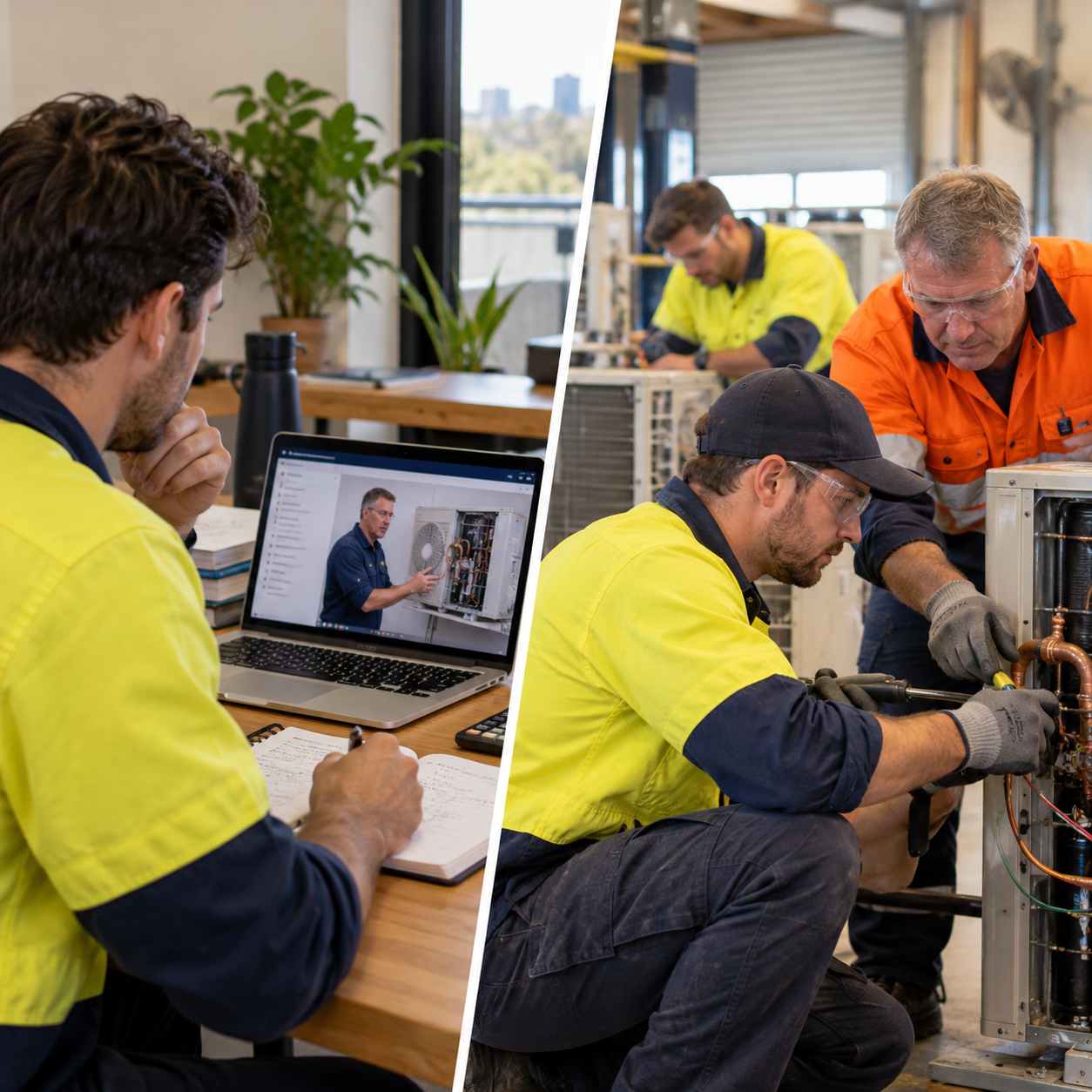
Blended learning works because it respects the reality of working life. Self-paced online theory lets you study around your schedule. Structured progress tracking keeps you accountable. Practical workshops give you real assessment and hands-on support without forcing you to put your whole life on hold.
For the right student, that model can compress the timeline without compromising the standard. And when the standard remains nationally recognised, the outcome is what matters: you get qualified sooner and can act on that qualification sooner.
What to watch out for before you enrol
Not all certification pathways deliver the same value. If your goal is to increase earnings, you need more than a course that sounds convenient.
Look at whether the qualification is nationally recognised. Check whether the training is built for adults who are already working. Make sure practical components are properly supported rather than treated like an afterthought. And ask what happens after completion – because in some trades, finishing the course is only part of the pathway. Licensing assistance can make a major difference to how quickly you turn a qualification into income.
It also pays to be honest about your own situation. Fast-tracked learning suits motivated people who can manage deadlines and stay engaged. If you need heavy hand-holding every week, a flexible pathway may still work, but only if the provider offers strong structure and support.
The ROI is bigger than wages alone
When most people think about earning more, they think about hourly rate. That matters, but it is only one part of the return.
Certification can improve job security because qualified workers are harder to replace and easier to deploy across a wider range of work. It can improve credibility with employers and customers. It can reduce the risk of being boxed into low-responsibility roles. And it can give you a clearer route to licensing, compliance, and business growth.
That wider ROI is why many workers see certification as one of the smartest financial moves they can make. The cost is visible upfront. The cost of staying unqualified is usually hidden in smaller pay packets, missed jobs, and years of delay.
For Australian tradies looking at air conditioning, refrigeration, and other technical trades, this is where decisive action matters. A provider like Alpha Technical Training is built around that reality: get the same accredited outcome through a faster, more flexible model, keep working while you study, and move toward qualification and licensing without dragging the process out for years.
If you know you’re already capable of more, getting certified is how you make the market pay you accordingly. The sooner your skills are recognised on paper, the sooner they start paying off where it counts.