A capable worker can spend years doing skilled work without holding the qualification that proves it. That gap can limit the jobs you can pursue, the work you can take on and the confidence employers have in putting you forward. The best trade certificates close that gap with recognised, practical training that turns existing ability into documented career progress.
For working adults, the right certificate is not simply the shortest course or the one with the broadest title. It is the qualification that matches the work you want to do, builds skills employers actively need and fits around the commitments you already have.
What makes a trade certificate worth your time?
A strong trade qualification should lead to a clear outcome. It should give you practical competence, be nationally recognised where relevant, and reflect the standards used on real sites, in workshops and in service work.
That matters because employers do not just need people who understand theory. They need tradespeople who can work safely, diagnose faults, read plans, use equipment correctly and finish work to a professional standard. A certificate with substantial hands-on assessment gives you evidence that your skills have been assessed in conditions that reflect the job.
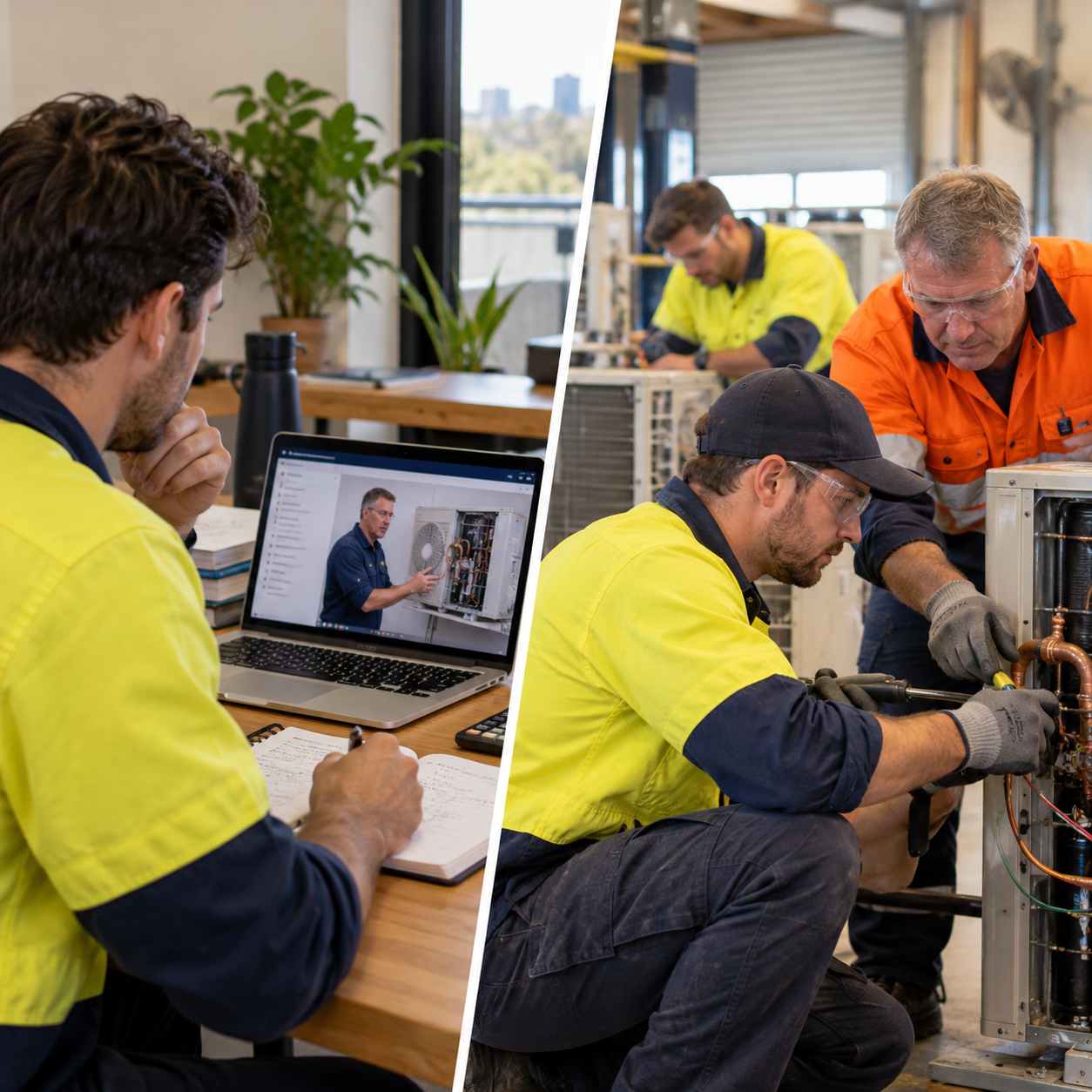
Flexibility also matters. Traditional study models can be difficult when you are already working full-time, supporting a family or travelling between jobs. Blended delivery – self-paced theory supported by structured learning and practical workshops – can help you keep earning while moving towards a recognised qualification.
The best choice depends on your starting point. An apprentice building foundations needs something different from an experienced worker who already has years of site knowledge. The goal is not to collect certificates. The goal is to select the pathway that strengthens your earning potential and puts you closer to the work you want.
Best trade certificates for high-demand technical work
Electrical, refrigeration and air conditioning remain strong choices for people who want technical, hands-on work with clear progression. These fields reward accuracy, fault-finding ability and consistent practical performance.
Certificate III in Electrotechnology Electrician
The Certificate III in Electrotechnology Electrician (UEE30820) is a major qualification for people pursuing electrical work. It develops the core competencies expected across the trade, including electrical principles, installation work, testing, fault finding and safe work practices.
It is not a casual commitment. Electrical work demands attention to detail, careful judgement and a disciplined approach to safety. For the right person, though, the return is significant: broad technical capability, strong employer relevance and a foundation for a long-term trade career.
This pathway suits aspiring electricians and experienced workers who need a structured route to formalise their skills. If you enjoy problem-solving more than repetitive production work, electrical can offer the variety that keeps a career interesting.
Certificate III in Air Conditioning and Refrigeration
The Certificate III in Air Conditioning and Refrigeration (UEE32225) is one of the most practical options for workers drawn to installation, servicing and fault diagnosis. Air conditioning and refrigeration systems are everywhere – homes, retail spaces, commercial buildings, food operations and industrial facilities all depend on them.
The work combines mechanical and electrical thinking. One day may involve system installation; the next may require diagnosing why equipment is not cooling, checking controls or completing scheduled service work. That variety makes the trade a solid fit for people who want a technical role with visible results.
It is also a field where practical training matters enormously. Reading about a system is not the same as working through a fault under the guidance of an experienced trainer. Look for a program that gives proper attention to workshop practice rather than treating hands-on skills as an afterthought.
Certificate II in Split Air-conditioning and Heat Pump Systems
For people focused on split-system air conditioning and heat pump work, a Certificate II pathway can be a sharper, more targeted starting point. It may suit those looking to build a defined skill set without beginning with the full scope of a Certificate III.
The trade-off is straightforward. A narrower qualification can get you moving in a specific direction sooner, while a broader qualification supports a wider range of technical capability over time. Choose based on the work you genuinely want to be doing in two or five years, not only the quickest next step.
Disconnect-Reconnect Low Voltage
Disconnect-Reconnect Low Voltage (UEERL0004) is a focused competency for workers whose role requires them to safely disconnect and reconnect low-voltage equipment. It can be particularly relevant to people working around appliances, equipment servicing or technical maintenance.
Its value is precision. Rather than completing training that is broader than your current role requires, you can develop a defined, job-relevant competency. That said, short courses work best when they sit within a clear career plan. If your ambition is to move into a wider technical trade, a full qualification may be the stronger long-term investment of your time.
Building trade certificates with real site value
Building and construction trades remain a powerful route for workers who prefer tangible results. You can point to a finished wall, a completed room or a structure that did not exist before you started. But construction employers also value workers who understand quality, sequencing and the standards expected on site.
Certificate III qualifications in carpentry, bricklaying and blocklaying, painting and decorating, solid plastering, and wall and floor tiling each lead towards distinct practical careers.
Carpentry suits workers who enjoy measuring, framing, fixing and working across residential or commercial projects. Bricklaying and blocklaying demand consistency, physical stamina and a strong eye for line and level. Painting, plastering and tiling reward finish quality – the difference between acceptable work and work clients notice immediately.
These are not interchangeable trades. A person who thrives on structural work may find fine-detail tiling frustrating, while someone with patience for surface preparation may excel in painting or plastering. Before enrolling, think honestly about the work environment, physical demands and type of problem-solving you prefer.
How to choose between the best trade certificates
Start with the jobs you want access to, then work backwards. Search job ads in your chosen field and note the qualifications, skills and experience employers repeatedly request. This simple exercise cuts through vague career advice and shows you what the market actually values.
Next, assess your current experience. If you have been working in the industry for years, you may need a pathway designed to recognise and build on what you already know. If you are new to the trade, you need structured foundations, more guided practice and the chance to develop confidence before the work gets complex.
Then examine how the training is delivered. Online theory is useful for fitting study around work, but it should not be the whole experience in a practical trade. You need access to organised learning, clear evidence requirements and hands-on workshops where skills can be observed and assessed properly.
Ask direct questions before you commit: Is the qualification nationally recognised? How much practical training is involved? Can you continue working while studying? Are trainers active industry professionals? What support is available if you are returning to study after years away from the classroom?
Clear answers are a good sign. If a provider cannot explain the pathway, assessment process and practical expectations in plain language, you may be buying uncertainty instead of progress.
Turn experience into a stronger position
The right certificate changes more than what appears on your resume. It gives you a clearer professional identity, a stronger case for better opportunities and a standard you can measure yourself against.
Alpha Technical Training supports working tradespeople with flexible, practical training built around real industry outcomes. The emphasis is simple: make steady progress without putting the rest of your life on hold.
Choose a trade certificate that reflects where you are now, but also where you intend to be next. Your experience has value. The right qualification gives it the weight it deserves.