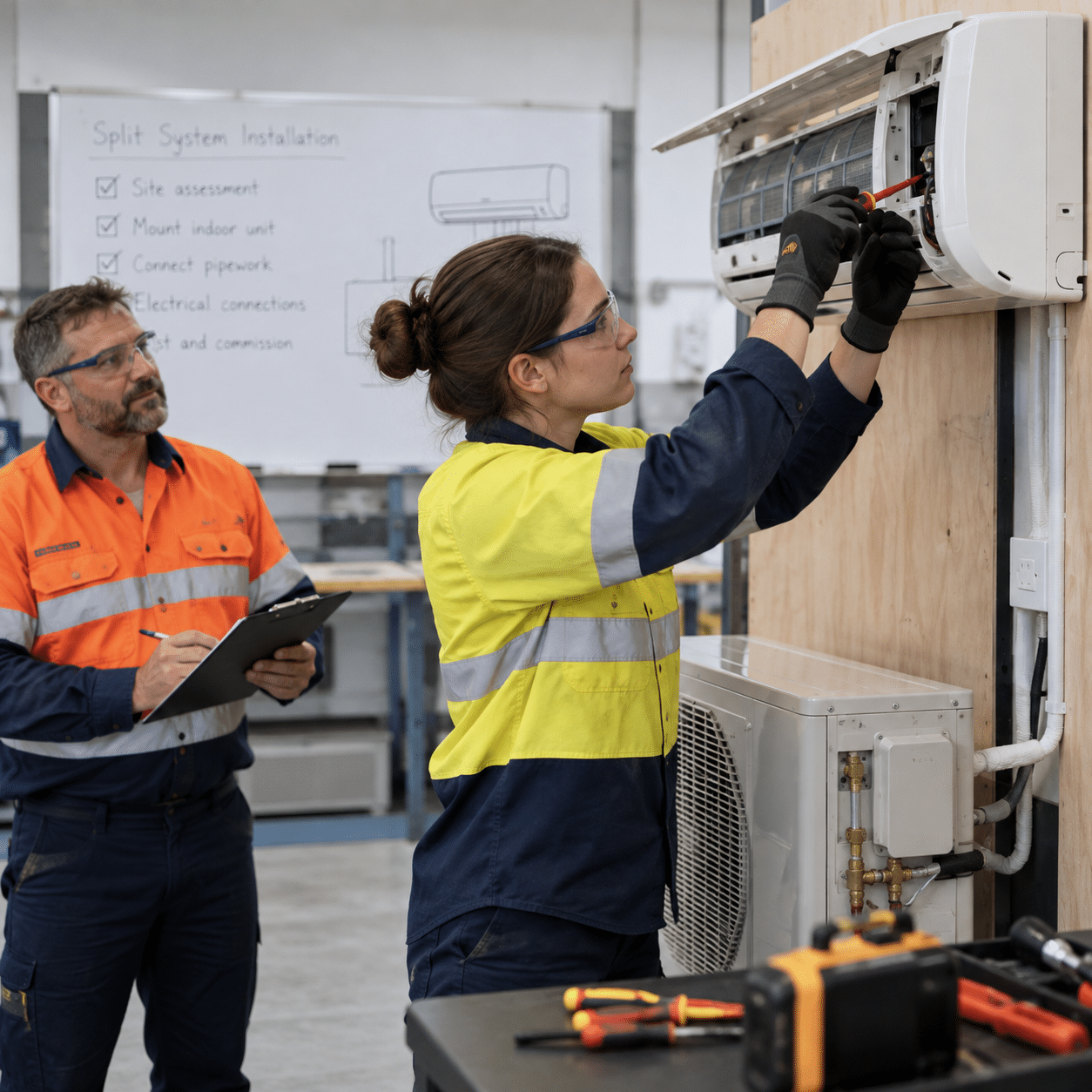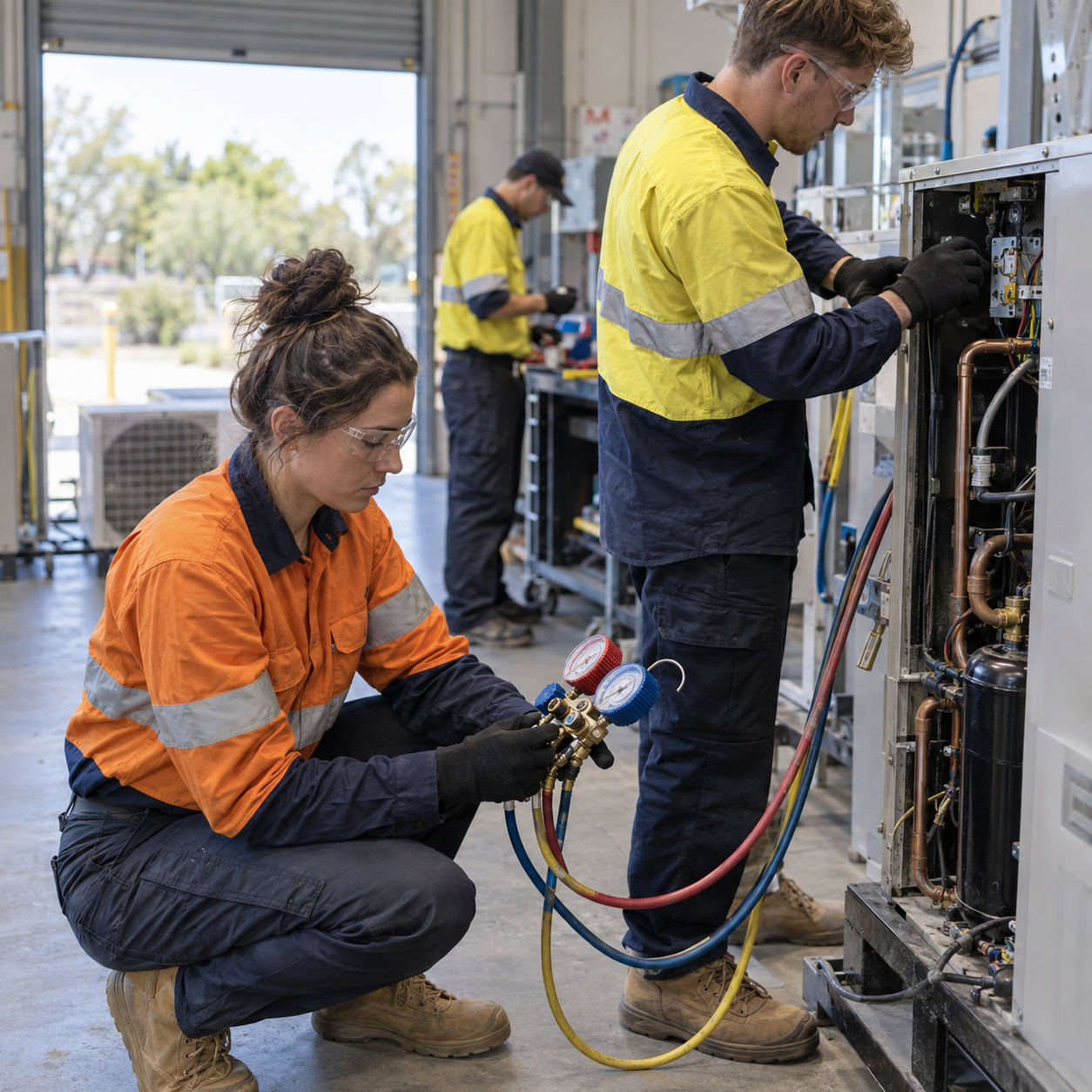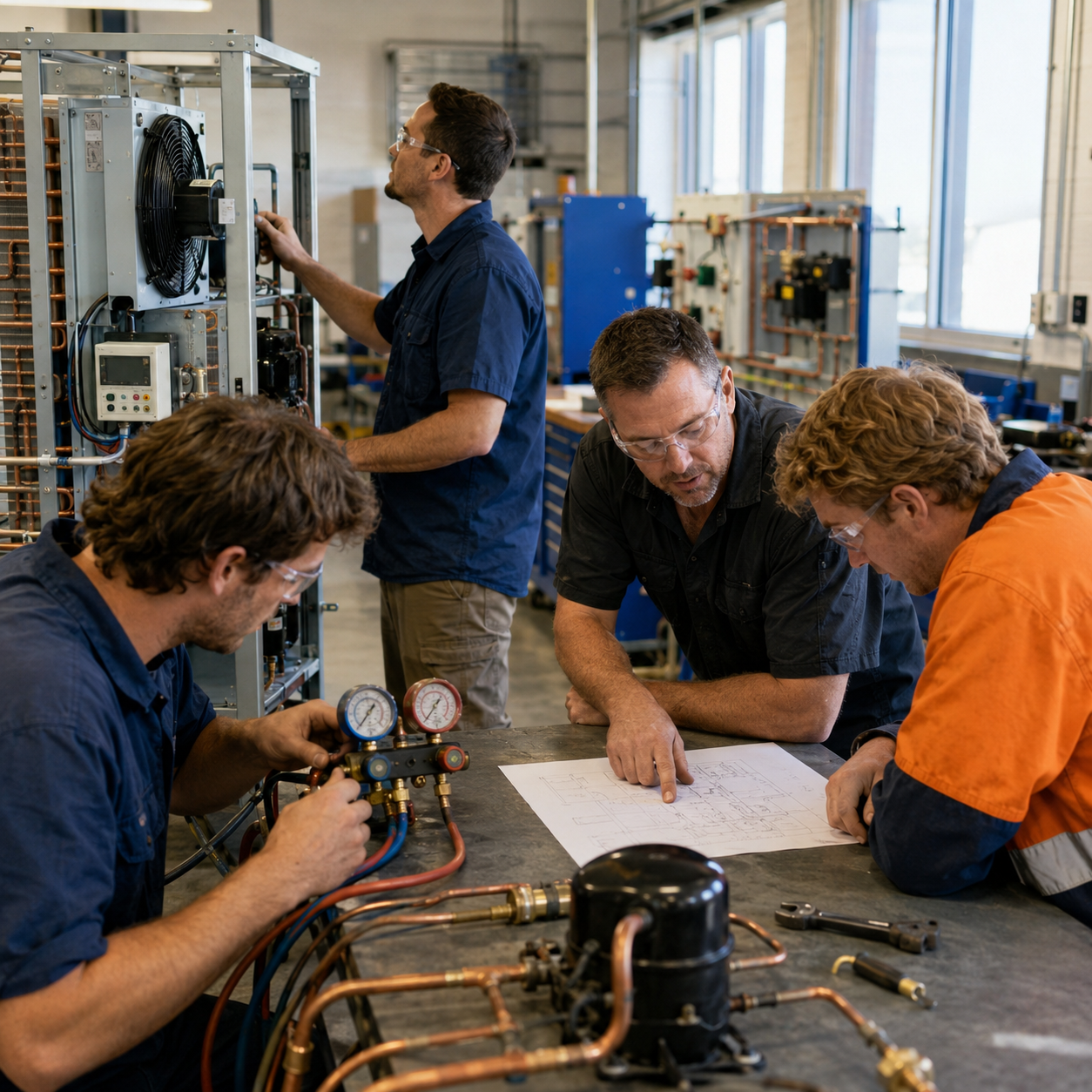
A supervisor can teach you plenty on site, but experience alone will not give you the formal credentials needed to access more refrigeration work, meet licensing requirements or move into better-paid roles. For most aspiring technicians, the best qualification for refrigeration work is the nationally recognised Certificate III in Air Conditioning and Refrigeration – UEE32220.
It is the qualification employers recognise when they need someone who can install, service, fault-find and repair air conditioning and refrigeration systems safely. But choosing the right course is only one part of the decision. You also need to understand refrigerant handling licences, electrical licensing rules in your state, practical assessment requirements and whether the training path genuinely fits around your life.
The best qualification for refrigeration work: UEE32225
UEE32225 Certificate III in Air Conditioning and Refrigeration is the core trade qualification for people who want to work across residential air conditioning, commercial refrigeration, cool rooms, display cabinets, split systems and related equipment.
The course is designed to build competence in the work that matters on the job: recovering and handling refrigerants, testing electrical circuits, diagnosing faults, installing equipment, commissioning systems and following safety procedures. It is not a quick theory certificate. A legitimate program requires practical skills to be assessed against nationally recognised units of competency.
For someone aiming to become a qualified refrigeration and air conditioning mechanic, this is usually the right destination. It is far more valuable than a short introductory course because it proves trade-level competence rather than basic awareness.
That distinction matters when you are applying for jobs, negotiating a pay rise or preparing to work independently. Employers do not just want to know that you have watched training videos or spent time assisting on a site. They want confidence that you can perform the work safely, correctly and in line with industry requirements.
A qualification is not the same as a licence
This is where many tradies lose time. Completing a Certificate III is a major step, but it does not automatically mean you can legally carry out every type of refrigeration or electrical work in every state or territory.
Refrigerant handling is regulated nationally. If your work involves fluorocarbon refrigerants, you will generally need the appropriate Refrigerant Handling Licence through the Australian Refrigeration Council. The licence class you need depends on the work you perform and must match your scope of work.
Electrical licensing is also regulated at state and territory level. Depending on where you work and the tasks you intend to carry out, you may need an electrical worker licence, a restricted electrical licence or another approval. Eligibility can depend on your qualification, supervised experience and the local regulator’s requirements.
The smart move is to choose a training provider that understands the full pathway, not just the classroom component. Your qualification should put you in the strongest possible position to progress towards the licences relevant to your work. Before enrolling, confirm the current licensing requirements in your state and make sure the course suits your career goal.
Which refrigeration career are you targeting?
The Certificate III is broad because refrigeration work is broad. A technician installing split systems in homes needs a different day-to-day skill mix from someone maintaining supermarket refrigeration racks or servicing industrial plant. The underlying qualification remains highly relevant, but the work experience you pursue afterwards will shape your specialisation.
Residential air conditioning
If you want to install, service and repair split systems, ducted units and small commercial air conditioning, you need confidence with electrical diagnostics, refrigerant procedures, installation standards and commissioning. This is a common pathway for tradies who want consistent local work and the long-term option of running their own business.
Commercial refrigeration
Commercial refrigeration can involve cool rooms, freezer rooms, display cases, ice machines and food-service equipment. The work can be more fault-finding intensive and often comes with urgent call-outs, particularly where a breakdown threatens stock or business operations. A recognised Certificate III gives you the trade base, while site experience builds speed and judgement.
Industrial and specialised systems
Larger systems may demand additional training, site-specific competencies and experience with more complex controls, plant and safety processes. The right approach is not to chase every niche course first. Build the recognised trade qualification, get your licences in order, then add specialised capability where it matches the jobs you want.
Why a faster pathway can be the better financial decision
The traditional apprenticeship route works for some people, especially those entering the trade straight from school. It can be a poor fit for an adult who is already working, supporting a family or bringing years of hands-on experience from a related trade.
A flexible, competency-based pathway does not mean cutting corners. It means avoiding unnecessary delays. If you can complete theory around your work schedule, demonstrate existing knowledge through valid evidence and attend structured practical workshops, you may be able to progress far faster than someone locked into a fixed, multi-year timetable.
The non-negotiable is compliance. Training must be delivered and assessed through an appropriately registered provider, against the requirements of the national training package. Practical competence still has to be demonstrated. Evidence still needs to stand up. Any pathway that promises a qualification with no meaningful assessment, no practical work or no discussion of licensing should raise serious questions.
The best accelerated programs balance flexibility with accountability. Look for self-paced online theory that lets you study after hours, clear LMS progress tracking so you always know where you stand, and practical workshops led by people who understand current industry conditions. That combination helps you keep earning while moving towards qualification.
What to check before you enrol
Not every refrigeration course leads to the same outcome. Before committing your time and money, assess whether the provider can support the qualification, practical training and career next steps you actually need.
Look for these four essentials:
- The exact nationally recognised qualification. Confirm that UEE32225 Certificate III in Air Conditioning and Refrigeration is clearly stated, along with the provider’s authority to deliver it.
- Real practical assessment. You need structured opportunities to demonstrate installation, testing, fault diagnosis and safe refrigerant practices – not just complete online modules.
- A realistic timetable. Ask how workshops work, what evidence you will need, how much study is expected and whether the program can fit around full-time work.
- Licensing guidance. The provider should be able to explain the likely next steps for refrigerant handling and relevant state-based electrical licensing, while being clear that final approvals sit with the regulator.
Also ask direct questions about support. If you get stuck on evidence, theory or workshop preparation, who helps you get moving again? Adult learners do not need vague encouragement. They need a structured plan, clear milestones and people who understand that every delay can cost income and momentum.
Do not mistake a short course for a trade qualification
A short safety, split-system installation or introductory refrigeration course may have value as supplementary training. It is not a replacement for Certificate III-level trade competency when your goal is to become a qualified refrigeration mechanic.
Likewise, a Certificate II can be a useful entry point for someone with no exposure to the industry, but it is usually not the final credential required to access the broader work, licensing pathways and earning potential associated with a qualified technician.
Be wary of marketing that makes qualification sound effortless. A recognised trade credential should require you to prove what you can do. The opportunity is to complete that process efficiently, with flexibility and support – not to pretend the standards do not exist.
Turn your existing experience into a recognised outcome
If you are already working around mechanical services, electrical systems, construction, facilities maintenance or air conditioning, you may have more relevant experience than you realise. Site photos, job records, references, supervisor reports, tickets and prior study can all help create a clearer picture of what you already know and what you still need to complete.
That is why a proper enrolment conversation matters. It should identify your starting point, the gaps you need to close and the practical route to qualification. Alpha Technical Training is built for working adults who want that route to be flexible, structured and focused on getting qualified without putting the rest of life on hold.
Your next career move should be based on the work you want access to in two or five years, not the easiest course to start this week. Choose the recognised qualification, confirm the licensing steps early and put yourself on a path where your skills can finally be recognised, trusted and paid accordingly.