A split system that will not communicate with its controller, a VRF installation with unstable performance, a heat pump not delivering expected efficiency – these are not problems solved by swapping parts until something works. They need technicians who understand systems, diagnostics and the real conditions on site. That is why the future of HVAC careers is not about fewer jobs. It is about higher-value work for people who can prove practical capability.
For aspiring and experienced tradies, that changes the opportunity. Basic labour will always have a place, but the strongest career progression will go to workers who can install, commission, fault-find and maintain increasingly sophisticated air conditioning and refrigeration equipment. The work is becoming more technical. So is the earning potential for people who move beyond being the extra set of hands on site.
The Future of HVAC Careers Is More Technical
Air conditioning is no longer a simple comfort feature reserved for offices and high-end homes. It is central to how homes, retail spaces, warehouses, health facilities and commercial buildings operate. As energy performance becomes a bigger consideration for property owners and businesses, systems must do more than turn on and blow cold air. They need to be correctly selected, installed, tested and maintained to perform as intended.
That puts greater pressure on the technician. A modern HVAC worker needs to read documentation, follow specifications, make accurate electrical connections, assess airflow, identify refrigerant circuit issues and understand how controls affect overall system operation. On larger sites, they may be working around building management systems, zoning, variable refrigerant flow technology and equipment with sophisticated fault reporting.
This does not mean every HVAC job will become a highly complex commercial project. Domestic split-system work remains important, and it can be a practical entry point into the sector. But workers who build their competence from fundamentals through to advanced systems give themselves more options. They are better placed to move between domestic, light commercial and specialist work as demand shifts.
Electrification Will Keep Changing the Work
Australia’s move towards electric appliances and more efficient buildings is creating a clear direction of travel. Heat pumps, reverse-cycle air conditioning and energy-conscious system design are becoming more relevant across homes and businesses. For HVAC professionals, this creates work across installation, replacement, upgrades, servicing and fault diagnosis.
The opportunity is not simply that more equipment will be sold. It is that customers will expect better results from that equipment. They want lower running costs, reliable comfort, quiet operation and systems sized for the space rather than sold as a one-size-fits-all solution. Poor installation can undermine even premium equipment. A technician who understands commissioning and performance checks delivers an outcome customers can see and feel.
There is a trade-off. More efficient equipment often comes with more controls, more sensors and more diagnostic information. That raises the standard required on site. The tradie who avoids technical learning may still find work, but they risk being limited to lower-complexity tasks while better-trained technicians take on the more valuable jobs.
Smart Systems Reward Strong Fault-Finding Skills
The old approach of relying only on experience and instinct is no longer enough. Experience matters enormously, but it must be paired with a methodical diagnostic process. Smart controls can help identify faults, yet they do not replace the person who can interpret what the system is telling them.
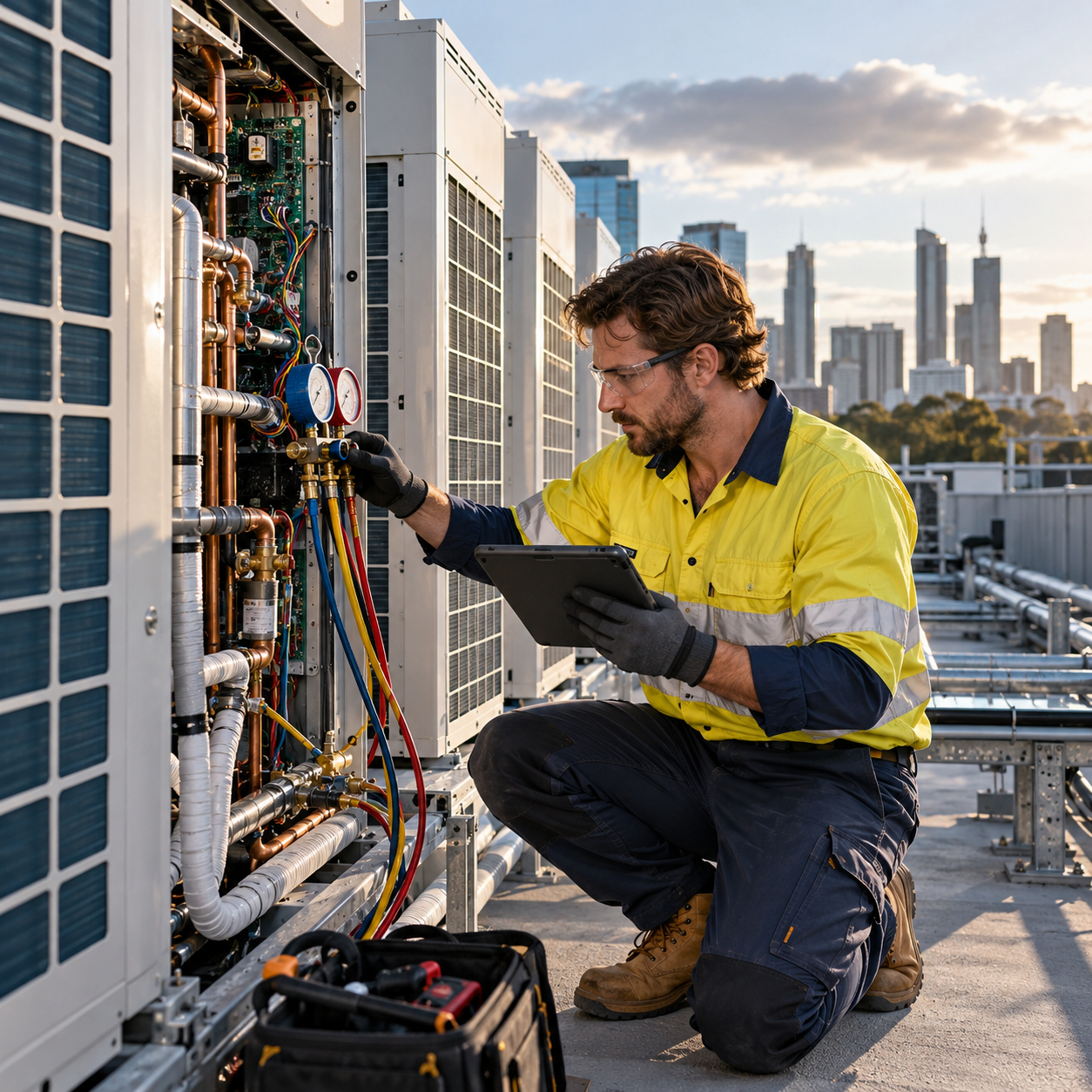
A fault code may point to a communication issue, but the real cause could sit in wiring, configuration, a failed component, an incorrect installation step or another issue entirely. The technician who follows test procedures, uses instruments properly and understands the sequence of operation gets to the cause faster. That saves callbacks, protects the business’s reputation and reduces downtime for the customer.
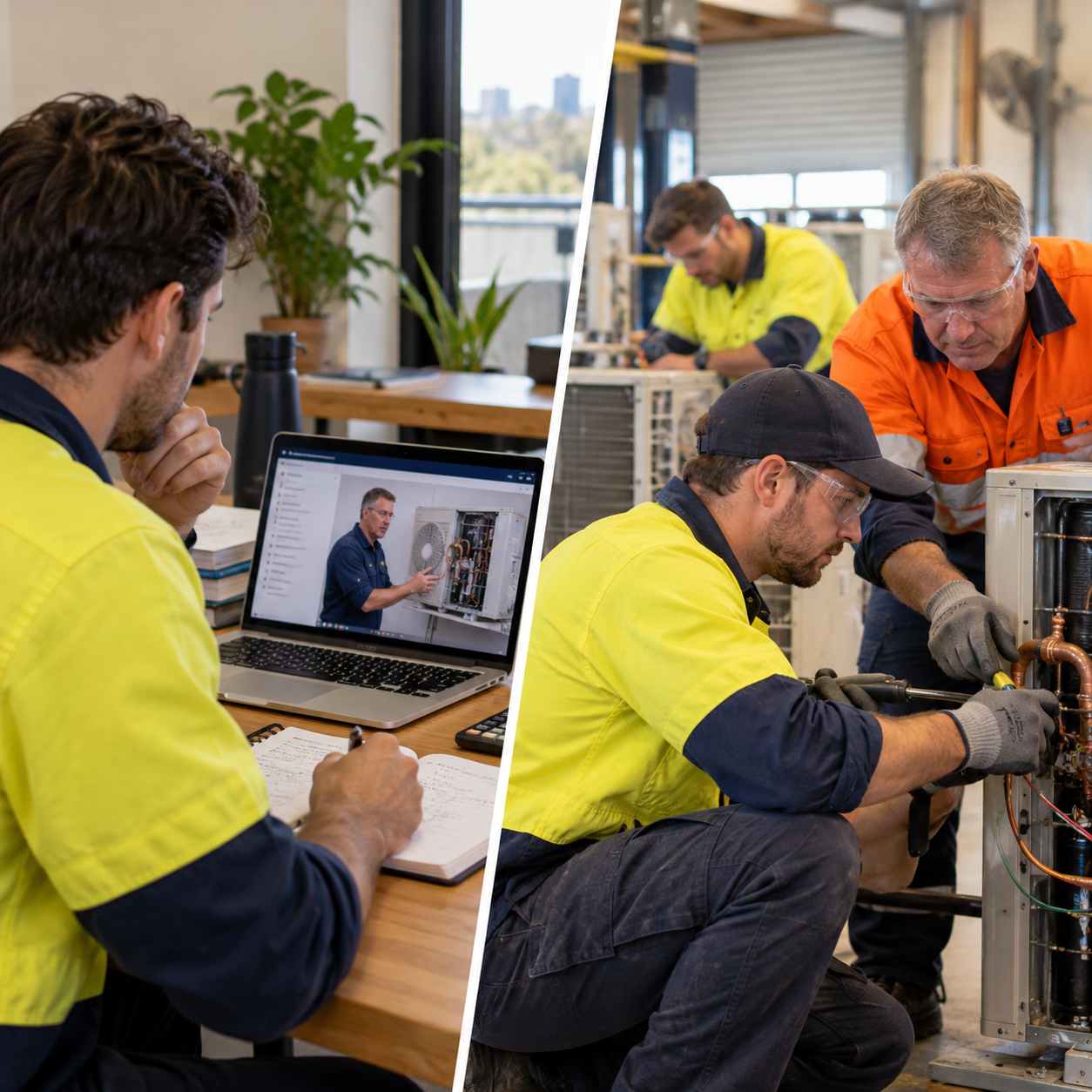
This is where formal training can make a measurable difference to career momentum. It gives experienced workers a structured way to close knowledge gaps, while newer entrants build correct habits before poor practices become ingrained. Practical workshops matter because HVAC work is hands-on. Theory explains the system; supervised application develops confidence under real conditions.
The Skills That Will Separate Technicians
The most employable HVAC workers will not necessarily be the ones who have worked the longest. They will be the ones who can demonstrate capability across the tasks employers and customers need completed properly. That includes safe electrical isolation practices, refrigeration fundamentals, installation standards, commissioning, air balancing awareness, controls and systematic fault-finding.
Communication will matter too. A strong technician can explain a problem clearly to a supervisor, builder or customer without hiding behind jargon. They can document what was tested, what was found and what work was completed. This is especially valuable for tradies who want to step into senior technician roles, supervise others or build a reputation that brings repeat work.
Domestic and Commercial HVAC Offer Different Paths
There is no single best HVAC career path. Domestic work can offer variety, fast exposure to customers and a steady flow of installation and service work. It often suits people who value independence and enjoy seeing a job through from quote to completion. Commercial work may involve larger systems, planned maintenance programs and more technical coordination with other trades.
Specialisation can pay off, but it should be built on solid core competence. A worker who understands split systems and refrigeration principles can progress into VRF, ducted systems, controls or commercial maintenance with far more confidence than someone who has only learned one narrow task. Conversely, a technician who tries to chase advanced work without sound foundations can quickly be exposed when a difficult fault appears.
For many people, the smartest move is to build broad capability first, then choose a direction based on the work available in their area, the employers they want to work for and the kind of day-to-day work they actually enjoy. A coastal regional market may create different opportunities from a major city commercial market. The right path depends on demand, experience and personal goals.
Qualifications Turn Experience Into Career Leverage
Plenty of capable workers have learned valuable skills on the job but remain stuck because their experience is not formally recognised. They may be trusted to do the work, yet miss out on better roles, larger projects or the confidence that comes from holding a nationally recognised trade qualification.
That gap can be closed without putting life on hold. Flexible blended learning allows working adults to complete theory around their existing commitments and attend practical training with active industry professionals. The goal is not to make training feel easy. The goal is to make progress realistic for people with a job, family and financial responsibilities.
For experienced workers, a structured pathway can also expose blind spots before they become costly problems. For career changers, it provides a clear route into a trade with long-term relevance. Either way, the result is the same: stronger evidence of competence and a better position when opportunities arise.
Alpha Technical Training supports tradies who want to turn existing experience and ambition into recognised HVAC capability through flexible, practical training built around real industry outcomes.
What to Do Now if You Want a Better HVAC Career
Do not wait for the industry to become more technical before taking your next step. Start by honestly assessing where you are strongest and where you are relying on guesswork. If you can install equipment but lack confidence in diagnostics, focus on fault-finding. If you have years of site experience but no recognised qualification, build a pathway that fits around work. If you want to work on advanced systems, strengthen your fundamentals before chasing the specialist badge.
The technicians who will lead the next phase of the industry are preparing now. They are building skills that reduce callbacks, improve system performance and make them harder to replace. In a trade where technology keeps moving, the best career move is simple: become the person who can solve the problems others cannot.