A VRV system fault does not wait for a convenient time. When a commercial site has multiple indoor units, demanding occupants and a tight handover date, the technician on site needs more than product familiarity. They need the judgement to diagnose the system, understand the wider installation and work confidently across the job. That is the real decision when weighing a VRV course versus HVAC qualification.
A VRV course can sharpen your capability on a specialised system. A broad air conditioning and refrigeration qualification develops the foundation to work across the trade. Neither option is automatically better. The right choice depends on the work you do now, the work you want access to next, and whether you need a targeted skills boost or a recognised trade pathway with long-term value.
VRV course versus HVAC qualification: the real difference
VRV stands for Variable Refrigerant Volume, Daikin’s term for a variable refrigerant flow system. These systems are common in commercial applications because they can serve multiple zones from connected outdoor equipment. They are sophisticated, efficient and highly configurable, which is exactly why training on their design, commissioning approach, controls and fault diagnosis can be valuable.
A VRV short course is specialist training. It is designed to help people understand the architecture and operation of VRV equipment, interpret system information and work more effectively around that product family. For a technician already operating in commercial air conditioning, this can be a direct way to become more useful on sites where VRV systems are installed.
An HVAC qualification has a wider purpose. In Australia, the Certificate III in Air Conditioning and Refrigeration, UEE32225, is a nationally recognised trade qualification covering the practical and theoretical capability expected across air conditioning and refrigeration work. It builds broad competence, rather than concentrating on one manufacturer or system type.
That distinction matters. One course helps you become sharper in a specialist lane. The other gives you a stronger platform across residential, light commercial and commercial work, including the core skills that transfer when equipment, controls or job types change.
What a VRV course can do for your career
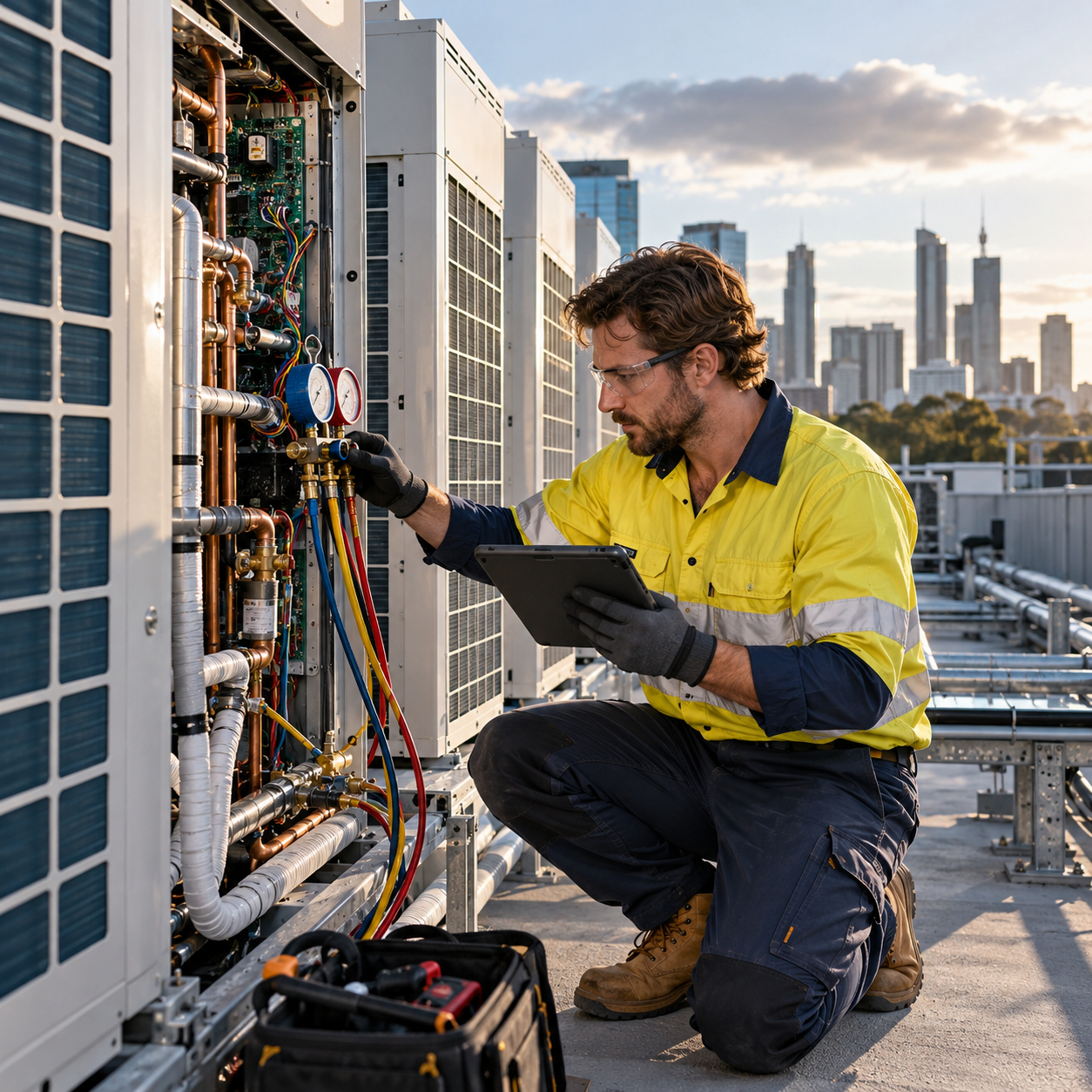
A VRV course suits someone who already has a solid trade base and wants to reduce uncertainty around a system they encounter regularly. It can help you understand how VRV systems are configured, how indoor and outdoor units interact, what operating data means and where to start when a fault is not obvious.
The commercial benefit is practical. A technician who can approach a VRV call-out methodically is less likely to lose hours guessing, swapping parts without evidence or escalating a problem that could have been diagnosed on site. Better system knowledge also supports clearer communication with supervisors, builders, facility managers and customers.
Specialist training is particularly worthwhile when your employer has a strong commercial maintenance portfolio, your projects regularly specify Daikin VRV equipment, or you want to move towards larger and more technical installations. In those situations, product-specific knowledge can make you more productive quickly.
But a short course has a defined ceiling. It does not replace the breadth of a full trade qualification. It will not give you the same exposure to the range of equipment, installation methods, electrical principles, refrigeration fundamentals and practical assessment required to build all-round capability.
That is not a weakness in the course. It is simply the wrong expectation. A VRV course is a precision tool, not the whole toolbox.
What an HVAC qualification builds
An HVAC qualification is for people who want recognised, transferable trade capability. It is the stronger option if you are entering the industry, formalising substantial hands-on experience, or moving from basic split-system exposure into wider air conditioning and refrigeration work.
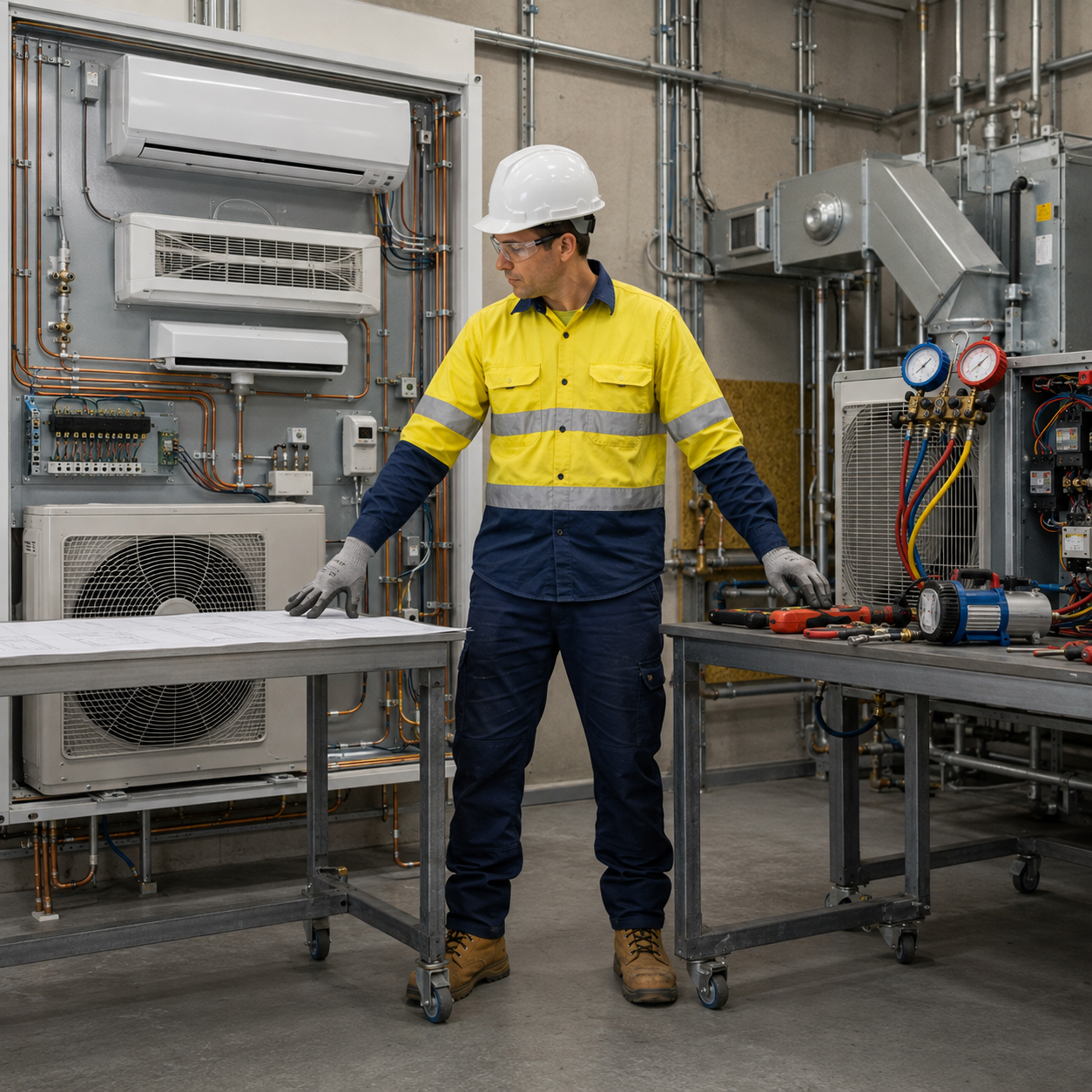
The value is not just the certificate at the end. It is the structured development behind it. You build knowledge of systems and components, fault-finding processes, installation practices, electrical connections, safe work procedures and the disciplined workflow that separates a parts changer from a reliable technician.
This broader base has a direct impact on opportunity. If one week you are working on a split system, the next on refrigeration equipment and then on a commercial plant issue, you need principles that travel with you. Manufacturers release new models. Controls evolve. Sites vary. The technician who understands why a system behaves as it does is better placed than someone trained only on a single platform.
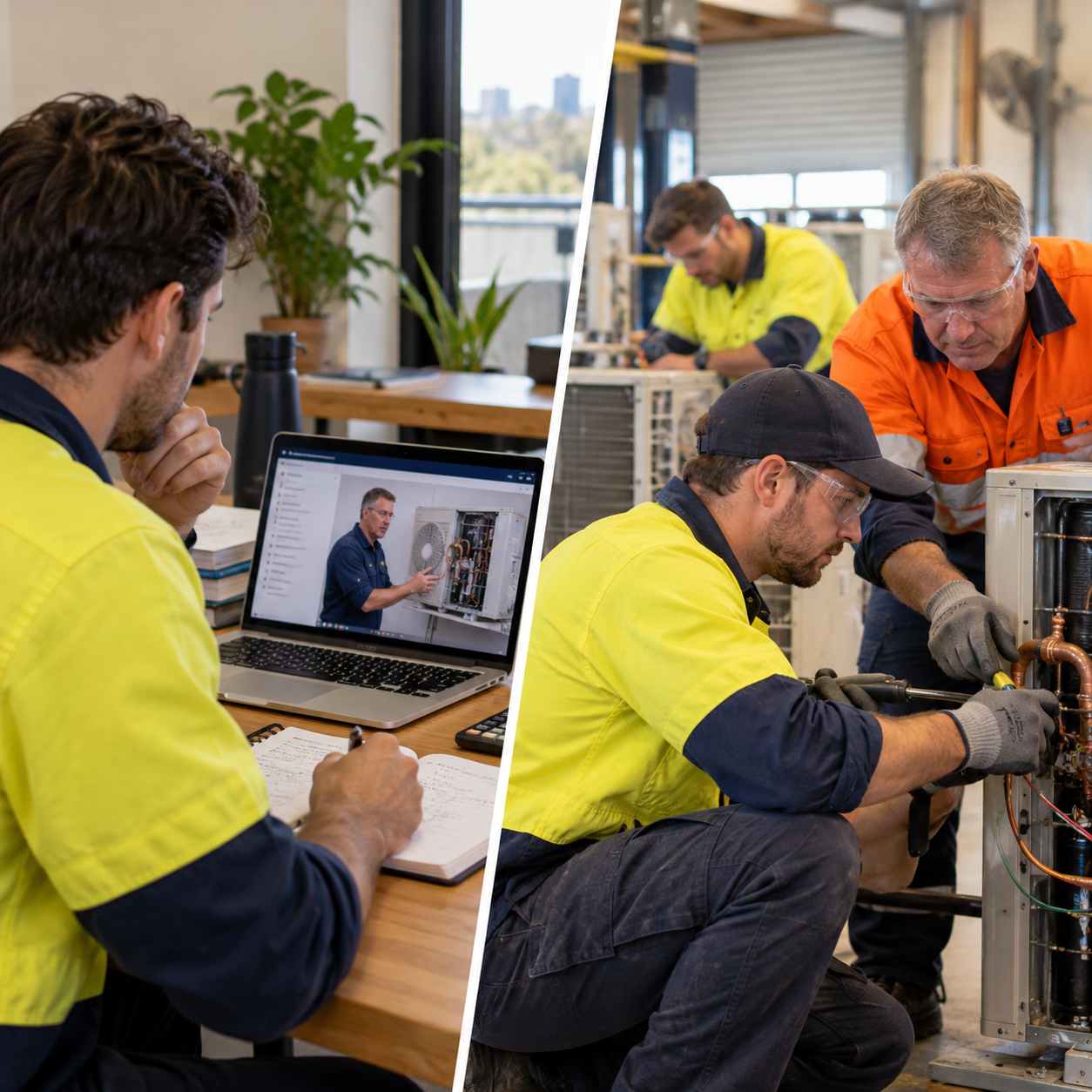
For experienced workers, a qualification pathway can also be a smarter use of existing knowledge. Rather than repeating what you already know, a structured training and assessment process can identify demonstrated skills, close genuine gaps and focus practical workshop time where it delivers the greatest return. This is especially important for tradies who cannot afford to step away from full-time work for a traditional, drawn-out training model.
Alpha Technical Training delivers flexible blended learning that combines self-paced theory, structured learning support and practical workshops led by active industry professionals. That format is built for working adults who need progress without putting their income on hold.
Compare the scope before you commit
| Decision point | VRV course | HVAC qualification | |—|—|—| | Primary focus | Daikin VRV system knowledge and specialist application | Broad air conditioning and refrigeration trade capability | | Best for | Existing technicians working with VRV equipment | New entrants and experienced workers seeking formal, transferable skills | | Training outcome | Targeted system expertise | Nationally recognised qualification outcome | | Career value | Stronger performance on relevant VRV work | Wider job readiness across equipment types and work settings | | Long-term flexibility | Depends on continued exposure to the product family | Better suited to changing roles, employers and system types |
The key point is scope. If your next job is likely to involve VRV systems, specialist training can deliver immediate relevance. If your next five years could involve a mix of service, installation, maintenance and refrigeration work, the broader qualification usually provides a more durable return.
When a VRV course is the right first move
Choose a VRV course first when you already hold a strong trade foundation and have a clear commercial reason to specialise. Maybe your employer services Daikin-heavy sites. Maybe you are moving into facilities maintenance where multi-zone systems are routine. Maybe you are technically capable but want more confidence reading system behaviour, configuration details and fault information.
In these cases, targeted training helps close a specific performance gap. You do not need to spend time revisiting basic concepts if your immediate goal is to work better on the equipment in front of you.
A VRV course also makes sense as professional development after gaining a broader qualification. This sequence is often powerful: build the trade fundamentals first, then add specialist manufacturer knowledge as your work becomes more focused. You gain the confidence to work across systems while developing a point of difference in the commercial market.
When an HVAC qualification is the stronger choice
Choose the qualification first if your experience is limited, your skills have been learned informally, or you want to stop being restricted to narrow tasks. It gives you a recognised framework for the work you know and the work you need to learn next.
It is also the better fit if you are planning for independence, better roles or a move from residential work into more complex environments. Employers value people who can adapt. A qualification signals that your skills are not tied to one brand, one supervisor or one type of site.
For many working tradies, the biggest mistake is chasing a string of short courses while avoiding the core qualification. The certificates can look productive, but they may not solve the underlying problem: limited breadth, inconsistent knowledge and fewer options when you want to step up. Specialist courses add value fastest when they sit on top of a solid foundation.
Build the pathway around the work you want
Do not choose based on what sounds more advanced. VRV is technically complex, but complexity is not the same as career breadth. Start with an honest assessment of your current experience and the jobs you want to be trusted with.
If you are already established in air conditioning and refrigeration and need sharper capability on Daikin VRV systems, a short course can be a focused, commercially relevant move. If you want broad credibility, practical depth and a qualification that keeps working for you as your career changes, start with HVAC training and add specialist skills afterwards.
The strongest technicians do not collect training for the sake of it. They build capability in the right order, then use it to take on better work with greater confidence.