A split system that cools properly on day one can still become an expensive callback if the pipework, drainage, electrical connection or commissioning has been handled poorly. That is why the right qualification for aircon installer work is more than a box to tick. It is the proof that you can install, test and fault-find systems safely, work to recognised industry standards, and give employers or customers confidence in the result.
For people already working around construction, electrical or mechanical trades, air conditioning can be a high-value next move. The demand is practical and visible: homes, shops, offices and industrial sites all rely on climate control. But getting qualified is where many capable workers stall. They assume the only route is stepping away from work for years. A well-structured training pathway can make progress possible while you keep earning and building real site experience.
What qualification does an aircon installer need?
The best qualification depends on the type of work you want to perform. Installing a residential split system is not the same job as diagnosing faults in a commercial package unit, commissioning variable refrigerant flow equipment or carrying out complex refrigeration work.
For broad, long-term work in the trade, the nationally recognised Certificate III in Air Conditioning and Refrigeration (UEE32225) is the benchmark qualification. It develops the knowledge and hands-on capability needed across air conditioning and refrigeration systems, including installation, servicing, testing, commissioning and fault finding. It is the pathway for people who want more than basic installation work and who want the skills to take on a wider range of opportunities as their career grows.
The Certificate II in Split Air-conditioning and Heat Pump Systems is more targeted. It can suit workers whose focus is split-system and heat-pump installation rather than the full range of air conditioning and refrigeration work. It is a practical option where the work scope is clear, but it does not deliver the same breadth as a Certificate III.
The key is to choose based on your end goal, not simply the fastest-looking course. A narrow qualification may suit a narrowly defined role. If you want stronger earning potential, more technical capability and the freedom to move into commercial or specialist work, Certificate III-level training is usually the more strategic investment in your future.
Why employers value formal aircon qualifications
Experience matters in this trade. So does evidence. An employer needs to know that you understand the full job, not just the parts you have repeated on site. That means reading plans, selecting materials, preparing a site, installing equipment correctly, pressure testing, evacuating systems, commissioning performance and finding the cause when a system does not operate as expected.
Formal training puts structure around those skills. It helps you understand why a system is behaving a certain way, not just what you were told to do by the leading hand. That distinction becomes critical when you are working independently, managing a difficult installation, responding to a fault, or supervising less experienced workers.
A recognised qualification can also change how you are viewed in the market. Instead of being limited to labouring support or repetitive installation tasks, you can present yourself as a trained technician with verified competency. For experienced tradies, that can be the difference between staying stuck in the same pay bracket and accessing higher-responsibility work.
The practical skills that separate installers from technicians
Air conditioning is a trade where small errors create big consequences. A poorly supported pipe run can cause noise and vibration. Incorrect condensate drainage can damage ceilings and walls. A rushed commissioning process can leave a customer with poor performance, high energy use and a system that fails early.
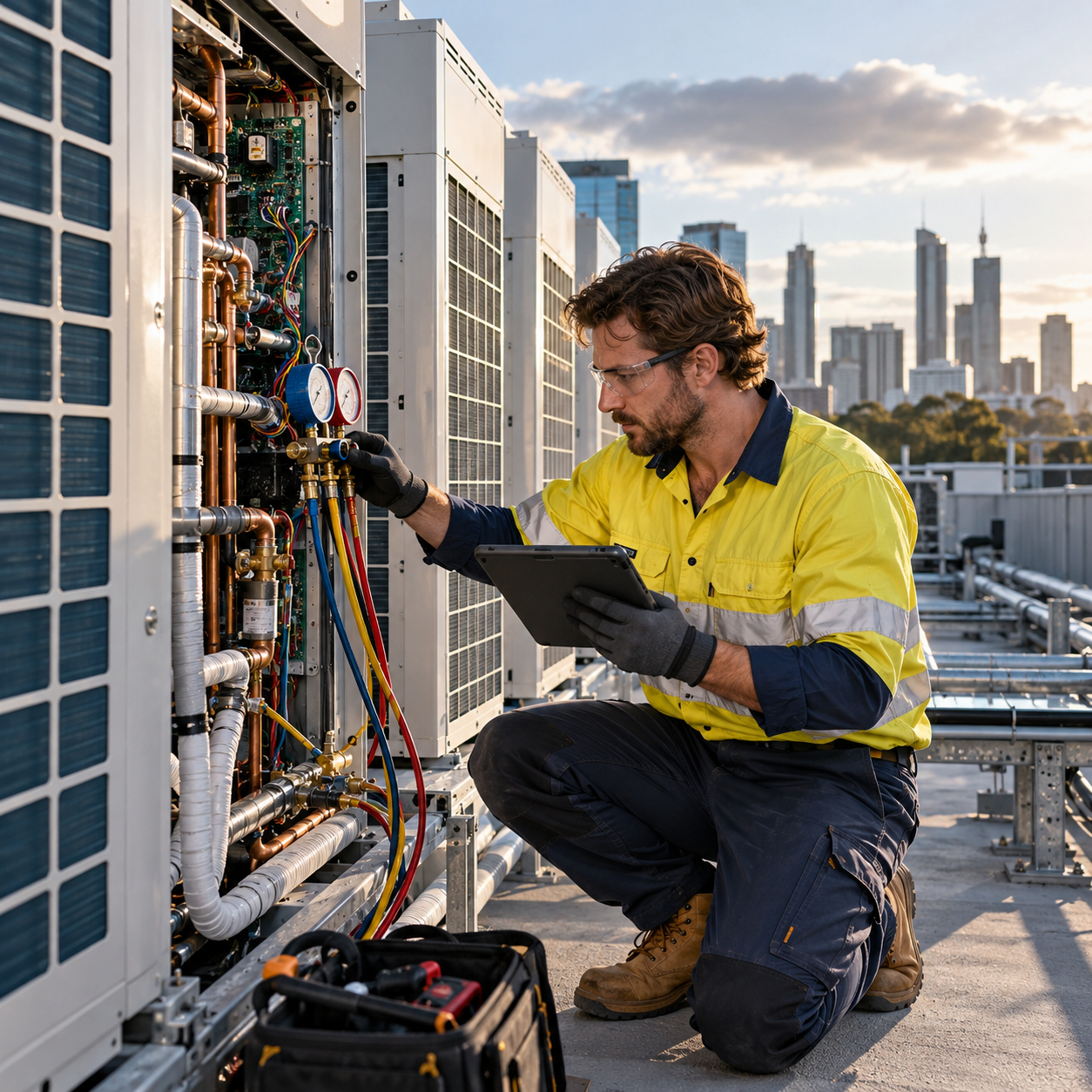
A quality qualification for an aircon installer should build capability across the entire workflow, rather than treating the job as mounting indoor and outdoor units. You should expect to develop skills in system installation, refrigerant pipework, electrical isolation and connection within your work scope, wiring checks, airflow, drainage, pressure testing, evacuation, charging procedures, commissioning and diagnostic fault finding.
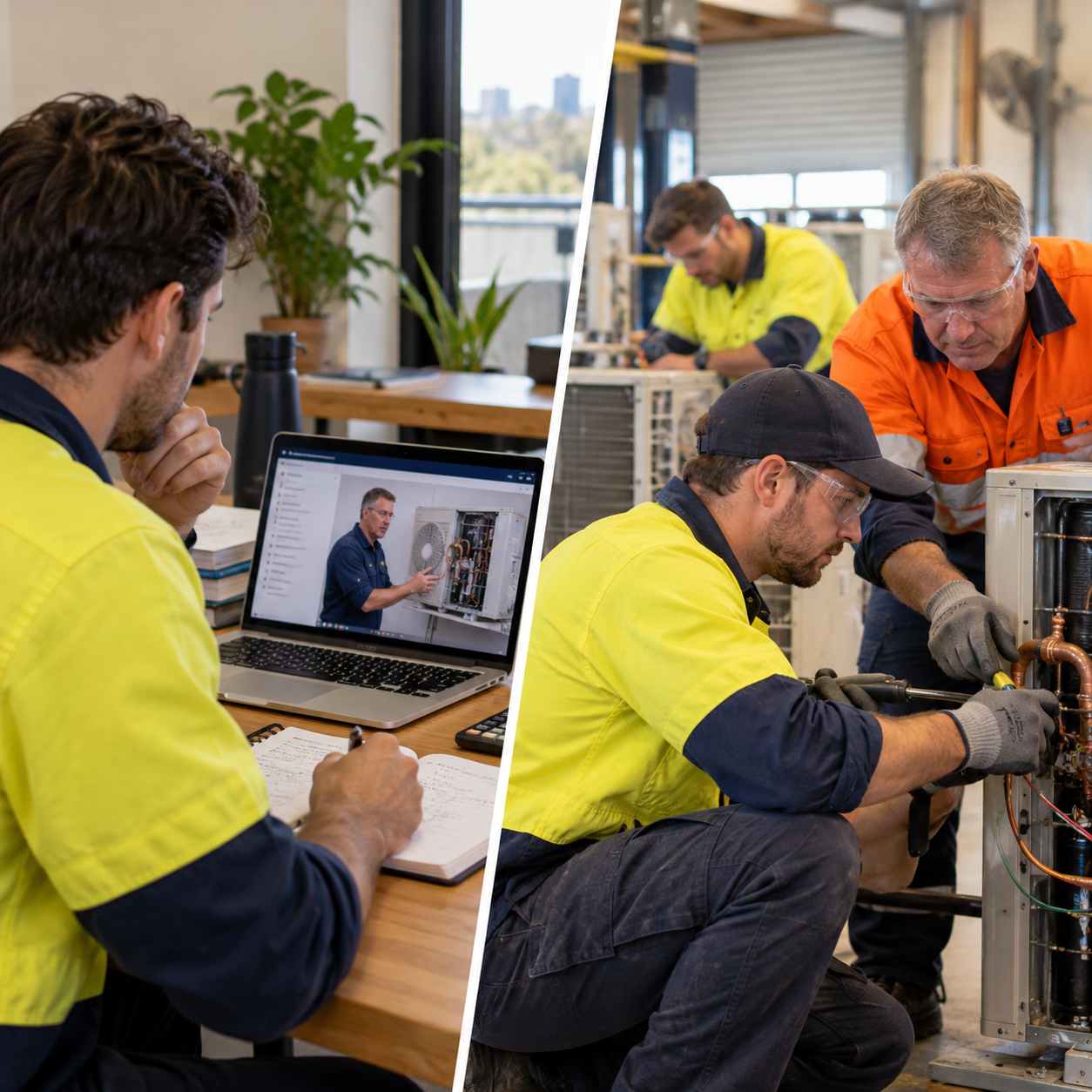
Practical assessment is essential. Online theory has value because it allows busy workers to complete knowledge components around their job and family commitments. But theory alone will not make you job-ready. You need structured practical workshops where you use tools, follow procedures, receive feedback and demonstrate that you can complete tasks to the required standard.
That blended model works particularly well for adults already in the workforce. You can move through self-paced learning when it suits your roster, then use workshop time to focus on the skills that matter on site. It is a more efficient use of your time than sitting in a classroom for content you could have completed after hours.
Choosing the right pathway for your experience
Your starting point matters. A person with no trade experience needs a different level of support from a mature worker who has spent years assisting HVAC technicians, installing equipment or working in electrical construction.
If you are new to the industry, look for a pathway that provides clear foundations and regular practical exposure. Air conditioning combines mechanical, electrical and diagnostic work, so shortcuts in the basics tend to show up later as mistakes, failed assessments or low confidence on site.
If you are already experienced, do not assume you need to start from zero. Your existing skills, job history and practical knowledge should shape the conversation with a training provider. The right provider will explain the evidence required, identify skill gaps honestly and map out a structured route to the qualification. Beware of anyone promising a credential without meaningful assessment. In a technical trade, weak training catches up with you quickly when the job becomes complex.
There is also a middle ground for workers coming from adjacent trades. Electricians, plumbers, builders and maintenance workers often bring strong site awareness, tool skills and customer experience. Those strengths are valuable, but air conditioning has its own technical rules and processes. Recognising what you already know while focusing hard on the gaps is the sensible approach.
Questions to ask before enrolling
Not all training delivers the same experience. Before committing, check that the provider is a Registered Training Organisation and that the course is nationally recognised. Ask how much practical training is included, who delivers it, what evidence you will need to provide, and how the program works around full-time employment.
You should also ask whether the trainers are active industry professionals. Current field experience matters because equipment, installation expectations and common faults change. A trainer who understands real site pressures can show you how to work efficiently without cutting corners.
Finally, look at the support behind the course. A flexible timetable is only useful if there is a clear learning plan, accessible trainer support and practical workshops scheduled often enough to maintain momentum. The goal is not to enrol and hope for the best. The goal is to complete a recognised qualification with skills you can use immediately.
Build a career that is harder to replace
Air conditioning work rewards technicians who can think, diagnose and deliver quality under pressure. Basic installation ability may get you onto site, but verified technical capability gives you a stronger platform for the long term.
Alpha Technical Training supports working tradies through flexible online learning and hands-on practical workshops designed around real industry outcomes. Whether you are entering the field or turning existing site experience into a recognised qualification, the right training plan can remove the biggest barrier: trying to put your career on hold while you get ahead.
The strongest next step is the one that matches the work you want to be trusted with. Choose training that builds real competence, keep your momentum at work, and put yourself in a position to take on better jobs when they appear.