TL;DR
Yes—but not entirely.
In Australia, you can complete a significant portion of your HVAC qualification online, including theory, assessments and learning modules. However, if you’re completing a nationally recognised trade qualification such as the Certificate III in Air Conditioning and Refrigeration (UEE32225), you’ll also need practical training and workplace competency assessments. Training packages require learners to demonstrate practical skills in real or simulated workplace environments, and many licensing pathways depend on this evidence.
The exact licensing and qualification requirements depend on which Australian state or territory you intend to work in.
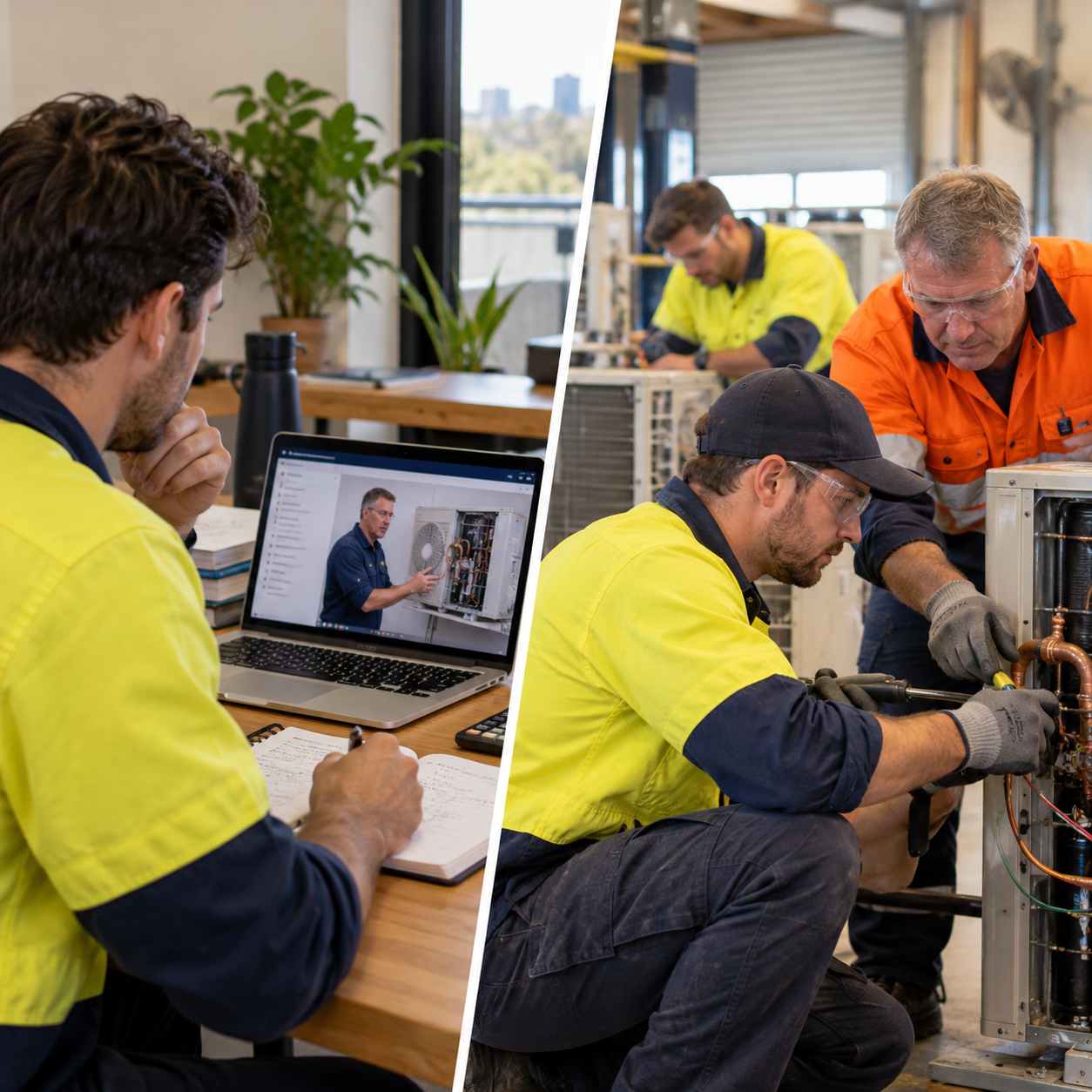
If you’re looking for flexibility while working full-time, a blended learning model that combines online theory with scheduled practical training is often the most practical option.
If you’re still exploring whether HVAC is the right career, read our guide on Are HVAC Technicians in Demand in Australia? to understand the industry’s long-term job outlook.
Can You Become an HVAC Technician Completely Online?
This is one of the most common questions asked by people considering a career in heating, ventilation, air conditioning and refrigeration.
The answer is:
No—not if you’re aiming for a nationally recognised trade qualification.
While technology has made it easier to study online, HVAC remains a practical trade.
You’ll need to demonstrate skills such as:
- Installing refrigeration systems
- Fault finding
- Electrical testing
- Refrigerant handling
- Commissioning equipment
- Repairing air conditioning systems
- Working safely with industry tools
These practical competencies cannot be assessed through online learning alone. National training packages require workplace or practical evidence before the qualification can be awarded.
Before enrolling, it’s also worth understanding how much HVAC technicians earn in Australia and the career opportunities available after becoming qualified.
What Parts Can Be Completed Online?
Many modern RTOs now deliver the theory component online. At Alpha Technical Training, our Certificate III in Air Conditioning and Refrigeration combines flexible online theory with scheduled practical training designed for Australian tradies.
This often includes:
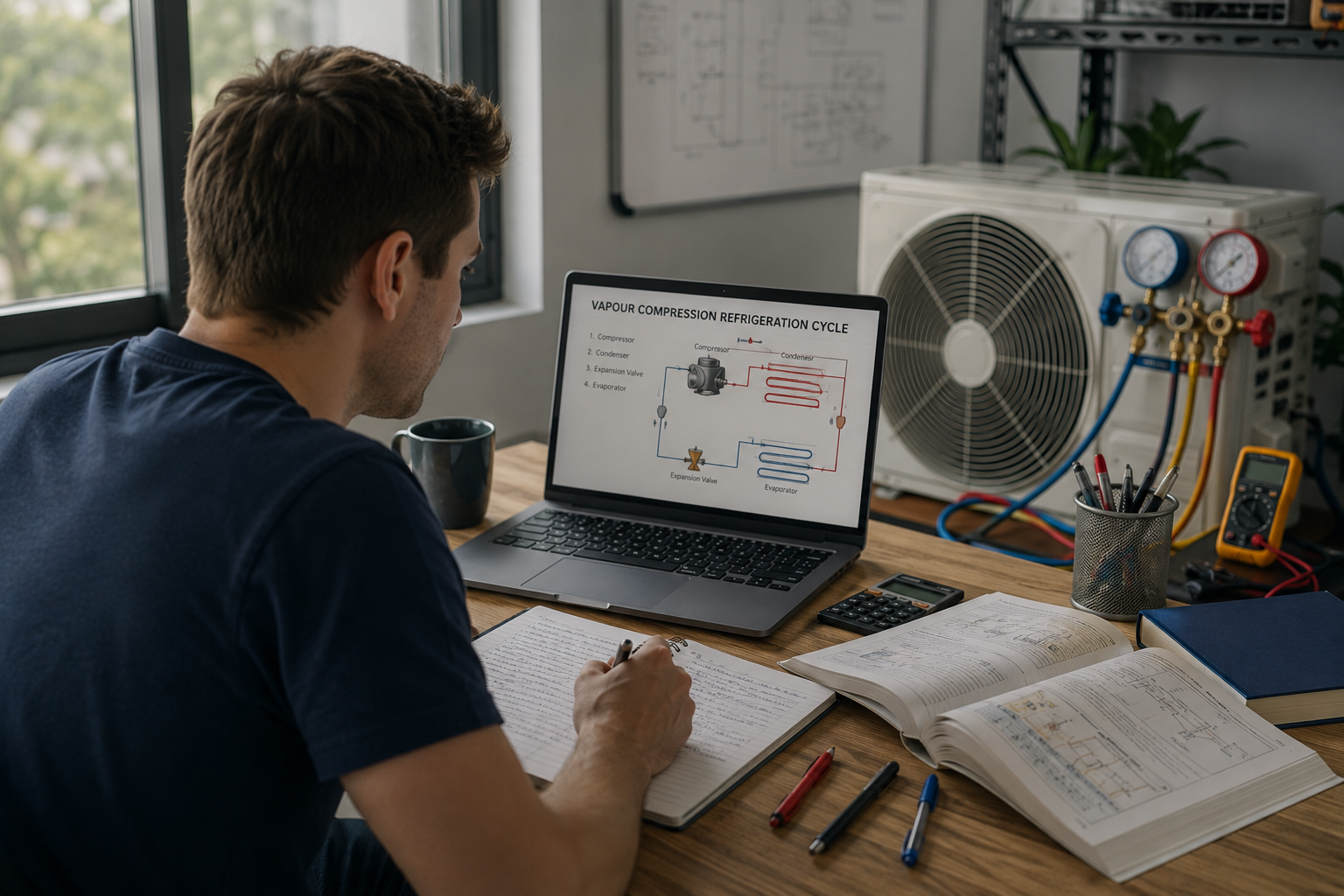
- Learning modules
- Technical theory
- Electrical principles
- Refrigeration principles
- Safety legislation
- Online quizzes
- Written assessments
- Videos and demonstrations
- Live online support sessions
Studying online allows many students to continue working while progressing through their qualification.
What Requires Face-to-Face Practical Training?
The practical component generally includes:
- Installing systems
- Pressure testing
- Brazing
- Pipework
- Electrical fault finding
- Commissioning equipment
- Refrigerant recovery
- System servicing
- Performance testing
These skills must be demonstrated under appropriate assessment conditions before competency can be awarded.
Why Doesn’t Australia Allow Fully Online HVAC Certification?
Unlike purely office-based professions, HVAC technicians work on equipment involving:
- Electricity
- Refrigerants
- Pressurised systems
- Mechanical components
- Workplace safety risks
For this reason, nationally recognised qualifications require students to demonstrate practical competence.
The combination of online theory and practical training helps ensure graduates are prepared to work safely and effectively.
Registered Training Organisations (RTOs) must comply with nationally recognised training and assessment standards established by the Australian Skills Quality Authority (ASQA).
What Is Blended Learning?
Blended learning combines:
✅ Online study
with
✅ Practical workshops
This model allows students to:
- Study from home
- Learn at their own pace
- Keep working full-time
- Reduce travel
- Attend practical sessions only when required
Many Australian training providers now use this delivery model for trade qualifications.
Can Experienced HVAC Technicians Study Mostly Online?
Often, yes.
If you already work in HVAC, you may not need to repeat training you’ve already mastered.
Depending on your experience, your pathway may include:
- Recognition of Prior Learning (RPL)
- Gap training
- Online theory
- Practical assessment of existing skills
This can significantly reduce the amount of training required while still meeting the competency and licensing requirements for your state.
Experienced technicians may also qualify for a fast-track Certificate III pathway, reducing unnecessary training while meeting competency requirements.
What If You’re an Electrician?
Qualified electricians often have faster pathways into air conditioning and refrigeration because they already possess many of the required electrical competencies.
Many training providers offer gap-training pathways where:
- Theory is completed online
- Practical components are completed over intensive face-to-face sessions
- Existing electrical experience is recognised
This can provide an efficient route to gaining HVAC qualifications while continuing to work.
Our Certificate III pathway for A-Grade electricians is designed to recognise existing electrical skills while helping you move into HVAC.
Do Licensing Requirements Differ Between States?
Yes.
This is one of the most important things to understand.
Australia does not have one national HVAC licence. Learn more about HVAC licensing requirements in Australia and how licensing differs between states.
Each state and territory has its own licensing framework for regulated HVAC and refrigeration work.
For example:
- NSW has specific air conditioning and refrigeration licensing requirements administered by NSW Fair Trading.
- Other states have different licensing authorities and may require additional contractor or electrical licences.
Many technicians who handle refrigerants also need an ARC Refrigerant Handling Licence (RAC01) before carrying out regulated refrigerant work.
Before enrolling, always check the licensing requirements for the state where you intend to work.
Can You Work While Studying?
For many students, yes.
One of the biggest advantages of blended learning is flexibility.
Many students continue working while completing:
- Online theory after work
- Weekend study
- Practical workshops scheduled throughout the course
This allows them to continue earning an income while progressing toward qualification.
Is an Online HVAC Course Worth It?
For many students, absolutely.
Online learning offers:
- Flexible study hours
- Reduced travel
- Self-paced learning
- Access from anywhere
- Better work-life balance
- Lower disruption to employment
When combined with practical training, it provides a flexible pathway to gaining a nationally recognised qualification.
How Do You Choose the Right Training Provider?
Not every course is delivered the same way.
Before enrolling, consider whether the provider offers:
- Nationally recognised training
- Flexible online learning
- Practical workshops
- Experienced trainers
- Student support
- Licensing guidance
- Different pathways for beginners, experienced technicians and electricians
If your goal is licensing, ask how the course aligns with your state’s regulatory requirements.
Frequently Asked Questions
Can I become an HVAC technician completely online?
No. While much of the theory can be completed online, nationally recognised HVAC qualifications require practical training and competency assessment in real or simulated workplace environments.
Can I study while working full-time?
Yes. Many blended courses allow students to complete theory online while attending scheduled practical sessions, making it easier to continue working.
Does every state have the same licensing rules?
No. Licensing requirements differ between Australian states and territories, so you should always check the rules that apply where you intend to work.
Can electricians complete HVAC qualifications faster?
In many cases, yes. Existing electrical qualifications and experience may allow electricians to undertake accelerated or gap-training pathways offered by some RTOs.
Do I need a Refrigerant Handling Licence?
If your work involves handling refrigerants, you’ll generally need an ARC Refrigerant Handling Licence (RAC01) in addition to meeting any state-based licensing requirements.
Final Thoughts
If you’re wondering whether you can get HVAC certified online in Australia, the answer is yes—up to a point. Online learning has made HVAC training far more flexible, allowing students to complete theory and assessments from almost anywhere. However, because HVAC is a hands-on trade, nationally recognised qualifications still require practical training and competency assessments.
The best pathway is one that balances flexibility with real-world experience. Whether you’re starting from scratch, already working in HVAC, or transitioning from an electrical background, choosing a training provider that offers blended learning and understands your state’s licensing requirements will put you in the strongest position for long-term success.