The VRV Refrigerant Charging Conundrum: Why “Auto-Charge” Is Not Enough (and How to Get It Right)

The Challenge of Charging Large VRV Systems

If you’re a licensed HVAC technician in Australia, you’ve likely wrestled with charging Daikin VRV systems in big commercial or high-rise jobs. Let’s be honest – getting the refrigerant charge just right in these large, long-line systems can be a headache. VRV (Variable Refrigerant Volume) systems are critically charged, meaning their performance and reliability hinge on having exactly the correct refrigerant amount. Unlike simpler split systems, you can’t rely on sight-glass bubbles or a quick gauge reading to tell if a VRV is properly charged. In fact, Daikin explicitly notes that VRV systems cannot be charged by observing operating pressures, superheat, or subcooling – the refrigerant must be weighed into the system for an accurate charge.

Simply put, the margin for error on these complex systems is razor-thin, and traditional “rule of thumb” charging methods just won’t cut it.

Complicating things further, VRV units often won’t give you obvious clues when the charge is off. Many modern VRV/VRF heat pump systems don’t trip on low pressure until it’s far too late, thanks to design features like hot-gas bypass and smart controls. That means an undercharged system might keep running without a fault code, all while starving the compressor of oil – a recipe for long-term compressor damage. Overcharge it by a bit, and you risk high-pressure errors or flooded compressors. In other words, charging a VRV is high stakes: too little or too much refrigerant can both wreak havoc. This is why getting the charge exactly right is so critical for VRV systems’ health.


Why the “Auto-Charge” Feature Isn’t a Silver Bullet

To ease the process, Daikin introduced an “Automatic Refrigerant Charge” function on newer VRV models (such as the VRV IV and VRV X series). The idea sounds great: press a button and let the system automatically top itself up to the optimal charge. In theory, the Auto-Charge feature should prevent capacity loss or inefficiency from incorrect charging by automatically determining the optimal amount of refrigerant and closing the valves when done. Unfortunately, many technicians have found that in practice “Auto-Chargeis not a magic solution – especially on large, complex installations.

For one, the Auto-Charge mode has limitations. It requires certain conditions (like adequate indoor and outdoor temperatures) and even then does not display how much refrigerant was charged into the system. You’re essentially running blind unless you’ve tracked the refrigerant weight manually. In fact, Daikin’s own commissioning guide advises that if you use Auto-Charge, you should pre-charge at least 50% of the calculated charge by weight first, then let Auto-Charge finish the rest. That tells you something: even the “automatic” method isn’t fully automatic – it still relies on a substantial weighed charge to start. And if your system has certain configurations (like FXTQ air handlers or other non-standard indoor units), the Auto-Charge function isn’t usable at all.

Most importantly, many techs report that relying solely on Auto-Charge often doesn’t deliver a perfect charge on big VRV systems. Maybe it shuts off early, or maybe it “finishes” without actually getting the charge right, due to long line lengths or complex piping arrangements. The result? You might commission the system, only to find performance issues or pressure alarms when the building hits peak load on a 40°C summer day. It’s no wonder frustration runs high – you did what the machine told you, yet the charge is still off! Clearly, Auto-Charge by itself isn’t enough assurance on critical systems. You need a more reliable, hands-on approach to charging these behemoths correctly.


Charging by Weight vs. “Dumping It In”: No More Guesswork

So, what’s the right way to charge a VRV system? In a word: precision. That means charging by weight – every time, no exceptions. Charging by weight involves calculating exactly how much refrigerant the system needs (accounting for the factory charge in the condenser plus the additional charge for all those long liquid lines and vertical rises) and then weighing that refrigerant in using a scale. Daikin provides formulas and software (like VRV WebXpress) to determine the additional charge based on pipe lengths, so you’re not guessing. This weighed-in method is the polar opposite of the old “glug in some gas until it looks good” approach (what some jokingly call “dumping it in the suction line”).

Why not just add refrigerant until pressures or temps look “okay”? Because a VRV’s sophisticated controls will outsmart you every time. These systems are fully modulating – compressors ramp up and down, electronic expansion valves (EEVs) continually adjust, and indoor units cycle to meet varying loads. With so many moving targets, trying to charge by feel or by single-point measurements is basically guesswork. As one experienced VRF tech put it, attempting to charge a VRV by anything other than weight is like trying to hit a moving target in the dark. You might get close enough to make it run and cool a little, but as soon as conditions change, the system could start throwing errors or underperforming.

Charging by weight ensures you hit the bullseye. You follow the manufacturer’s specs to the letter: for example, if the unit’s ID plate plus your pipe calculations say the system needs a total of 55.0 kg of R-410A, then you put in 55.0 kg – not 54 kg, not 58 kg. In large VRV systems, even a small deviation can cause problems. To illustrate, a 28-ton VRV heat recovery system might require around 120 lbs of refrigerant, and being just 5 lbs under or over (that’s only ~4% off) can make the system “not work properly.” That’s how tight the tolerances are! Undercharge it and some farthest indoor units won’t get enough refrigerant (leading to poor cooling and potential compressor oil return issues); overcharge it and you risk liquid refrigerant backing up or high-pressure cut-outs. Weighing in the exact charge removes this uncertainty. It’s a bit more effort upfront, but it saves countless hours of troubleshooting down the road.

And what about those who say, “I’ll just add refrigerant via the suction until the superheat looks right”? Not with VRV. Remember, superheat and subcooling readings on a running VRV can be deceiving – the system’s control logic is actively adjusting to maintain setpoints, which can mask the true state of charge. Subcooling in particular can vary widely with load on multi-split systems, so a “normal” subcooling at partial load might fool you into thinking the charge is fine when it isn’t. The bottom line: the only reliable method to charge a VRV is to recover any unknown charge and weigh in the correct factory-specified amount of refrigerant. It’s not as fast as dumping in gas, but it’s the only method that truly works for these complex systems.


Full Recovery and Triple Evacuation – Mandatory for Big Systems

If you’re servicing or commissioning a large VRV system that’s low on refrigerant (or suspect it is), the gold standard approach is: perform a complete recovery, triple evacuation, and weighed-in charge from scratch. Yes, it’s a bit of a process – but it’s absolutely worth it for large, critical-charge systems. Here’s how it breaks down:

  1. Recover 100% of the old refrigerant. Safely pump down and reclaim all refrigerant from the system into cylinders. (Pro tip: Weigh the recovery cylinders – knowing how much came out is useful data. If you pulled out 40 kg but the system is supposed to have Fifty-five, you just confirmed it was significantly undercharged.) Believe it or not, pulling the entire charge on a big multi-zone VRV can take as little as 30 minutes with proper recovery equipment. It’s time well spent. Now you have a clean slate.
  2. Perform a triple evacuation to 500 microns or better. This is non-negotiable on large VRV installs. After repairing any leaks or opening the system, do a triple evacuation: evacuate the system with a vacuum pump, break the vacuum with dry nitrogen, and repeat that cycle at least three times. This procedure helps boil off and remove any moisture or non-condensables thoroughly. On the final evacuation, pull down below 500 microns (deep vacuum) to ensure the system is dehydrated. Triple evacuation might sound like overkill, but it ensures the internal piping (which can be hundreds of meters in a high-rise) is bone-dry and air-free. Daikin’s guidelines specifically recommend a triple evac to 500 microns, using nitrogen purges, for VRV systems. Skipping this step can lead to moisture or air remaining, which can cause acid formation or erratic pressures in a critically charged system – not what you want after all that effort.
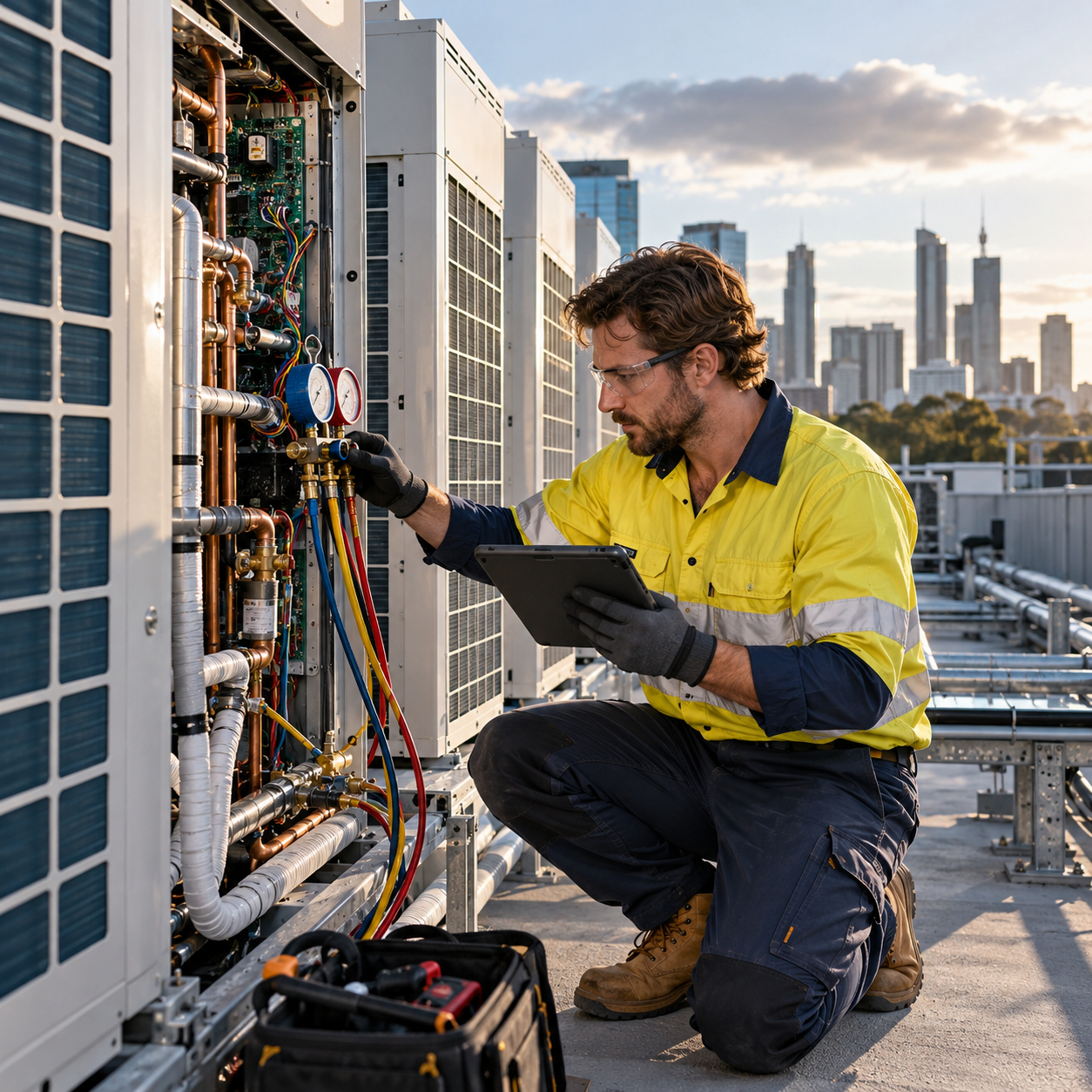
  3. Weigh in the precise refrigerant charge. Now for the main event: charging the system by weight. With the system still under deep vacuum (from your last evac), connect your refrigerant cylinder (with R-410A, in the liquid phase) to the liquid line service port. Use the vacuum to draw in as much liquid refrigerant as it will suck in – this often gets a good portion of the charge in without even running the unit. You should have the cylinder on a digital scale and watch the weight as you feed refrigerant. If the vacuum doesn’t pull the entire calculated charge in (common on very large systems), you have two options: either manually add the remainder carefully using the unit’s manual charging mode, or utilize the Daikin Additional Refrigerant Charge (Auto-Charge) mode to finish the job. In either case, keep measuring the refrigerant by weight as it goes in. For instance, Daikin suggests introducing at least 50% of the required charge by weight, then using the Auto-Charge function to automatically top off the rest – and you’d verify the total weight on your scale once it’s done. However you do it, ensure the total kilograms of refrigerant match the spec for that system (factory charge + additional charge for piping). Once achieved, close up the service valves and you’re ready for testing.
  4. Open valves and perform a test run. Open all the stop valves on the outdoor unit(s) and any branch selector boxes. Now initiate a test run or commissioning mode. Most Daikin VRVs have a “Field Settings” or dip-switch procedure to force the system into a cooling test run (often called ‘Trial Operation’ or ‘Test Mode’). This will run all compressors and indoor units to simulate full load cooling. It’s the moment of truth for your charging work.

Following this full procedure – recover, triple evac, weighed charge – eliminates the uncertainty. You start fresh with the exact refrigerant amount the system is designed for. No more wondering if there’s air or old contaminated refrigerant in there, or if the charge is a bit off. It’s as if you’ve installed a brand-new system with the correct charge. Yes, it takes more upfront time and diligence, but it saves you from countless callbacks and performance issues. Remember, Daikin VRV units are engineered under the assumption that the charge is spot on; give them anything less, and they won’t operate optimally. By doing it right the first time, you ensure efficiency, capacity, and reliability are all up to spec – and you avoid that sinking feeling of chasing mysterious faults caused by an incorrect charge.


Leveraging the Daikin Service Checker: Superheat, Subcooling & Diagnostics

After charging, how do you verify the system is truly “happy”? This is where tools like the Daikin Service Checker interface become your best friend. The Daikin Service Checker (a portable PC-based diagnostic tool) allows you to connect to the VRV system and monitor a wealth of real-time data: pressures, temperatures, electronic expansion valve positions, superheat (SH), subcooling (SC), compressor frequencies, and more. Essentially, it taps into the system’s sensor network so you can see “under the hood” of the VRV while it’s running. Interpreting this data correctly is key to confirming that your refrigerant charge and system operation are in the sweet spot.

One thing to keep in mind: context matters when reading superheat and subcooling on a VRV. If the system is not under a meaningful load (say it’s a mild day and only a couple of indoor units are running at partial capacity), the readings might not tell you much. For example, you could see what looks like a high subcooling or low superheat and be misled – because the compressors could be idling and EEVs throttling down in low-load conditions. Don’t jump to conclusions based on those numbers alone. VRV systems will adjust their operating parameters to maintain comfort, even if the charge isn’t perfect, which can mask issues. In fact, the firmware control will often compensate for minor over- or under-charge by adjusting expansion valve positions and compressor speeds, so the system appears to run “okay” at light load. This is why a lightly loaded system can fool technicians.

To truly use Service Checker data effectively, you want to see the system under near design load. One way is to use the test run mode to drive the outdoor unit to 100% capacity in cooling (or heating) and make all indoor units demand full output. Essentially, force the system to work hard, then observe your SH and SC. Under those conditions, the numbers mean a lot more. For instance, in cooling test mode with all fan coils blasting, you can check that the subcooling at the outdoor unit is within the expected range and that superheat at various points is stable. If the refrigerant charge is correct, you’ll typically see a stable subcooling and superheat that fall in line with Daikin’s guidelines (and no erratic swings or extreme values). If you still have very low subcooling or extremely high superheat at full load, that’s a red flag – it could indicate the charge is off or there’s a flow issue. But because you weighed in the charge, you have a solid baseline assumption that the charge should be right; any weird readings might point to other issues (like a restriction, sensor error, or an EEV problem) rather than charge amount. As one VRF specialist notes, “You cannot charge any mini-splits or VRF by subcooling… You have to charge them with the correct weight of refrigerant. It’s helpful to have the software to plug in and see what the indoor units, outdoor units and EEVs are doing.” . In other words, use the Service Checker as a validation and diagnostic tool, not as a charging tool. The software can provide target values and let you confirm that everything is within normal operating parameters after you’ve charged by weight.

Another tip when analyzing Service Checker data: look at the EEV (electronic expansion valve) step counts and sensor readings together. For example, if the system is in cooling and you see the outdoor unit’s liquid line temperature and gas (suction) line temperature, you can derive subcool and superheat. Suppose at full load cooling you observe an outdoor unit subcooling of, say, 5–8°C and the indoor units’ superheat around 5°C (Daikin often targets about 5°C SH for indoor units) – those are healthy numbers. Also, check the EEV “pulse” or step positions: if every indoor unit’s EEV is nearly wide open trying to feed refrigerant, that could mean undercharge (not enough liquid to go around). If many EEVs are almost closed down and the outdoor unit is flooding liquid into the subcooler, that could imply overcharge. The Service Checker won’t flat-out tell you “charge is low” or “charge is high,” but with proper training you’ll learn the telltale signs in the data. Daikin’s training materials emphasize comparing the Service Checker data against known normal conditions – basically, learning what a healthy VRV looks like versus a system in distress. This skill is exactly what we focus on in our advanced VRV training: giving technicians the know-how to interpret those numbers confidently.

Lastly, be mindful of “no load” scenarios when checking SH/SC. If the building isn’t calling for cooling or heating, the VRV may enter an almost idle state with low pressures. You might see very low pressure on gauges which could be misinterpreted as undercharge. Always create or wait for a proper load to assess charge-related metrics. If needed, artificially load the system: crank down some thermostat set points or use test mode. The Service Checker even lets you override and control indoor units in some cases to help create the demand. Once the system is humming along under load, that’s when you gather your data and compare to the expected values. With practice, you’ll be able to say, “Yep, subcooling is ~6°C and indoor superheats ~5°C, EEVs mid-range – looks like we nailed the charge,” and have full confidence in it. And if something is off, you’ll know where to investigate next.


Conclusion: Getting It Right – Training and Diligence

Refrigerant charging on large VRV systems doesn’t have to be a mysterious or frustrating process. As we’ve discussed, the key is abandoning the old shortcuts and embracing a meticulous approach: recover fully, evacuate thoroughly, charge by weight precisely, and verify with the proper tools. The so-called “Auto-Charge” button can be a helpful assistant, but it’s not a replacement for skilled practices. When you charge by weight and understand how to read the system’s data, you remove the uncertainty and ensure the system operates at peak performance. The reward? Happy clients, fewer callbacks, and VRV systems that run efficiently for years.

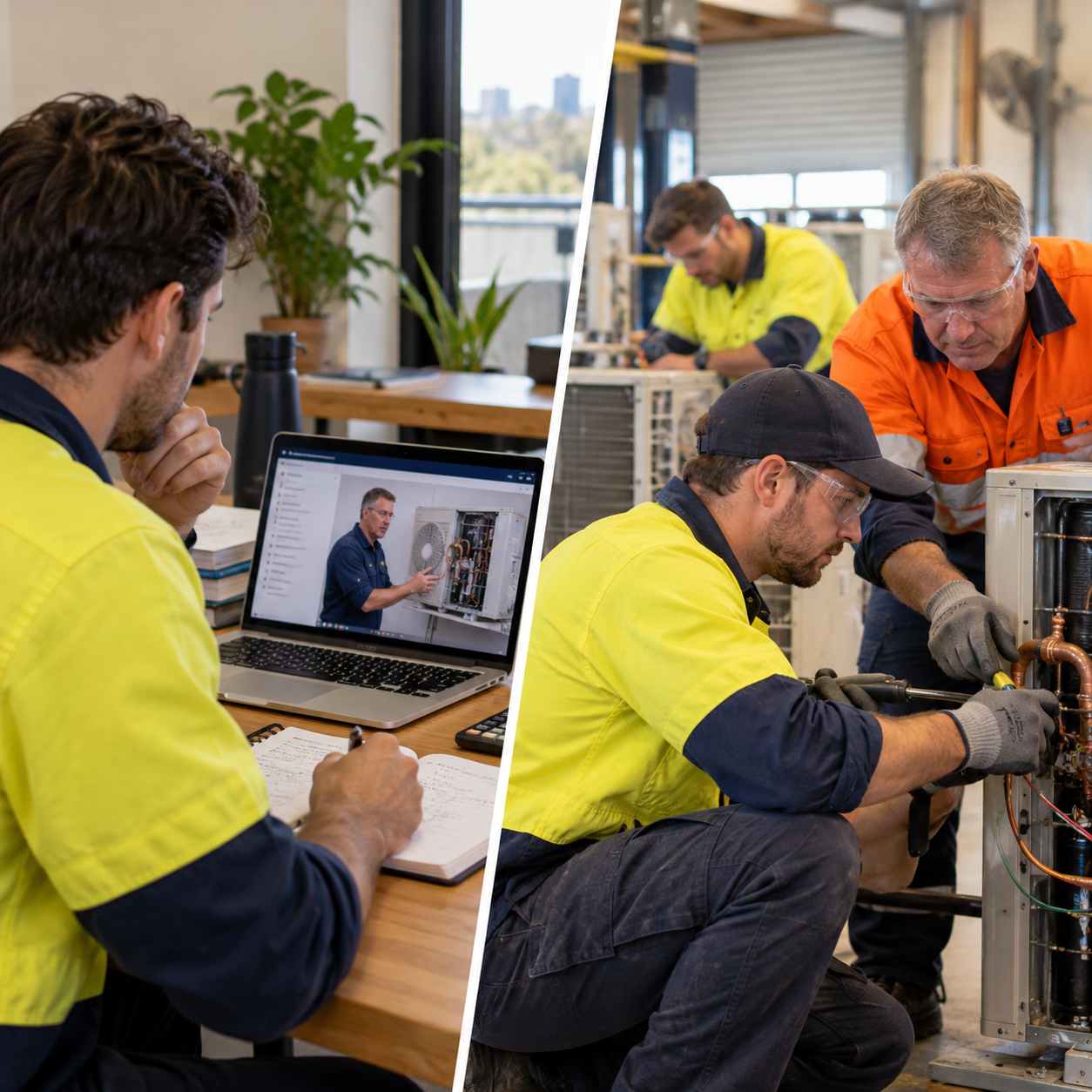
For technicians holding a RAC01 or full refrigerant handling license, mastering these skills is well worth the effort. This is exactly where professional training comes in. Our team at Alpha Technical Training (in partnership with Daikin Australia) has developed a VRV short course that dives deep into these topics. We’ll show you step-by-step how to calculate additional refrigerant charges for sprawling pipework, how to execute a triple evacuation correctly, and how to use Daikin’s Service Checker tool to interpret superheat and subcooling under various conditions. It’s a hands-on, conversational learning experience designed for real-world techs who want to eliminate guesswork. As the official training partner for Daikin’s VRV systems in Australia, we’ve helped countless techs upgrade their skills and confidence with these advanced systems.

Ultimately, solving “The VRV Refrigerant Charging Conundrum” comes down to knowledge and process. When you know why “Auto-Charge” can fall short and how to get the charge right using weighed methods and proper diagnostics, you’ll approach every VRV job with much more confidence. No more hoping the charge is correct – you’ll know it is. By applying the best practices outlined above (and taught in our course), you can turn refrigerant charging from a frustration into just another routine step in a successful installation or service call. In the end, doing it right is faster than doing it twice. So weigh that charge, check those readings, and enjoy the satisfaction of a VRV system charged to perfection. Your compressors – and your sanity – will thank you!


Share on

Get Your Skills Recognized with Fast-Tracked Certification!

More Content

Not Sure Where to Start? Just Book A Call With Our Consultants. It’s Free!