A stalled trade career rarely comes down to a lack of ability. More often, it comes down to having years of hands-on experience without the recognised qualification that opens better roles, larger projects and stronger earning potential. The best trade courses adults can choose are built for that reality: practical, nationally recognised and structured around the commitments of people who already work hard for a living.
For adults, the right course is not simply the shortest one on paper. It is the pathway that turns existing experience into credible evidence, fills genuine skill gaps and gives you practical capability employers can see. That is where blended training, industry-led workshops and focused support make the difference.
What Makes a Trade Course Worth Your Time?
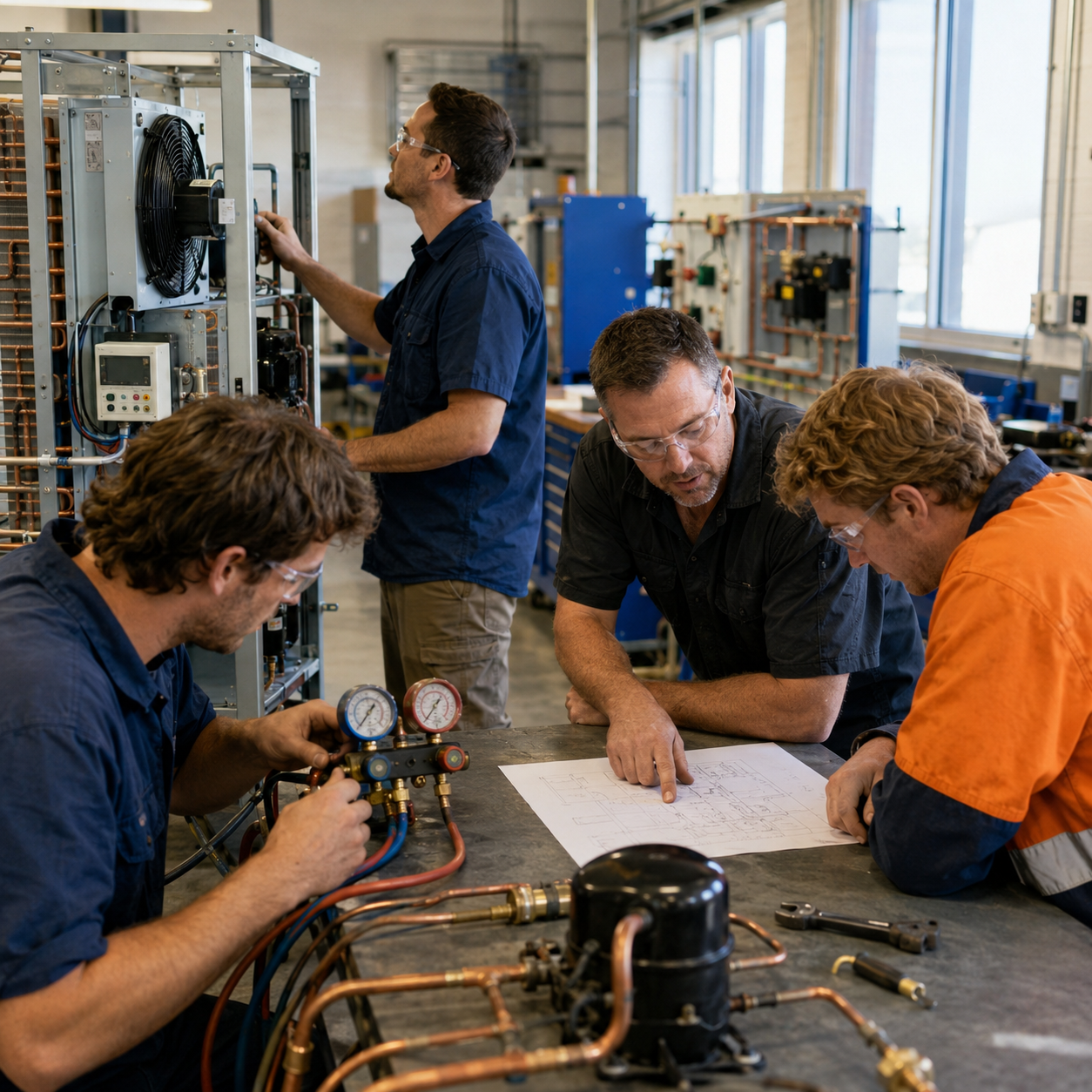
A course should move your career forward, not force it to stand still. If you are balancing site work, a family, a mortgage or all three, flexibility matters. But flexibility without structure can leave people stuck. The strongest programs combine self-paced theory with clear deadlines, trainer support and practical workshop time where the standard of your work is assessed properly.
Look for nationally recognised training that is directly relevant to the work you want to perform. A qualification with a broad enough foundation to support long-term opportunities is usually more valuable than a short course that teaches one narrow task. Short courses have their place, particularly when you need specialist product knowledge or a targeted skill, but they do not always replace the value of a full trade qualification.
The other test is simple: can you keep earning while you train? Adult learners need training that respects the fact that work experience is not an inconvenience. It is an asset. The right provider helps you organise that experience, identify what evidence may be relevant and prepare for the practical components without treating you like a school leaver starting from zero.
The Best Trade Courses for Adults with Career Momentum
The best option depends on where you are now, what work you already do and where you want your income and responsibility to go. For many adults in technical and construction fields, these pathways deliver the strongest return because demand is tied to essential work, ongoing maintenance and new building activity.
Certificate III in Electrotechnology Electrician
Electrical work remains one of the clearest pathways for adults who want a technical trade with room to grow. The Certificate III in Electrotechnology Electrician develops the foundational skills needed across electrical installations, testing, fault finding and safety-driven work practices.
It is not a casual option. Electrical training requires focus, detailed theory and confidence with practical tasks. That is exactly why a structured blended model can suit experienced workers. You can progress through learning material around your work schedule, then use practical sessions to sharpen technique, ask the right questions and demonstrate competence under industry conditions.
This course suits people already exposed to electrical environments, trade assistants looking to formalise a career direction, and adults who are ready to commit to a high-skill technical pathway. The payoff is not just a certificate. It is the ability to move beyond limited-support roles and build a more capable, better-paid future.
Certificate III in Air Conditioning and Refrigeration
Air conditioning and refrigeration is a strong choice for adults who enjoy diagnostic work, mechanical systems and solving problems that have an immediate result. When a system is not cooling, a commercial unit is down or a customer needs a reliable installation, technical skill has real value.
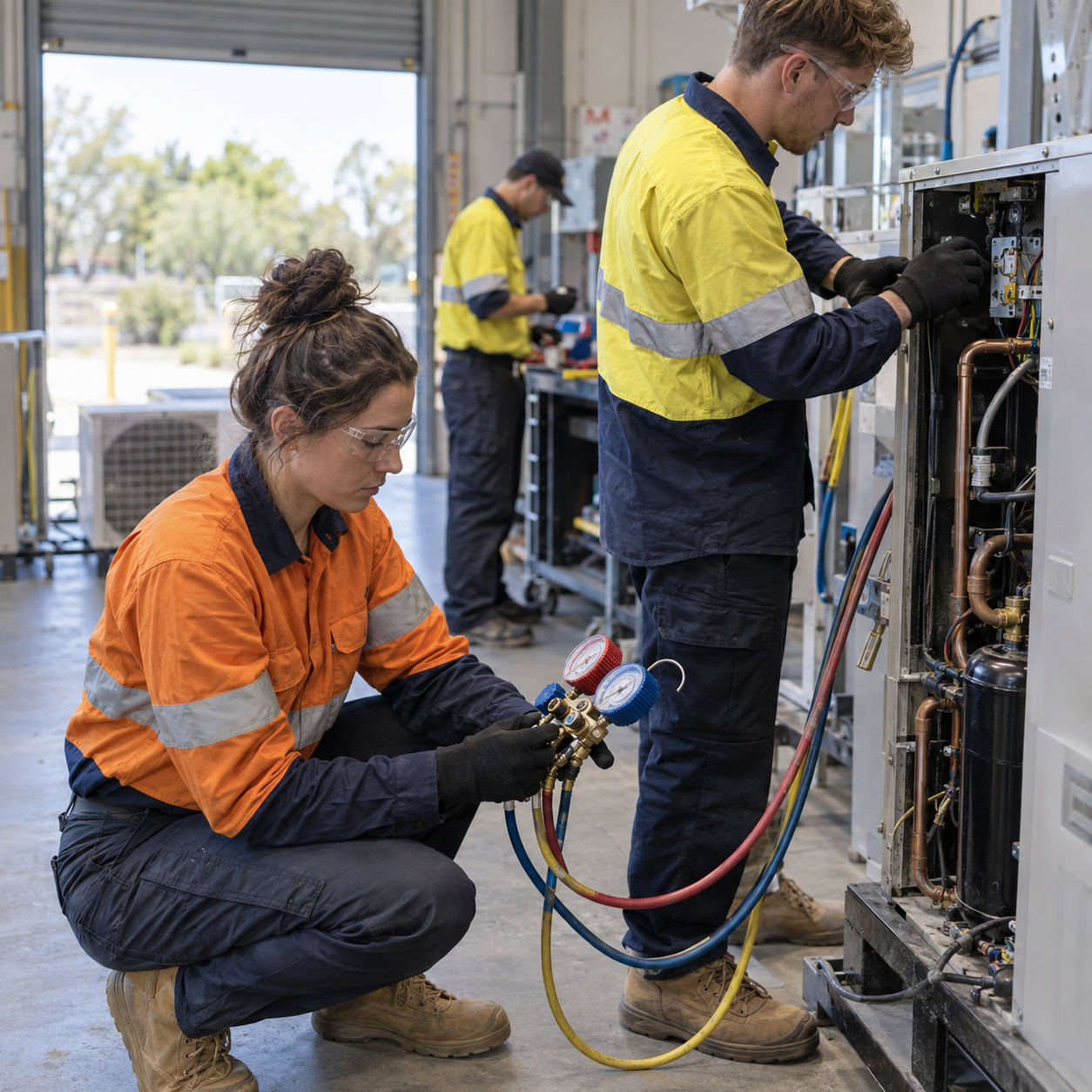
The Certificate III in Air Conditioning and Refrigeration covers the broad trade knowledge required to work across refrigeration and air conditioning systems. It is especially relevant for workers with existing mechanical, electrical or HVAC exposure who want to turn practical familiarity into a recognised trade outcome.
This field can reward people who are methodical. You need to understand systems, follow processes and diagnose faults rather than guess. A quality course should build that discipline through a mix of theory, real equipment and practical assessments. If you want a trade where no two faults are exactly the same, refrigeration and air conditioning can offer a satisfying progression.
Certificate II in Split Air-Conditioning and Heat Pump Systems
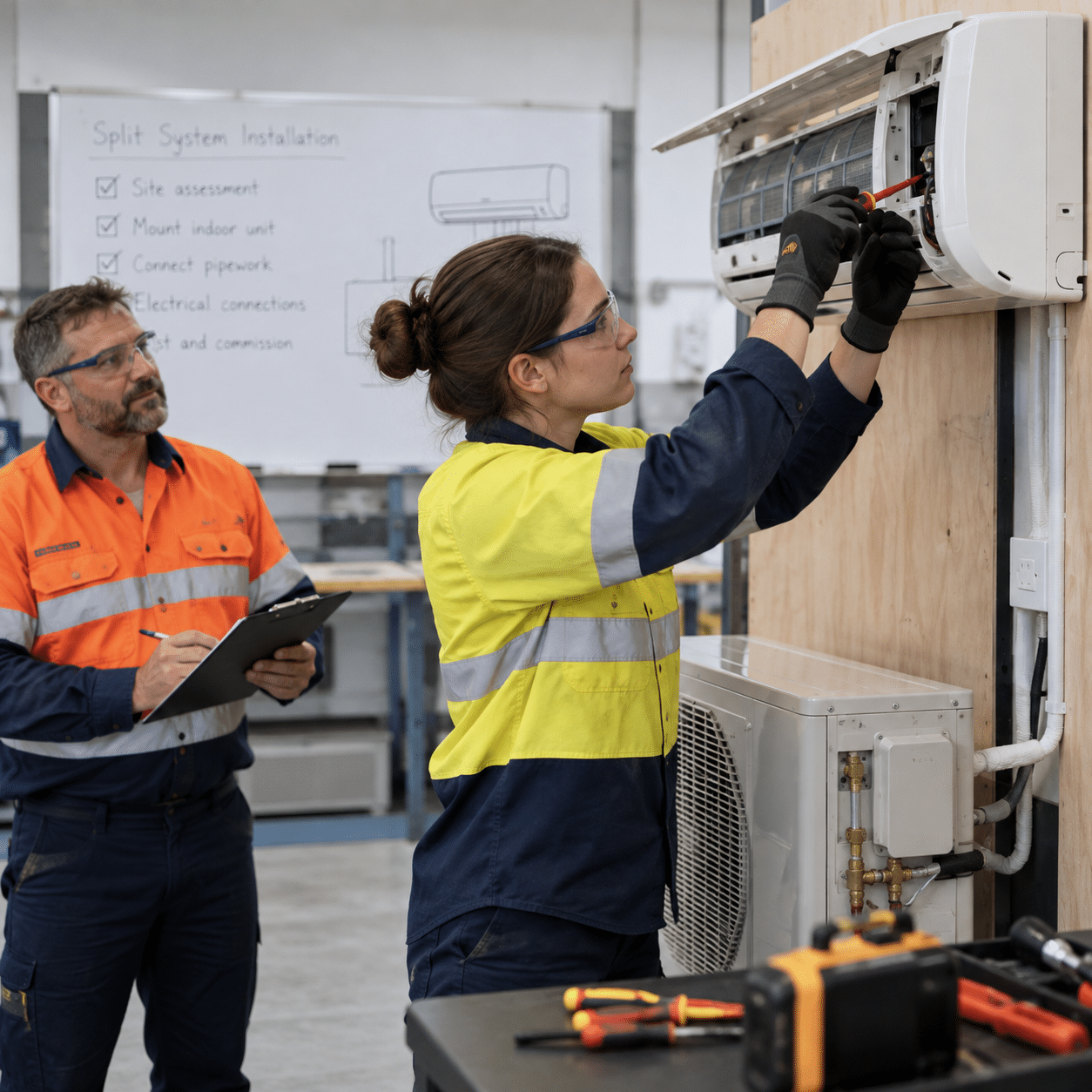
Not every adult needs to begin with the broadest qualification. A Certificate II in Split Air-Conditioning and Heat Pump Systems can be a practical entry point for people who want focused training in a growing part of the market.
Heat pumps and split systems are common across homes, small businesses and renovation projects. That creates demand for workers who understand installation processes, system components and safe work practices. This pathway can suit builders, maintenance workers and people already working around residential installations who want to add a defined technical capability.
The trade-off is scope. A focused Certificate II builds targeted skills, while a Certificate III creates a broader foundation for people aiming to develop a full career in refrigeration and air conditioning. Choose the shorter pathway when it genuinely matches your work goals, not just because it looks easier.
Building and Construction Trade Qualifications
For adults already working on building sites, qualifications in carpentry, bricklaying and blocklaying, painting and decorating, solid plastering, or wall and floor tiling can turn years of informal experience into a recognised career asset.
These trades are practical by nature. Employers and clients care about quality, reliability, problem solving and whether you can complete work to a professional standard. A qualification gives your experience more weight while ensuring you have covered the core knowledge that separates a capable worker from someone who has only picked up parts of the job along the way.
Carpentry suits people who like varied work, accuracy and building from plans. Bricklaying and blocklaying rewards consistency, physical stamina and an eye for line and level. Painting, plastering and tiling can be excellent choices for detail-oriented workers whose finish quality speaks for itself. There is no single “best” construction trade. The right choice depends on the work you enjoy enough to keep improving at for years.
Specialist Technical Short Courses
Short courses are valuable when they solve a specific workplace need. For example, Daikin VRV system training can help technicians improve their understanding of advanced variable refrigerant volume systems. Disconnect-Reconnect Low Voltage training may also suit workers whose role requires a clearly defined technical skill.
The mistake is treating every short course as a substitute for broader competence. Specialist training is most powerful when it sits on top of solid trade knowledge. It helps you become more useful on complex jobs, strengthens your confidence with particular systems and shows employers you are serious about staying current.
How Adults Should Choose Between Courses
Start with the work you are already doing. If you spend most days assisting on HVAC jobs, a refrigeration and air conditioning pathway may make more sense than starting in an unrelated construction trade. If your experience is in fit-outs, framing or site carpentry, a building qualification may deliver faster relevance than a general course.
Next, be honest about your desired end point. Do you want a better role with your current employer, a move into technical service work, or the foundation to eventually run your own operation? A course should be chosen against that goal. Chasing a qualification because it is popular can waste time if it does not match the work you actually want to perform.
Finally, assess delivery properly. Ask whether theory can be completed around work, how practical training is scheduled, what support is available when you hit a difficult unit and whether trainers have current industry experience. Adult training should be demanding, but it should not be disorganised.
Why Practical Support Changes the Outcome
Many capable workers fail to progress because they underestimate the paperwork, evidence requirements and theory involved in formal training. They know how to do the work, but they have not had to explain it, document it or demonstrate it against a recognised benchmark.
That is why trainer access matters. Active industry professionals can identify gaps early, explain why a process matters and help you prepare properly for practical workshops. At Alpha Technical Training, the model combines online learning with hands-on support so students can build momentum without stepping away from work completely.
The goal is not to make a trade qualification easy. The goal is to make the path clear, structured and achievable for adults who are prepared to put in the work.
A good course gives you more than another line on a résumé. It gives your experience a direction. Choose the pathway that fits the work you want to be known for, commit to finishing it properly and let your next opportunity be based on proven capability rather than potential alone.