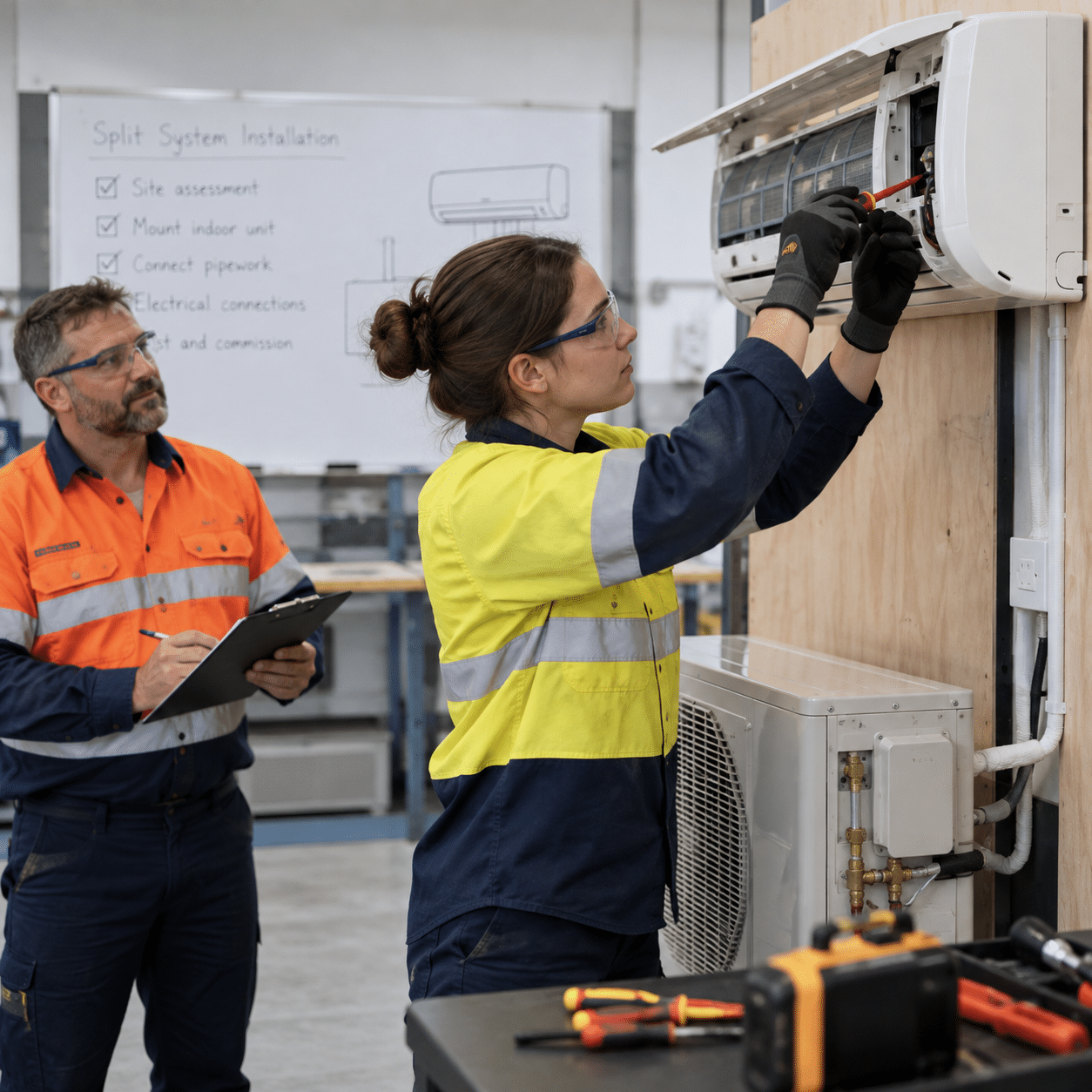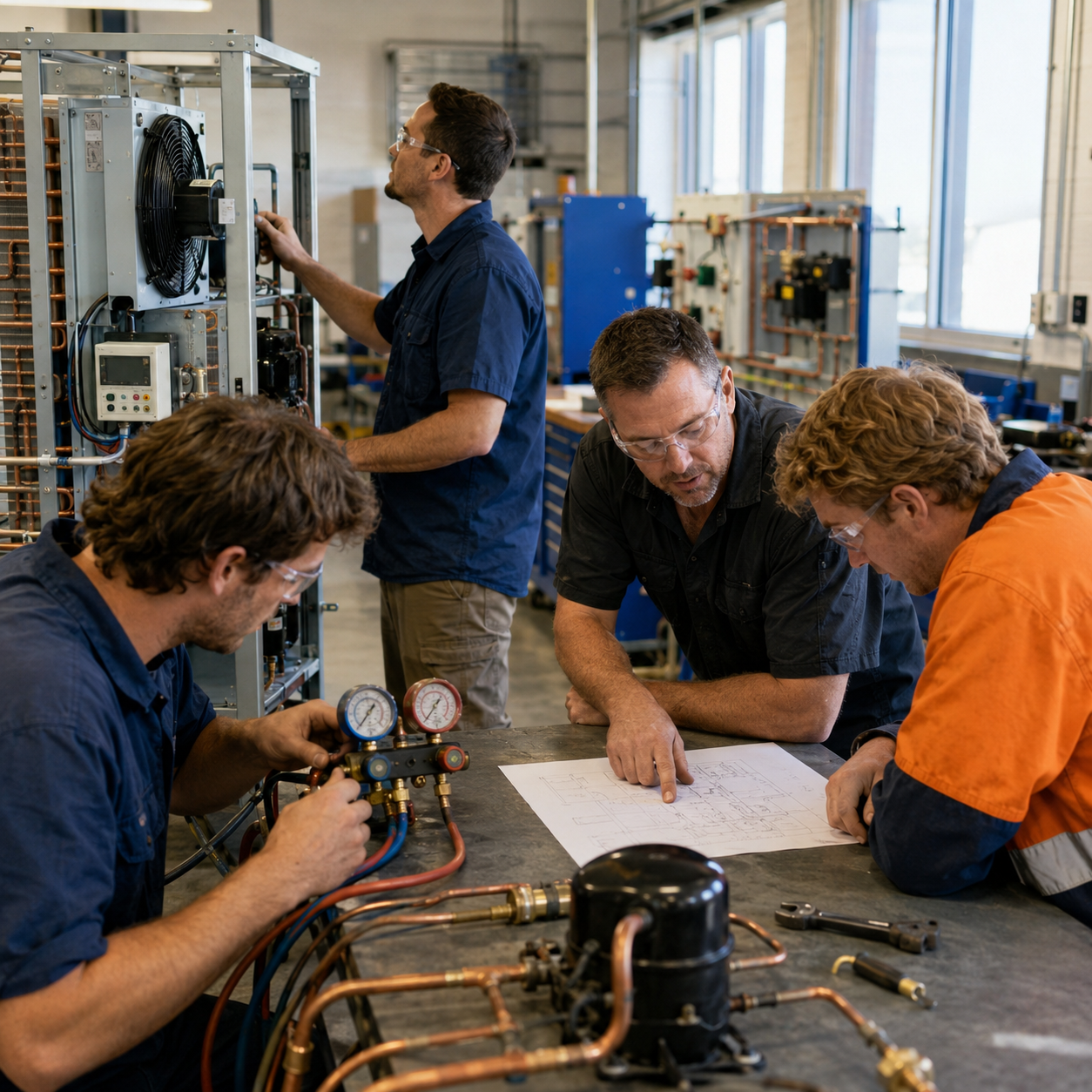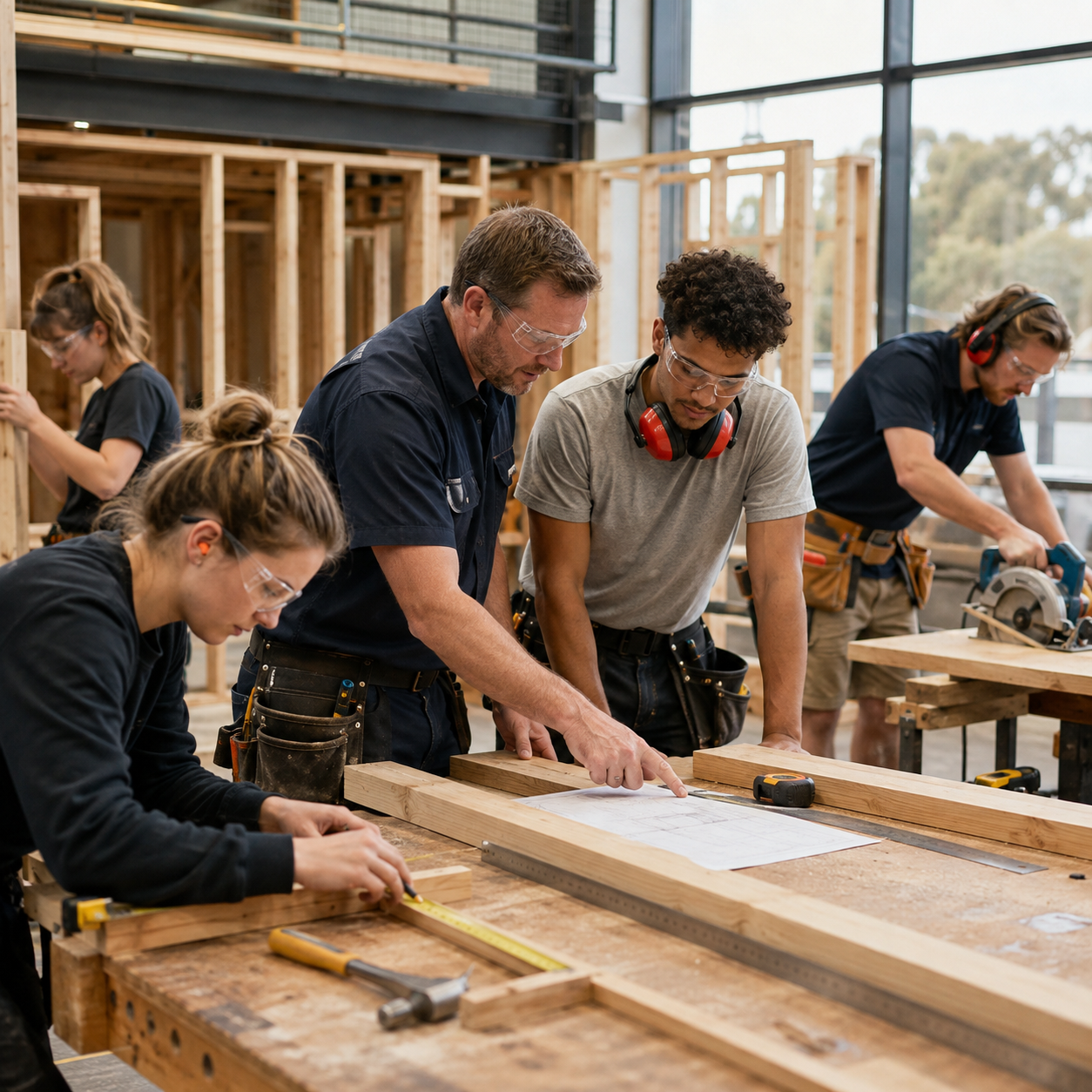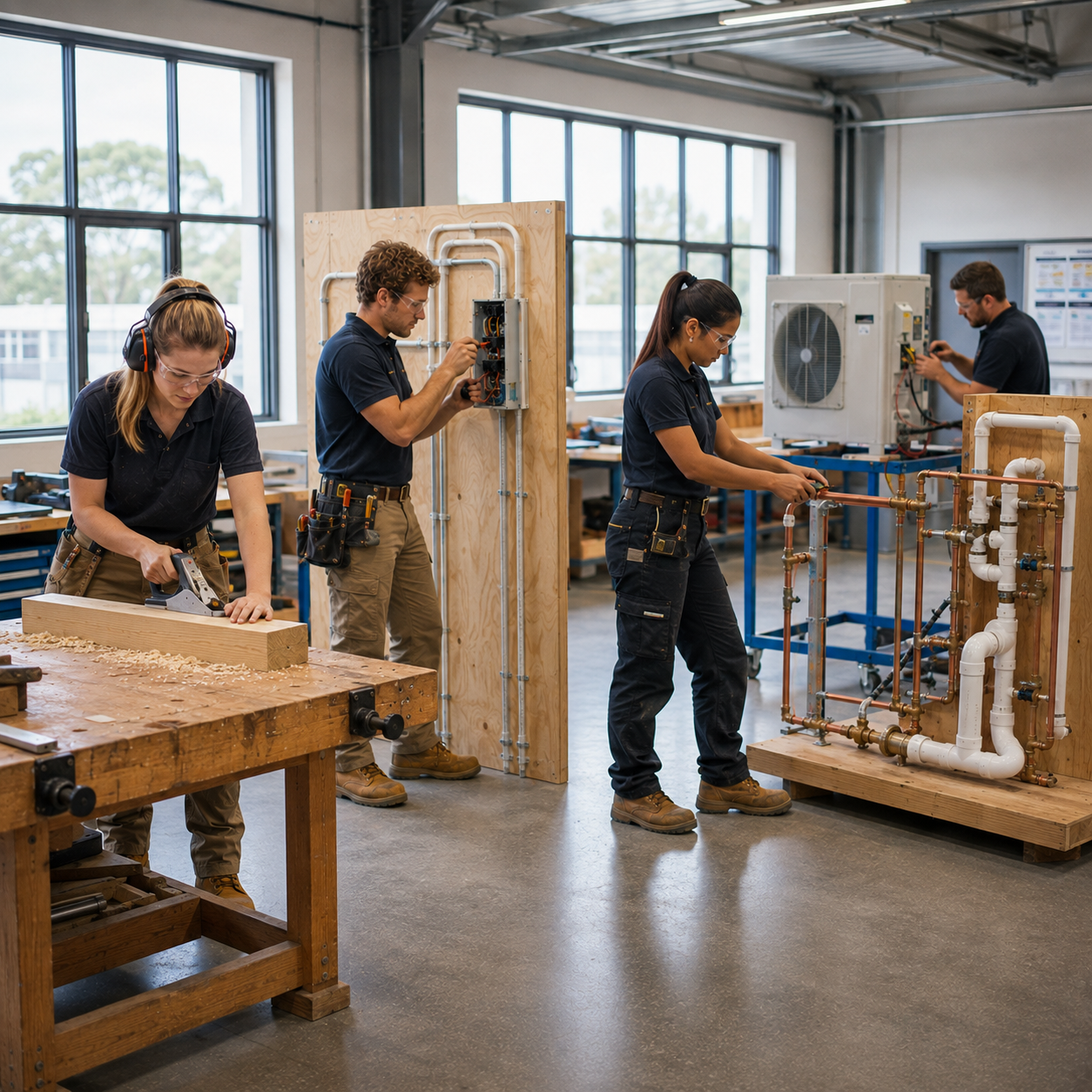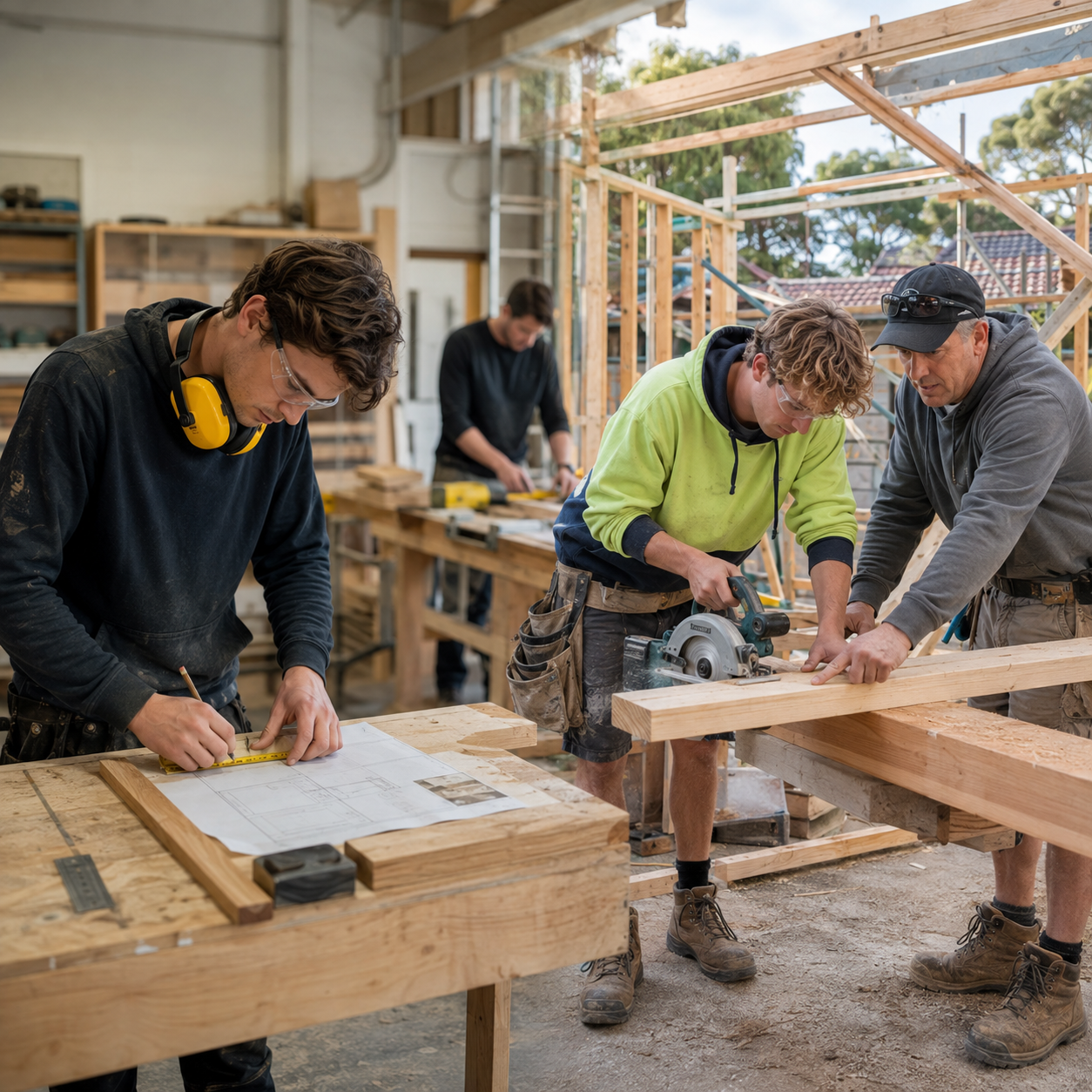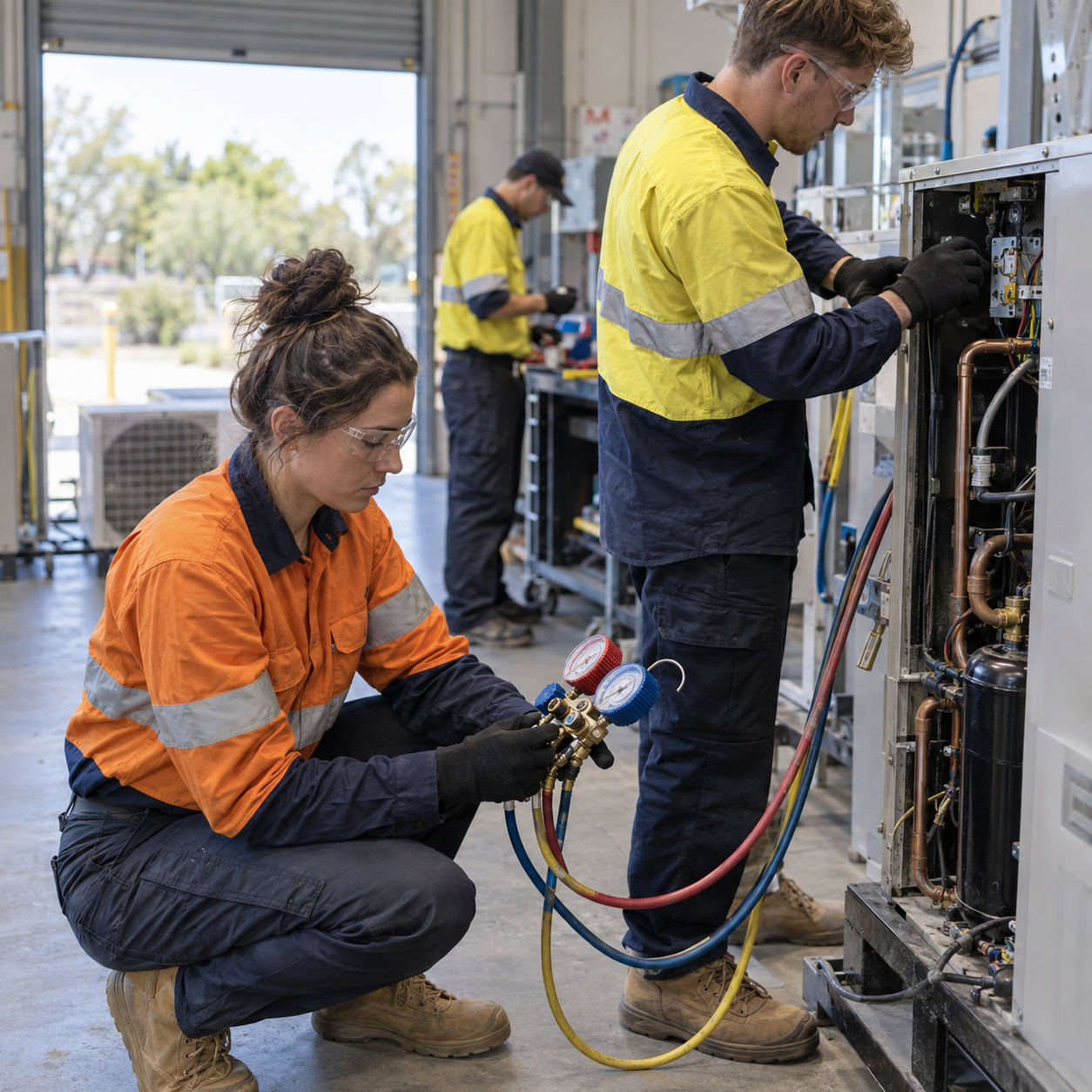
A practical workshop is where refrigeration and air conditioning training stops being theory on a screen and starts looking like the work you want to be trusted to do. This aircon workshop guide is for tradies who want more than attendance records. You need evidence that you can work safely, follow a process, diagnose faults and complete tasks to an industry standard.
For people already working, workshop time is too valuable to waste. It should build confidence with tools, equipment and job sequences that transfer directly to site. The right training environment does not make the work easier. It makes the standard clear, gives you repeated practice and shows you exactly where to improve.
What an aircon workshop should actually deliver
A strong workshop is not a demonstration where learners stand around watching an instructor complete the hard parts. It is structured, hands-on practice with clear performance expectations. You should be working through tasks, responding to faults and receiving feedback while the process is still fresh.
In air conditioning and refrigeration, practical capability is built through repetition. Connecting pipework once is not the same as producing consistent work under supervision. Carrying out a pressure test is not just about attaching gauges. It is about preparing the system correctly, reading the result, identifying an issue and recording the outcome properly.
The workshop should also reflect the reality that no two jobs arrive in perfect condition. Equipment varies. Access can be limited. Faults can be caused by more than one factor. A useful practical session teaches a method for working through the problem, rather than relying on guesswork or a trainer supplying every answer.
The core skills worth practising
Your exact workshop activities will depend on your training pathway and prior experience, but practical air conditioning training commonly focuses on installation, commissioning, servicing and fault finding. That means developing control over the fundamentals before moving to complex systems.
Expect to work with hand tools and test instruments, prepare and join pipework, conduct pressure and leak checks, evacuate systems, make electrical connections within the scope of the task, and verify operation. You may also work through airflow checks, temperature measurements, component testing and systematic diagnostic exercises.
The value is not in ticking off a task quickly. It is in understanding the order of operations. A technician who can explain why a system must be prepared, tested and verified in sequence is far more useful on site than someone who has memorised isolated steps.
How to prepare before practical training
The fastest learners are rarely the people who know everything before they arrive. They are the people who arrive prepared to use every hour well. If your program includes online or LMS-based theory, complete the required modules before the workshop. That gives you the language, diagrams and safety concepts needed to make sense of the equipment in front of you.
Review key terms such as superheat, subcooling, evacuation, pressure testing, airflow and electrical isolation. You do not need to pretend you have mastered every concept. You do need enough familiarity to ask better questions and follow instructions without falling behind at the first technical explanation.
Bring the required personal protective equipment, suitable workwear and any specified tools or materials. Arrive early enough to settle in, not rushed and distracted. Workshops run to a sequence, and missing the setup briefing can put you behind for the whole session.
It also helps to write down the jobs you have seen at work but do not yet feel confident completing. Maybe you have assisted with split-system installations but have not led the commissioning process. Maybe you can identify common parts but want more confidence interpreting readings. Take those gaps into the workshop. Specific questions get specific answers.
What separates real competence from watching videos
Video training has a place. It can explain a process clearly, let you revise theory after hours and help you arrive better prepared. But it cannot replicate the feel of a flare that is not seated properly, a reading that does not match expectations or a fault that requires you to slow down and test each possibility.
Practical workshops add the pressure that matters: you must make decisions. You need to select the right tool, check your work, respond when a test result changes and explain the reason for your next step. That is where confidence becomes capability.
There is a trade-off. Hands-on learning requires time away from work or family commitments, and it can feel confronting when experienced peers are in the room. But avoiding the workshop does not remove the skill gap. It simply leaves it waiting for you on a real job, where the stakes are higher and support is limited.
The better approach is to use a flexible learning model: handle foundational theory around your existing schedule, then attend structured practical training ready to apply it. That combination respects the reality of working adults while keeping the practical standard high.
Make the most of trainer feedback
Active industry professionals can spot small habits that create larger problems later. A rushed measurement, poor cable management, an untidy joint or skipped verification step may not seem dramatic in a workshop. On a job, those habits can create callbacks, delays and loss of trust.
Take feedback directly. The goal is not to prove that your first attempt was good enough. The goal is to leave with a better second attempt. Ask what the trainer checks first, what commonly goes wrong and what a site supervisor would expect to see before signing off on the job.
If you make an error, do not rush to hide it. Use it as the practical lesson. Good trainers want to see that you can recognise a problem, correct it safely and adjust your process for next time. That is a far stronger outcome than completing every activity perfectly with constant prompting.
Build a repeatable job process
The most valuable thing you can take from a workshop is not one completed task. It is a repeatable process you can use again. For most practical jobs, that process includes planning the work, confirming safety controls, selecting equipment, completing the task in the correct sequence, testing the result and documenting what was done.
This approach makes you faster over time because it reduces rework. It also helps when the job is unfamiliar. Instead of freezing because the equipment looks different, you can return to the same disciplined method: inspect, test, isolate the variable, verify and communicate.
Choosing an aircon workshop that moves you forward
Not every workshop provides the same value. Look beyond a vague promise of hands-on learning. Ask whether the sessions are structured around recognised competency requirements, whether there is enough equipment for meaningful individual practice and whether trainers give direct assessment feedback.
Class size matters too. If too many learners are crowded around one unit, your practical exposure drops. Watching others work can reinforce learning, but it cannot replace doing the task yourself. You need sufficient time on tools and equipment to demonstrate your own ability.
For experienced workers, the best option is often one that recognises your existing industry knowledge while still holding you to the required standard. You should not be treated like a complete beginner if you have years on the tools. Equally, experience alone should not let gaps in technique or theory slide.
Alpha Technical Training uses blended learning and practical workshops to help working tradies turn existing experience into structured, assessed capability. The focus is straightforward: train with purpose, practise to standard and keep moving towards better work opportunities without putting the rest of your life on hold.
Turn workshop hours into better site performance
Do not let the learning stop when you leave the training facility. After each workshop, record the procedures you practised, the readings you took, the faults you encountered and the feedback you received. A short set of notes becomes a useful reference before your next practical session or when a similar job appears at work.
Then look for controlled opportunities to apply the process under appropriate supervision. Focus on doing the basics properly: preparation, measurement, testing and final checks. Speed comes later. Reliable work comes first.
Your workshop time is an investment in the standard you will bring to every future job. Turn up prepared, ask direct questions, accept correction and practise until the process feels deliberate rather than uncertain. That is how hands-on training becomes a real step forward in your trade career.