A qualified sparky, fridgie or construction worker can spend years doing the work before holding the formal qualification that reflects it. That raises a fair question: can experience reduce study time? Yes, it can – but only when your existing skills are current, relevant and backed by evidence that stands up to a proper competency assessment.
For working tradies, this matters. Starting every unit from zero can feel like wasted time when you already install, test, fault-find, read plans or manage site tasks every week. A well-structured training pathway recognises what you can already do, identifies the gaps that genuinely need attention, and directs your effort where it will make a measurable difference.
Can experience reduce study time in a trade qualification?
Experience can reduce the time needed to complete a qualification because competency-based training is about demonstrating capability, not simply sitting in a classroom for a fixed number of hours. If you already perform parts of the job to the required standard, you may be able to provide evidence and complete assessment activities instead of repeating learning you have already mastered.
That is not a shortcut around the standard. It is a more efficient route through it.
The distinction matters. Being on the tools for five years is valuable, but time served alone is not proof of every competency in a qualification. The work you have done needs to match the required outcomes, and you need to show that you can perform it safely, consistently and to current industry expectations.
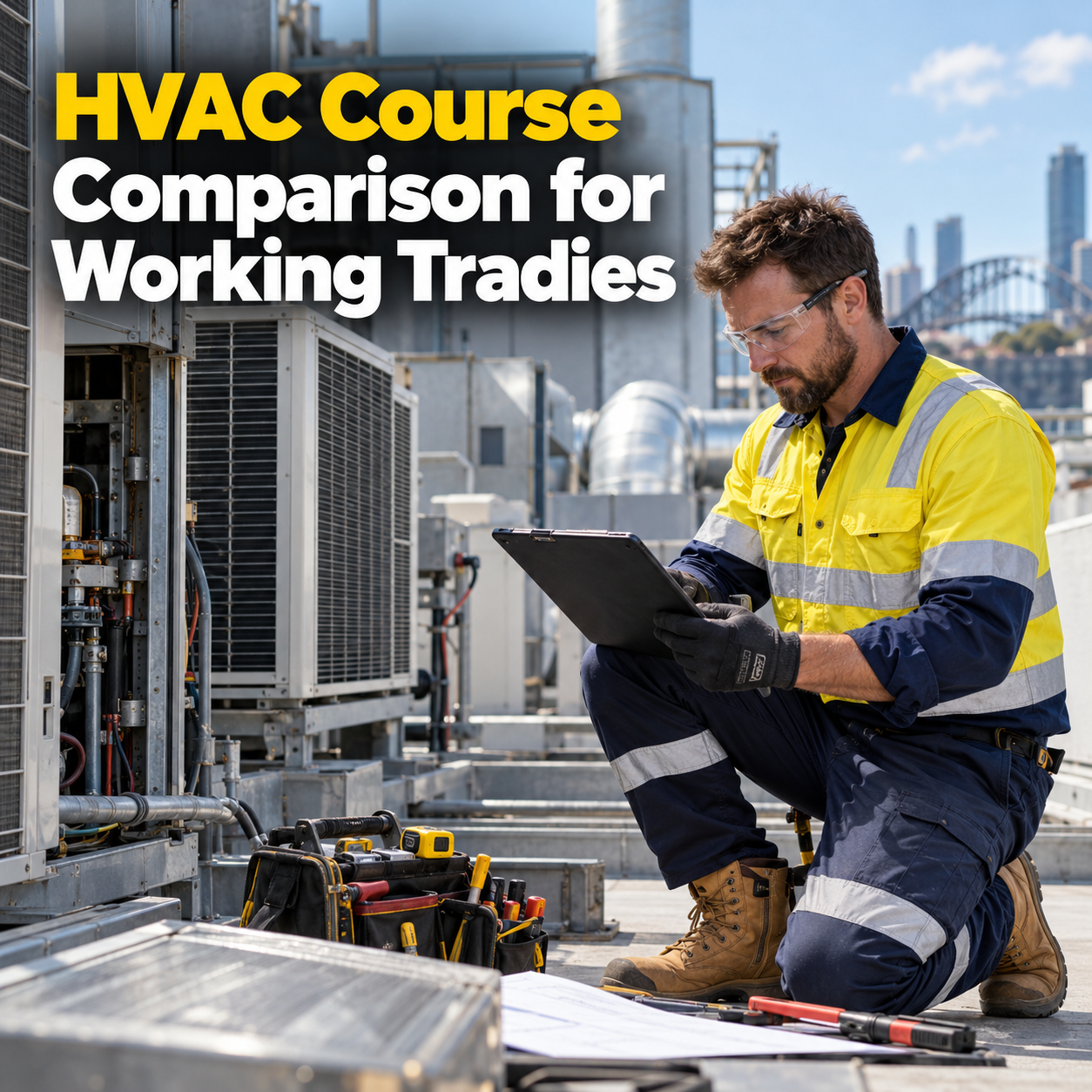
For example, an experienced air conditioning worker may have strong practical capability in installation, commissioning and fault-finding. Yet they may have limited evidence across a particular system type, documentation process or technical calculation. The fastest legitimate pathway is not pretending that gap does not exist. It is targeting it directly, completing the required learning and practical assessment, then moving on.
What counts as useful experience?
The most valuable experience is relevant, recent and verifiable. It should show the type of work you have performed, the level of responsibility you held and the practical outcomes you achieved.
Useful evidence can include job records, work orders, photos or videos of completed work, supervisor reports, employment references, resumes, technical documents you have completed, site records and examples of testing or commissioning activities. In some cases, a practical demonstration or conversation with an assessor also helps establish what you know and how you apply it.
The evidence must tell a clear story. A photo of an installation, for instance, is stronger when it is supported by an explanation of your role, the equipment involved, the relevant task requirements and confirmation from a supervisor or employer. Random photos saved on a mobile are not automatically enough. Organised evidence reduces delays because the assessor can map it against the required competencies with confidence.
Experience needs to be current
Trade methods, standards, equipment and workplace expectations change. Experience from years ago may still be useful, but it may need to be refreshed or supplemented before it can support a current qualification outcome.
This is particularly relevant in electrical, refrigeration and air conditioning work, where technology evolves quickly. Variable refrigerant systems, control technologies, commissioning procedures and diagnostic tools demand more than old habits. Experienced workers often progress fastest when they respect this reality: keep what works, update what has changed and prove both.
Experience needs to be broad enough
Many workers become highly capable in a narrow slice of a trade. A technician who has spent years replacing split systems may be efficient and commercially valuable, but a full qualification can require competence across a broader range of tasks and knowledge.
That does not diminish the experience. It simply means the remaining study should focus on the areas your job has not exposed you to. This is where a training plan earns its value. Rather than dragging you through generic content, it shows exactly what is recognised and exactly what remains.
Recognition is faster when your evidence is organised
The difference between a smooth assessment process and a drawn-out one is often preparation. Workers who can clearly document their history give themselves the best chance of having relevant experience recognised without unnecessary back-and-forth.
Start by mapping your work history honestly. List the main tasks you perform, the tools and systems you use, the types of sites you work on and the people who can verify your role. Then gather supporting documents while they are easy to access. Former employers, supervisors and project managers can be difficult to track down months later.
Do not overstate your experience. A credible pathway is built on evidence you can defend. If you were assisting rather than leading a task, say so. If you have strong field experience but need help with theory, that is normal. Clear gaps are easier to solve than vague claims.
At Alpha Technical Training, experienced workers can use a blended approach that combines self-paced online theory, structured learning and hands-on practical support. The goal is not to make training feel longer than it needs to be. It is to turn existing capability into visible progress while ensuring the skills being assessed are genuinely yours.
Where experience saves the most time
Experience tends to have the greatest impact when a worker has repeated the same core tasks across multiple jobs and can explain the reasons behind their decisions. Repetition builds speed, but understanding builds competency.
A worker who can fault-find systematically, select appropriate tools, interpret technical information, communicate with clients and complete work records has more than muscle memory. They have the decision-making ability assessors need to see.
Experience can save time in three practical ways. First, familiar tasks require less revision because the theory already has a real-world reference point. Second, evidence may support recognition of competencies already achieved in the workplace. Third, practical workshops become a place to confirm and sharpen capability rather than learn every task for the first time.
That last point is important for busy adults. A practical session is far more productive when you arrive knowing the terminology, the equipment and the job sequence. You spend your time demonstrating, asking sharper questions and addressing the details that hold people back.
The trade-off: faster does not mean effortless
An accelerated pathway still requires commitment. You will need to complete assessments, meet evidence requirements and close any gaps identified in your skills or knowledge. Anyone promising that experience alone removes all study is selling the wrong idea.
The better question is not, “How can I avoid training?” It is, “How can I avoid repeating training that does not move me forward?” For an experienced tradie balancing work, family and site commitments, that difference can be substantial.
Flexible delivery helps, but it only works when you create a routine. Set aside regular study blocks, upload evidence as you collect it, prepare for workshops and respond quickly when an assessor requests clarification. Momentum is a real advantage. Workers who pause for weeks between tasks often turn a manageable pathway into a frustrating one.
When experience may not reduce study time much
There are situations where prior experience will have a limited effect. You may be changing into a different trade area, returning after a long break, working mainly as an assistant, or moving from highly repetitive work into a qualification with broader requirements. In these cases, the learning is still worthwhile because it expands what you can confidently do.
There is no downside to getting an honest skills picture early. If your experience covers most of the requirements, you can focus on proving it. If it does not, you receive a clear plan to build the missing capability rather than guessing your way through.
Turn work history into career progress
Your experience has value when it is recognised, evidenced and aligned to a real qualification outcome. The right training process respects what you already know while holding the line on practical standards. That is how study time becomes more efficient without cutting corners.
If you have been doing the work for years, do not assume you need to start from scratch – and do not assume your experience will speak for itself. Put your work history in order, be honest about your gaps and choose a pathway that converts proven capability into progress you can use.