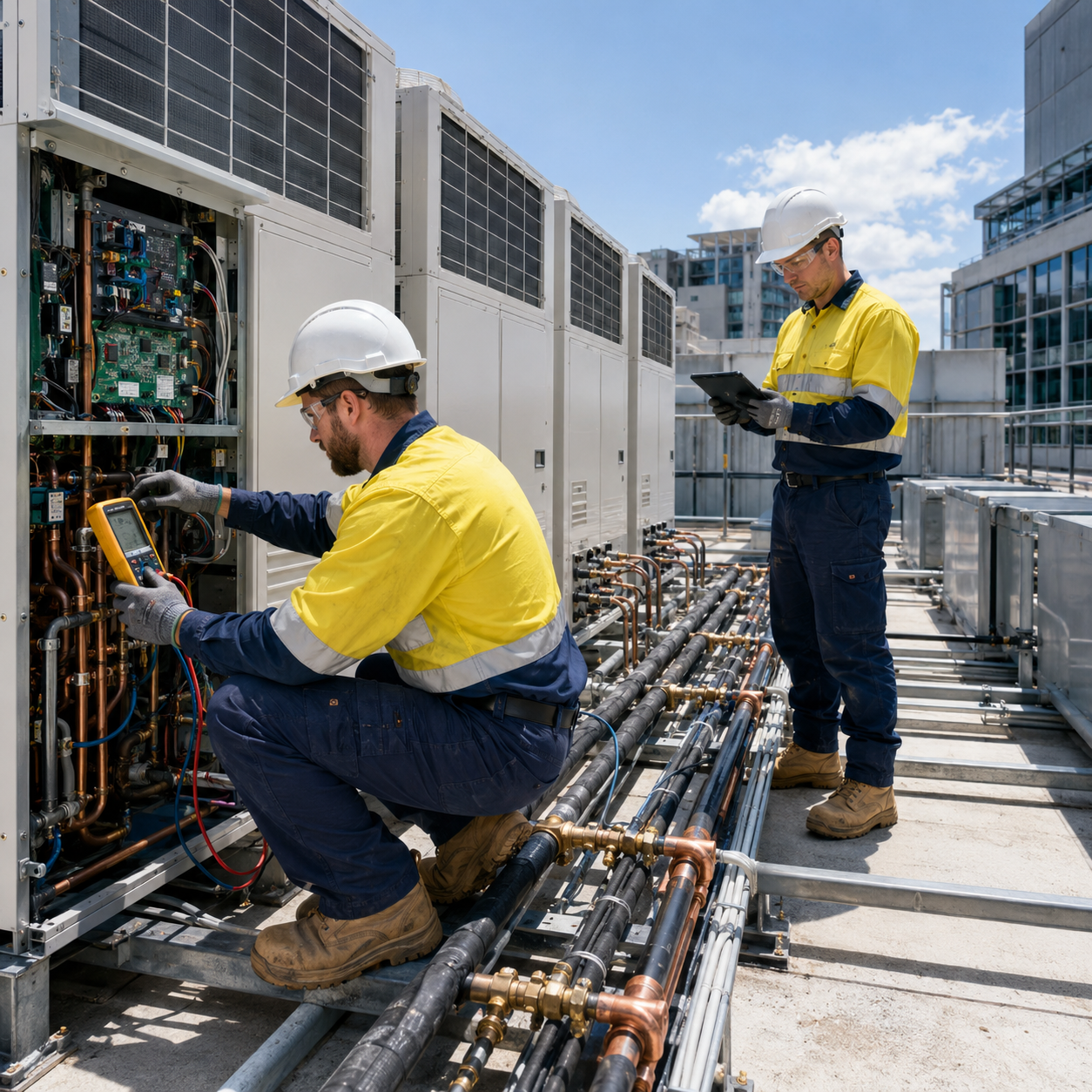
A VRV system that is not commissioned, configured or diagnosed correctly can consume hours of site time and damage a technician’s reputation quickly. The strongest VRV course benefits are not theoretical. They help air conditioning technicians work with greater certainty around sophisticated systems, make better decisions under pressure and step into more valuable commercial work.
For experienced tradies, that matters. VRV and VRF systems are common across offices, retail spaces, schools, accommodation and multi-zone commercial projects. They demand more than general split-system knowledge. A targeted course gives you a clearer process for understanding system design, controls, commissioning requirements and fault behaviour before a small issue becomes an expensive callback.
Why VRV training changes your value on site
A VRV system is designed to manage multiple indoor units from a shared outdoor system while responding to changing load demands across different zones. That efficiency and flexibility is exactly why these systems are widely specified. It is also why installation and service work can become complex fast.
A technician may be dealing with pipework limits, addressing, branch selector arrangements, communication faults, refrigerant charge considerations, control settings and indoor-unit behaviour across an entire building. Guesswork is not a strategy. Replacing parts without a clear diagnostic path costs time, disrupts the client and can leave the original fault unresolved.
Training builds the structured thinking required for this work. Rather than treating every fault as an isolated problem, you learn to assess the system as a connected network. That shift helps you identify whether the issue sits in controls, communications, installation quality, commissioning data or component operation.
For a working technician, the return is practical: less time chasing the wrong cause, fewer avoidable return visits and more confidence when discussing findings with supervisors, builders, facility managers and clients.
VRV course benefits that support better field performance
The most useful short courses connect manufacturer-specific system knowledge to the work technicians face in the field. The goal is not simply to recognise product terminology. It is to understand what the system is doing, why it is doing it and what checks should come next.
Build confidence with multi-zone system operation
Many technicians have strong foundations in residential air conditioning but limited exposure to larger multi-zone applications. VRV training closes that gap by showing how indoor and outdoor components work together, how capacity is managed and how system configuration affects performance.
This knowledge helps when reading installation plans, checking unit combinations and understanding the practical consequences of design choices. You become better positioned to spot issues early, before handover or after the system has already been operating poorly for weeks.
Diagnose faults with a method, not assumptions
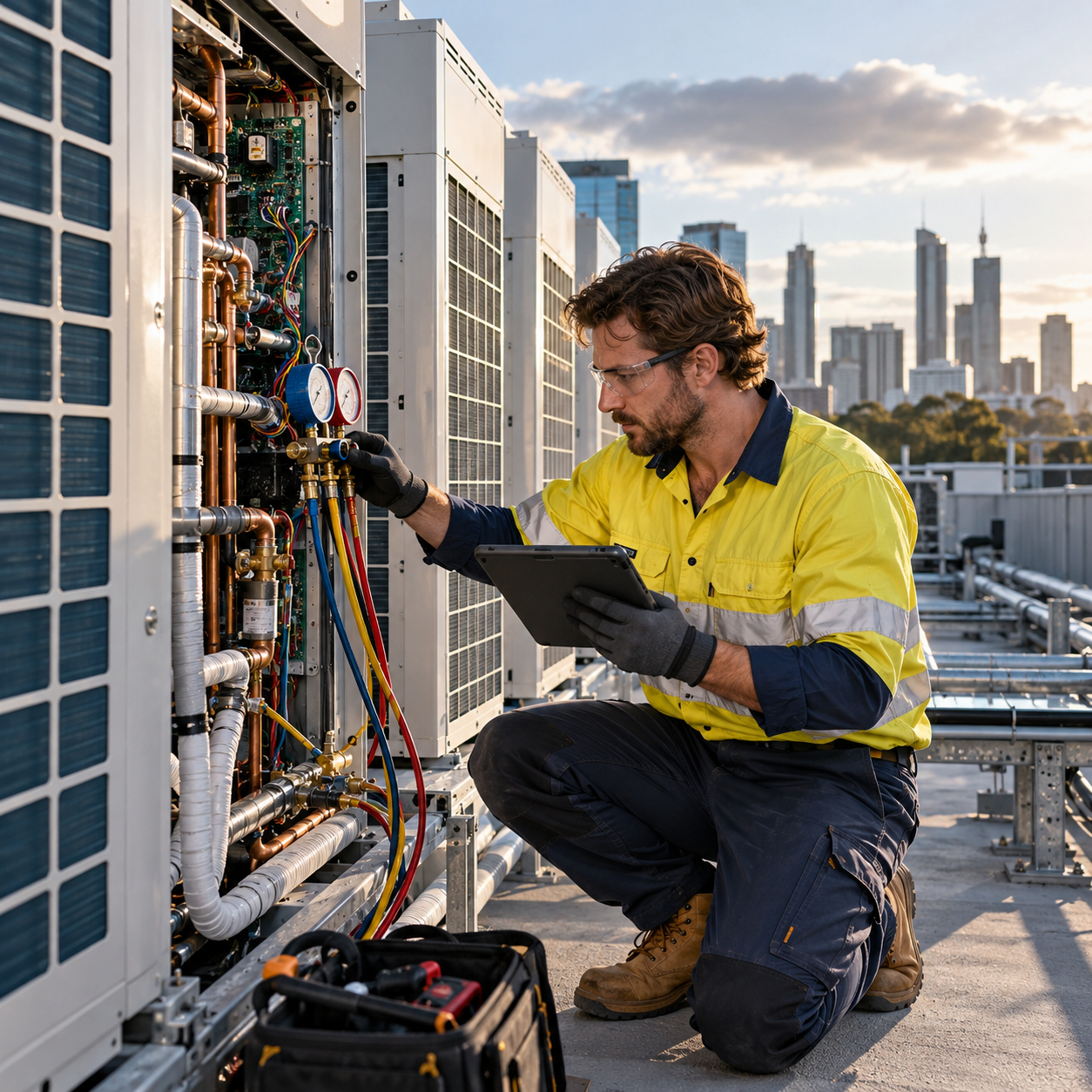
Fault-finding is where a technician’s competence becomes visible. On a complex VRV system, an error code is a starting point, not a complete answer. A course can help you interpret fault information alongside operating conditions, wiring checks, communication pathways and system history.
That method protects your time. Instead of jumping immediately to the most obvious component, you can follow a logical sequence that narrows the cause. It also gives you a more professional way to explain the diagnosis to others on site: what was checked, what was ruled out and what action is required.
Improve commissioning and handover quality
Commissioning is not paperwork at the end of a job. It is the point where installation quality, controls setup and system operation must prove they work together. When this stage is rushed, the consequences often appear later as comfort complaints, control problems or repeat visits.
VRV training reinforces the checks that matter during setup and verification. Technicians gain a stronger understanding of how system parameters, addressing and operational testing influence the finished result. That means a cleaner handover, more reliable performance and fewer problems handed back to the installation team.
Communicate with greater technical authority
Commercial projects involve more stakeholders than a standard residential job. You may need to speak with a project manager, site supervisor, builder, facilities team or another trade while a problem is holding up progress. Clear communication is a commercial skill as much as a technical one.
When you understand the system properly, you can explain what is happening without overcomplicating it. You can identify the next action, outline the likely impact and set realistic expectations. That credibility makes you easier to trust with more demanding work.
The difference between general experience and targeted VRV knowledge
Experience is valuable, but experience alone can leave gaps when the systems, controls and manufacturer processes change. A technician who has installed or serviced air conditioning for years may still be unfamiliar with the specific sequence required to configure, commission or fault-find a VRV system efficiently.
That does not mean starting from scratch. It means adding a specialist capability to an existing trade skill set. The right course should respect what you already know while focusing on the areas where VRV work differs from ordinary split-system servicing.
The difference is most obvious when a site presents a fault that does not have a simple mechanical answer. A room may not be achieving setpoint because of controls logic, a communication issue may affect several units, or system operation may reflect an installation condition elsewhere in the network. General knowledge gets you into the conversation. Specialist training helps you lead it.
Who gains the most from a VRV short course?
VRV training is particularly useful for technicians moving into commercial maintenance, installers taking on larger projects and experienced air conditioning workers who want stronger capability with Daikin VRV systems. It also suits people who are already encountering these systems on site but want to stop relying on trial-and-error, old notes or another technician’s availability.
The course is most valuable when it is connected to your immediate work goals. If your current role is exclusively basic residential servicing, the benefit may be less immediate. But if your employer is moving into commercial fit-outs, property maintenance or multi-zone systems, getting ahead of the knowledge gap can make you a more useful member of the team from day one.
For subcontractors and business-minded technicians, the value is equally direct. More complex work requires tighter processes, better documentation and confidence in your diagnosis. Building those habits before the pressure is on can protect your margins and your reputation.
What to look for in VRV training
Not every course delivers the same result. A worthwhile VRV program should be practical, current and focused on the systems technicians actually encounter. It should cover more than broad concepts and give you a clear framework for installation considerations, commissioning procedures, controls and fault diagnosis.
Look for training led by people who understand site realities: incomplete information, restricted access, competing trades, deadlines and clients who need an answer. The content should help you work through those realities, not bury you in theory that has no application once you are back in the ute.
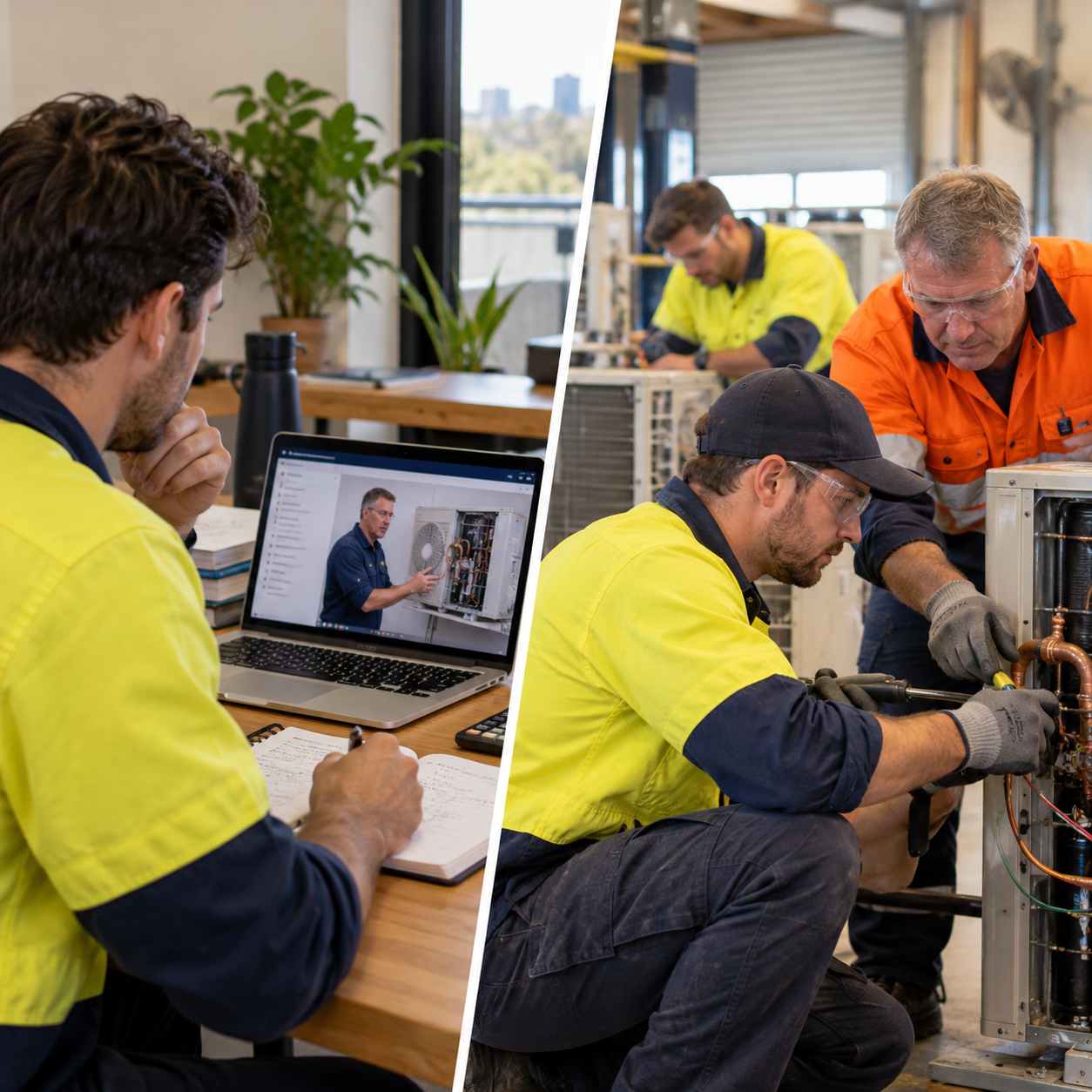
Flexible delivery also matters for working tradies. Alpha Technical Training’s Daikin VRV System Short Courses are designed to build specialist knowledge without requiring you to step away from your existing work commitments for an extended period. That makes the training easier to turn into immediate on-site value.
Turn specialist knowledge into better opportunities
The real benefit of VRV training is not having another course listed on a resume. It is being the technician who can approach a complex system calmly, follow a sound process and contribute a useful answer when the job gets difficult.
That capability can change the type of work you are trusted with. It can reduce the frustration of recurring faults, strengthen your standing with employers and clients, and give you a clearer pathway into higher-value commercial air conditioning work.
If VRV systems are appearing more often in your jobs, do not wait until a major fault leaves you scrambling for support. Build the knowledge while you can apply it, test it and turn every site visit into stronger practical experience.